
Five Terrible Alternatives to the F-35
A Fire Brings Naysayers Out of the Woodwork
Published July 31, 2014 • Read time: 5m
It appears that no bad idea ever truly dies in Washington. Whether it is high marginal tax rates, greater government regulation, or resurrecting terminated defense programs, there is always someone around to advocate for bad ideas.
Recently, for example, the Senate Appropriations Defense Subcommittee, responding to a fire in one F-35 engine, published a report asking the Pentagon to reassess its decision to cancel the program to develop a second engine for the Joint Strike Fighter. Then-Secretary of Defense Robert Gates – no friend of wasteful defense spending – cancelled this alternative engine program back in 2011 on the grounds that the cost to develop a second engine and maintain separate supply chains, parts inventories, and training for maintainers would exceed any savings that might accrue from competition between the current engine manufacturer, Pratt & Whitney, and a second source.
The June 23rd engine fire has brought all the F-35 naysayers out of the woodwork advocating the same tired, misguided alternatives to this must-have modernization program for the Air Force, Navy, and Marine Corps. Here is a set of the best of the worst alternatives (recently put forward by Robert Farley in the National Interest).
Build More F-22s
Nothing could be more emblematic of the problem I am discussing than the idea of building more F-22s. One reason the Air Force now needs so many F-35s is that it was denied the ability to replace all of its aging air superiority fighter fleet with F-22s. The program was cancelled precisely at the point when it was beginning to experience reduced costs due to moving down the learning curve and establishment of economical rates of production. The line is gone, the tooling is gone, and the workforce is gone. In the current environment, the first new F-22 couldn’t come off the line for at least ten years, if ever. Might as well wait for a sixth-generation fighter to emerge.
Buy Smarter, Fly More
The Defense Department's Reorganization Problem Comes to Fightertown
America Needs To Spend More on Defense and Build More With It
The Factory Floor and the Balance Sheet
Build UAVs Instead of Manned Aircraft
I have always been a science fiction fan. The proposal to build UAVs to do the missions that will be assigned to the F-35 is just that. Like a Jules Verne novel describing the idea of an airship or a submarine, the advocates of this approach can describe what the platform should look like but have no idea technically how to make it happen. The U.S. Navy cannot even agree on what its first carrier-based unmanned aerial vehicle (UAV) is supposed to do and, hence, what it should look like. We cannot, at present, build either an uninterruptable communications system to allow secure man-in-the-loop control or an autonomous guidance, control or targeting system for a weaponized UAV. Also, since the overwhelming fraction of the cost of any aircraft is in the platform, engines and electronic systems, and not equipment associated with the pilot, it isn’t clear that a combat UAV would cost less than a manned F-35.
Retain the Legacy Fighter Fleet
Anybody who has tried to keep an old car working knows just how bad an idea this really is. The cost of keeping aging aircraft in the air goes up dramatically over time. While the cost over fifty years of sustaining the F-35 fleet is estimated to be a little under $1 trillion, to keep the current fleet going that long is estimated to cost some $4 trillion. Moreover, the F-15, F-16 and Harriers are based on 1960s technology. Even with upgraded systems, these are obsolescent aircraft. Every other air power, including Russia, China, and our European allies, have deployed more modern aircraft than most of what we are flying today. We were reminded just last week that Russia has deployed – and given to others – advanced and highly lethal surface-to-air missile systems that pose a direct threat to our old, non-stealthy fighter fleet. Retaining the legacy force is the surest and quickest path to losing the a six decade-long battle to maintain U.S. asymmetric advantage in the air.
Skip a Generation
This is variation of the alternative above since the Pentagon would be stuck with its legacy fleet for however long it took (at least twenty years) for sixth-generation fighters to be designed and tested. So the existing fleet, many of which were first flown in the 1970s, would have to last until the 2050s at least. This is like having the Air Force fight the Vietnam War with a fleet of Wright biplanes. Skipping a generation is a well-worn tactic of defeat in Washington: cancel the current program, one which is now working, in favor of the promise of something spectacularly better in the future.
Buy Other Countries’ Airplanes
This may be the worst idea of them all. Even our allies, the United Kingdom and Italy, industrial partners in the Eurofighter program, are buying F-35s because they know it is a superior fifth-generation aircraft and will improve the performance of their fourth-generation tactical air fleets. Turkey, Canada, Norway, the Netherlands, Denmark, Australia, Japan, South Korea and Israel had the choice of buying a number of different aircraft to replace their aging fighter fleets. They all chose the F-35 indicating they knew something that some of the program’s critics apparently do not.
This article originally appeared on the Early Warning Blog, a publication of the Lexington Institute.

Batteries Can Power a Win for America in Super Intelligence
By Manisha Singh • RealClearDefense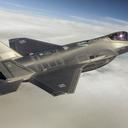
Poland’s Fighter Fleet Is Growing: Can Its Training System Keep Up?
By Bruce Allen Lubbering • RealClearDefense
Why Iran is Not Vietnam
By Kevin Brown • RealClearDefense
Closing the Missile (Defense) Gap
By Jason Camilletti • RealClearDefense
Part of a Larger Secret, Hidden World
RealClearDefense

Sign of the Times: CCAs Dominate a Major Fighter Conference
By Bill Sweetman • The Strategist (ASPI)Closing the Missile (Defense) Gap
By Jason Camilletti • RealClearDefense
U.S. Navy Prepares for Third Zumwalt Hypersonic Upgrade
By C. Johnston, Naval N.
Pearl Harbor Hero Doris Miller Will Stay Namesake of CVN-81
By Mongilio, USNI News
Navy CCA Plans Will Not Wait For F/A-XX Next Generation Fighter
By The WarZone