
Analysis of "Insider Attacks" in Afghanistan
Published April 4, 2017 • Read time: 2m
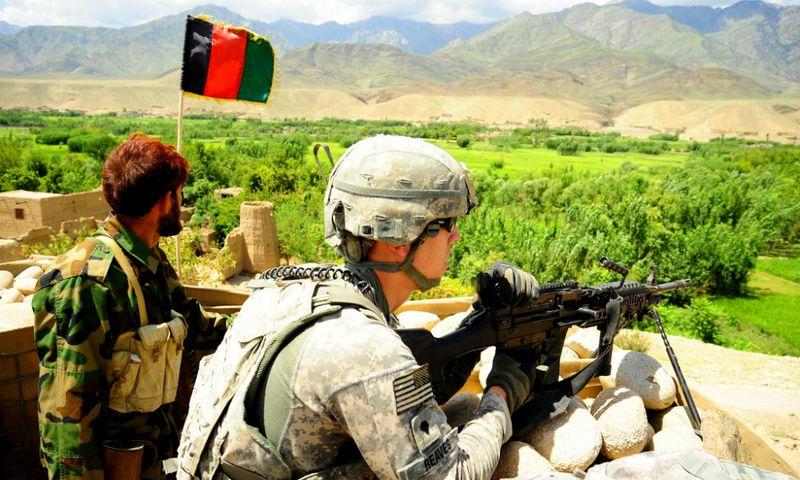
Insider attacks—attacks by insurgents posing as Afghan police or military personnel against local or international forces—have become an important threat to the American and NATO personnel in Afghanistan. “We’re willing to sacrifice a lot for this campaign. But we are not willing to be murdered for it,” as Gen. John R. Allen, then commander of US and NATO forces in Afghanistan, put it in 2012. Since 2007, insider attacks have resulted in the death of at least 157 NATO personnel and 557 members of the Afghan National Defense and Security Forces (ANDSF). The attacks have affected the public narrative of the Afghan war in the United States and partner countries and have sown a degree of distrust between NATO troops and ANDSF as they struggle to fight a common enemy. Despite the last sixteen years of engagement in Afghanistan, the United States and its NATO partners still fumble when trying to communicate with Afghans.
This report explains the scope of the insider threat and its underlying causes. It finds that “green-on-blue” attacks are often the product of cultural friction—a perceived insult, a cultural gaffe, or a small misstep that in the minds of certain Afghan forces take on much greater significance. It also demonstrates that increasingly after 2011, insider attacks became the preferred warfighting tactic of the Taliban, an organization that understood well how to apply limited resources for maximum effect. In fact, despite a reputation for cultural myopia, the Taliban’s use of insider attacks reveals that the group understood US military and political culture and domestic sensitivities far better than some imagined. Finally, the report examines the impact of insider attacks on the Afghan mission strategy and the implications for future US engagement in Afghanistan.
U.S. and Australia Should Give ANZUS Teeth
How to Win Without Military Victory
Tailored Deterrence and Nuclear First Use in Europe
When Access Becomes the Fight
Javid Ahmad is a non-resident fellow with the Modern War Institute at West Point and at the Atlantic Council’s South Asia Center. He is also a senior intelligence manager at iJET International.
The views expressed herein are those of the author and not necessarily those of West Point, the Department of the Army, the Department of Defense, or any agency of the US government.

Iron Raven: Remembering Colonel Joseph B. Conmy, Jr.
By Louis Marano • RealClearDefense
Stand Proud of the Force
By Jay Rogers • RealClearDefense
How a Dying Agency Turned Fentanyl Into a Weapon of Mass Destruction
By Barry Angeline • RealClearDefense
The Pressure Is the Message: What Xi and Putin Faced in Shenzhen
By Emzari Gelashvili • RealClearDefense
China’s Revised Mobilization Law and the Expanding Reach of National Defense
By Muhammad Shoaib • RealClearDefense

Marine Corps Hero Under Federal Investigation
By Laporta, Burnham & Watson, CBS
A Postmortem of Maneuver Warfare in the U.S. Marine Corps
By Donald Vandergriff
U.S. Putting Weapons in Space: A Strategic Blunder?
By Ajey Lele • RealClearDefense
U.S. Senate Seeks to Exchange Shipbuilding Funds for More Munitions
By Naval News
F-35C Completes First Launch and Recovery Trials on a Ford-Class Carrier
By Navy T.