


Introduction
In late April 2018, ASEAN leaders for the thirty-second ASEAN Summit, under the theme of resilience and innovation. The recommendations presented in this article reflect this theme. Moreover, regional stakeholders continually praise the concept of interoperability, offering increased inter-state security cooperation and coordination as the primary strategic option to ensure Indo-Pacific security, stability and prosperity.[2] Interoperability is broadly defined as “the ability to operate in synergy in the execution of assigned tasks.”[3] At its core, interoperability means two or more actors (states) acting in a coordinated manner to address a common problem or problems. Arguably, the Indo-Pacific is a region which necessitates high levels of interoperability.
There are few regions as culturally, socially, economically, and geopolitically diverse as the Indo-Pacific.[4] The nations of the region are home to more than 50% of the world's population, 3,000+ different languages, two of the three largest economies, along with ten of the fourteen smallest. The Indo-Pacific contains the most populous nation in the world, the largest democracy, and the largest Muslim-majority nation as well as the smallest republic in the world and the smallest nation in Asia. The region is a global economic engine room, yet it’s also a heavily militarized, containing seven of the world's ten largest standing militaries and five of the world's declared nuclear nations.[5] As a consequence of the strategic complexity of the region, the challenges faced by the Indo-Pacific are equaled only by the opportunities of the region. However, navigating such complexity without improving interoperability often results in states prioritizing political effectiveness at the expense of operational effectiveness.
This article assesses the viability of establishing an Indo-Pacific Joint Multinational Training Command (JMTC), incorporating a dedicated Joint Multinational Readiness Center (JMRC) to improve regional multinational interoperability to improve strategic (political effectiveness) and tactical (operational effectiveness) outcomes. Given the absence of a ‘permanent’ institution to plan Joint, Interagency, and Multinational (JIM) exercises, train personnel (professional military education (PME), conduct mission rehearsal exercises, as well as serving as a venue for developing joint/combined doctrine, standard operating procedures (SOPs) and tactics, techniques, and procedures (TTP) etc.: 1) could one be created, modelled conceptually on the North Atlantic Treaty Organization’s (NATO) JMRC, and 2) would it disrupt/delay/reverse the improvements in interoperability already taking place? Put simply, could a JMRC be a catalyst for a transformation in multinational security cooperation in the Indo-Pacific? [6]
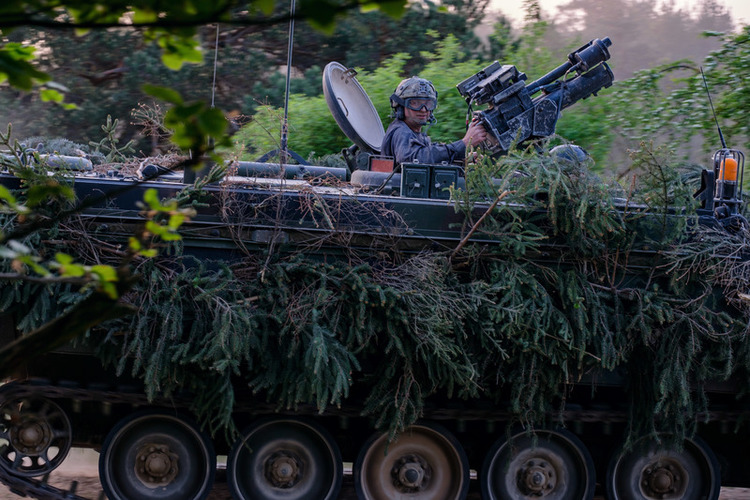
NATO’s JMRC is used as the conceptual model for this recommendation, therefore, NATO’s definitions and terminology are used for relevance and consistency. NATO’s Glossary of Terms and Definitions frames interoperability as “[T]he ability to act together coherently, effectively and efficiently to achieve Allied tactical, operational and strategic objectives.”[7] An alternate definition describes interoperability as “the ability to operate in synergy in the execution of assigned tasks.”[8] NATO’s JMRC “is the world’s premier training venue when it comes to multinational integration and interoperability.”[9] Since the end of the Cold War, interoperability has been at the heart of a debate over NATO’s viability and relevance. Programs such as the “Connected Forces Initiative” have been designed to address such criticisms.[10] Additionally, NATO has emphasized the joint element of JIM operations by developing parallel initiatives to improve inter-agency engagement in states with a history of military involvement in domestic security and associated imbalanced in foreign policy decision-making. Finally, the article often defaults to U.S. statements, capabilities and initiatives. Such U.S.-centrism is forgivable due to its ubiquity in the region and is consistent with similar NATO-oriented discussions.
Interoperability: Why It’s Important
Firstly, interoperability is a distinctive and critical aspect of the more general concept of security cooperation. Secondly, it must be noted that effective interoperability has two elements: strategic and tactical. National operational caveats, issues of sovereignty, divergent national interests, cuts in defense spending, support for local defense industries, disparities in technological capabilities, etc., “can only be resolved by politicians at the strategic level” while technological disparities, command and control issues, doctrinal differences and resource gaps are “tactical challenges to interoperability.”[11] Moreover, the strategic and tactical elements intersect where it matters most- at the contact point with an opponent. The politically influenced decisions of the individual states within a multinational partnership can impose command and control (C2) limitations which can render the most interoperable force impotent. To overcome this, long-standing alliances, such as NATO, have integrated command structures with designated nations providing force commanders.
Theoretically, a JMRC would improve interoperability by integrating regional partner assets, capabilities, relationships, and technologies. Practically a JMRC enables formations to communicate, train, and operate together effectively to generate common tactics, techniques, and procedures (TTP). It should also come as no surprise that within the group of countries which make up the Indo-Pacific region, there are divergent standard operating procedures (SOPs), regulatory and doctrinal differences and the JMRC would serve as a venue to discuss and coordinate strategy as well as generate and disseminate JIM doctrine.[12] A dedicated venue would present a cost-effective way to facilitate standardized education and training (including the adoption of common terminology), translates into a higher level of interoperability and readiness. Professional Military Training (PME) and personnel exchanges would be a central pillar of the JMRC. Achieving unity of effort is result in shared understanding and mutual respect required for mission success.
Joint/Multinational PME that enables an understanding of the region and the dynamics at play between nations, as well as the impact of religion and culture, will enhance JIM operations. This knowledge allows prescient planning which improves the ability of partners to rapidly respond to regional developments. Likewise, while inter-agency education sessions allow uniformed and civilian personnel to exchange ideas about leadership and organizational culture, they’re also venues to share ideas about future threats and opportunities. It’s important to consider that geographic and ideological proximity results in inter-regional groupings anchored on a level of cultural affinity.[13] A significant value-added outcome of the JMRC-generated PME and inter-agency education could be establishing “mobile training teams to locations of allies, and multinational partners to conduct leader training programs, provide specialty training, facilitate the development of local training centers, and participate in military-to-military cooperation events.”[14] A key factor in improving interoperability is the personal relationships established in JIM facilities. These connections are nodes in a multifaceted network which forms the foundations of interoperability.[15]
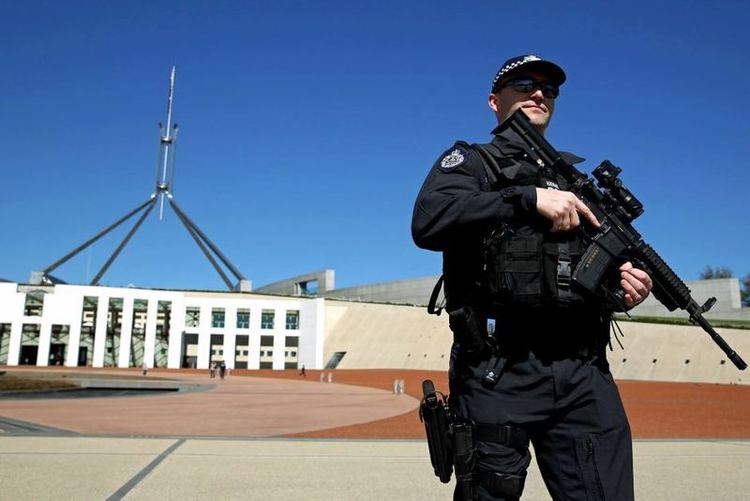
Operationally, capability gaps, organizational culture and training/education divergence severely undermine JIM efforts. For example, some argue the Australian Federal Police (ADF) and Australian Defence Force (ADF) are being asked to operate in environments they are not equipped or trained to attend. Declan Sullivan recognized that Australia’s ability to engage in regional stability operations is hampered by a critical gap in its law enforcement and policing capability. Sullivan asserts that “the AFP is used to normal policing in a stable situation, while the ADF are trained to operate in war-like environments necessitating lethal responses.” However, ADF personnel still lack adequate training across the spectrum of peacekeeping operations, While the AFP is “frequently put at risk” because they lack access to mission-specific equipment. Critically, and an area where the JMRC shines like a beacon, Sullivan laments the ADF and AFP have poor inter-agency cooperation due to lack of joint training, separate leadership and command structures and different approaches to operating environments and engagement with local populations.[16] Additionally, peacekeeping in the region continues to be conducted by raising forces on an ad hoc basis, with no dedicated rapid response teams or best practices doctrines. Subsequently, missions are too costly, more prolonged, and less effective. To mitigate these types of problems in the future, some suggest that the U.S. “should consider expanding its catalog of peacetime maritime operations … To better aid its allies and partners”.[17] Conducting these ‘rehearsals’ develop shared understanding and help to synchronize operations. For example, simulated-enabled supported training events (SIMEX) tests the command group’s ability to adjust to changes in real-time which in-turn enhances forecasting skills.
Indo-Pacific Interoperability
Interoperability between partners in the Indo-Pacific has increased despite onerous institutional, geographical, cultural and financial ballast. Although direct comparisons between the Atlantic alliance and Indo-Pacific bilateral/multilateral security-oriented engagement are desultory, on a conceptual level, lessons learned over almost 70 years of NATO mean that similar efforts are being made to improve interoperability.[18] The former Commander of U.S. PACOM emphasized that “[W]ith allies and partners, the United States is committed to enhancing stability in the region by promoting security cooperation, encouraging peaceful development, responding to contingencies, deterring aggression, and, when necessary, fighting to win. This approach is based on partnership, presence, and military readiness.”[19] In May 2017, the Pentagon endorsed the Asia Pacific Stability Initiative (ASPI), a plan to invest US$ 7.5 billion between 2018-2022 to realign and reinforce U.S. presence in the region through improvements to operationally relevant infrastructure, additional exercises, pre-positioning of equipment” and an overall increase in “capacity-building efforts with our allies and partners.”[20] Would a JMRC facilitate and expedite the identification of “interoperability gaps that impede their ability to synchronize actions” and ensure funding is directed where it’s most needed?[21] Moreover, would a JMTC and associated JMRC help to centralize and align these and other emerging regional inputs to ensure that the whole ads-value far beyond the sum of its parts, thus generating the sought-after regional unity of effort?
While not a new strategy for the U.S., since 9/11, the powerful U.S. foreign policy apparatus has worked hard to build the capacity of foreign partners to address security threats—for example, by training and equipping foreign security forces. A JMRC would improve interoperability by supporting two of the three distinct lines of effort outlined in the 2018NDS, firstly, rebuilding military readiness as we build a more lethal Joint Force and secondly, strengthening alliances as we attract new partners.”[22] Fundamentally, as states such as the U.S. applies resources and shares responsibilities toward common defense, the security cooperation burden for that state is lessened. This, in turn, enables the state to focus resources elsewhere. As a result, building partner-capacity to defend themselves or increases military readiness. Quite simply, if you want your regional security partners to do more ‘heavy lifting,’ you need to improve their physical capabilities.
In the Indo-Pacific, the U.S. has applied these lessons and committed to building healthy, stable, reliable, and continuous military-to-military relations.[23] To facilitate the process, the U.S. maintains a significant military presence in the region with 60,000 troops deployed across Japan, South Korea and Guam and the DoD pursues three maritime-oriented objectives in the Indo-Pacific region: to safeguard the freedom of the seas, deter conflict and coercion, and promote adherence to the rules-based global order,” however these broad goals would surely align, and thus be supported by most of the states within the region.[24] Sayers emphasized that “names matter,” and send an important signal to a region.[25] On the 4th of May 2018, House Armed Services Committee proposed renaming U.S. Pacific Command (USPACOM) as the Indo-Pacific Command to align it with adjustments made to the 2019 National Defence Authorization Act (NDAA) which changed from the Asia-Pacific Maritime Security Initiative and adopted the Indo-Pacific Maritime Security Initiative nomenclature.[26] Coincidentally, on the same day, the DoD announced that “it has officially offered to host the proposed NATO Joint Force Command for the Atlantic at its naval facilities in Norfolk, Virginia. These two actions demonstrate the U.S. determination to meet the challenges in today’s security environment by strengthening its deterrence and defense posture, and its ability to project stability beyond its borders” and to successfully conduct full spectrum JIM operations across the Atlantic, Pacific and Indian oceans.[27]
This is not unexpected, for the last decade, successive U.S. National Defense Strategy’s (NDS & QDR) have emphasized that U.S. “economic and security interests are inextricably linked to developments in the arc extending from the Western Pacific and East Asia into the Indian Ocean region and South Asia.”[28] The U.S. would protect those interests by maintaining existing alliances, as well as expanding “our networks of cooperation with emerging partners to ensure collective capability and capacity for securing common interests.”[29] Although regional status and capabilities may vary, this statement of U.S. strategic intent mirrors the sentiment of most Indo-Pacific states. The Lowy Institute’s 2018 Asia Power Index illustrates that Indo-Pacific nations are developing their own defense networks which facilitate JIM exercises without U.S. guidance of participation. For example, the Power Index reveals that Singapore had the 5th deepest defense network in the region and conducted “253 joint military training exercises with non-allied Index countries since 2012.”[30]
The Indo-Pacific has an abundance of regionally-focused security-oriented institutions, formal, informal, annual and crisis-specific ad-hoc meetings which aim to generate open dialogue and also serve as a foundation for an effective regional security architecture. This author has previously written on the trust and confidence-building capacity of these mechanisms,[31] however a brief overview of ASEAN-based institutions could identify the ASEAN Defense Ministers Meeting Plus (ADMM-Plus), ASEAN Regional Forum (ARF), and the Expanded ASEAN Maritime Forum (EAMF), as well as through wider forums like the Western Pacific Naval Symposium (WPNS) and Indian Ocean Naval Symposium (IONS). At the 2017 AUSMIN meeting, “Australia and U.S. representatives decided to expand defense and security cooperation to further strengthen the interoperability of our armed forces.”[32] Similarly, Australia’s Minister for Defence Marise Payne declared in March 2018 that “our respective Defence Forces must be able to work together as effectively and efficiently as possible. We will continue to maximize interoperability through aligning our strategic planning, capability development, logistics, communications, cybersecurity, and personnel practices, as well as continued exchanges and bilateral and multilateral exercises.”[33]
More importantly, dialogue through these and other venues have generated bilateral and multilateral defense and security-oriented pacts, treatiesand alliances. Therefore, it’s critical that establishing a JMTC/RC augments pre-existing (and functioning) engagement. Examples of current bilateral efforts include the bilateral Force Posture Agreement (U.S. & Australia), the Enhanced Defense Cooperation Agreement (U.S. & Philippines), the Department will be able to increase our routine and persistent rotational presence in Southeast Asia for expanded training with regional partners. The ADF is proactively engaging in a range of joint military exercises, such as Exercise Balikatan 18, designed to hone their interoperability skills in fighting terrorism,
including chemical attack, and disaster response.”[34] Balikatan 18, and other multilateral military exercises which focus on mutual defense as well as humanitarian assistance and disaster relief (HADR), “provide a valuable opportunity for participating nations to prepare for real-world challenges” according to ADF Chief of Joint Operations, Vice Admiral David Johnston.[35] The Five Powers Defence Agreement (FPDA) involving the U.S., Australia the U.K., Malaysia and Singapore; ANZUS, involving U.S., Australia and New Zealand. The Shanghai Cooperation Organisation (SCO), steered predominately by China and Russia, could also be included as an example of formal multilateral security-oriented engagement.
While capability gaps persist, the complexity of the current Indo-Pacific threat environment means that regional states are sought after and valuable partners for powerful states. Examining the top six nations in the Lowy Institutes Asian Power Index reveals the breadth, depth and analogous nature of the regions security-oriented networks.[36] It is now commonly recognized that “Alliances are force multipliers: through multinational cooperation and coordination, the sum of our actions is always greater than if we act alone … And we will continue to mutually benefit from the collective security provided by strong alliances.”[37]
Establishing a JMRC: Challenges and Opportunities
Impediment number 1 to establishing an Indo-Pacific JMRC is that ASEAN is not NATO. Scholars have previously addressed the question of “why is there no NATO in Asia,” analyzing the topic through a realist or constructivist theoretical lens.[38] Some conclude that throughout the mid-to-late 20th century, a vast disparity in “power differentials between the U.S. and its Asian allies” meant that creating a regional security organization was a non-starter because “Asian states had little to offer either individually or collectively to such a security grouping.”[39] Conversely, John Mearsheimer asserted, in his seminal pre-9/11 analysis, that “[T]here is already substantial evidence” to predict “that countries like India, Japan … Singapore, South Korea, and Vietnam are worried about China’s ascendancy and are looking for ways to contain it. In the end, they will join an American led balancing coalition to check China’s rise…”[40]
Nevertheless, numerous intra-regional (local, national, and regional) reasons remain why a JMRC would not be established in the first place, let alone given the opportunity to improve interoperability between partners in the Indo-pacific. Some reasons are unique to policy-makers and personnel involved in JIM operations. For example, even if a common doctrinal framework was evident, and states accurately audited and allocated available equipment and personnel, the ability to generate a shared understanding of mission, intent, and a desired end state may still be undermined by cultural differences or language barriers. Some assert that multilateral security structures are built on a firm foundation “of collective identity, in addition to shared interests.”[41] Others have highlighted “insufficient solidarity among diverse regional partners” as an explanation for the lack of a NATO-like institution, as well as “fear of alienating China, and the perceived advantages of bilateral and ad-hoc security arrangements.”[42] Moreover, fundamental institutional tenets, such as the ‘ASEAN way’ which sanctifies the principle of national sovereignty and consensus-oriented decision-making can thwart coordinated multilateral responses to intra-regional crises.[43] While it’s a noteworthy principle in theory, generating unanimity for an initiative to proceed in practice remains problematic.
Furthermore, even if unanimity can be reached at a policy level through diplomacy, delivering strategic objectives requires inter-agency coordination, and a rush to act can be just as harmful as inaction. For example, the rapid increase post-9/11 capacity-building efforts have led to questions about whether these agencies are adequately coordinating. Duplication can often occur between the Department of Defense security cooperation programs and Department of State security assistance efforts although both prioritize capacity-building.[44] Interagency organizational cultural differences are magnified in a multinational setting. Therefore, it’s vital for the efficacy of any combined initiative/operation that domestic efforts are coordinated and rehearsed. Professionalism and integrity begin at home.
Policy-makers are shackled to the core precept of the sovereign state – national interest. Gen. Tommy Franks concluded that “[I]t doesn’t make any difference what size or kind of contribution a nation gives. The first rule of statecraft is that every nation on this planet will do what it perceives to be in its own national interests.”[45] Moreover, policy-maker imposed caveats can have a detrimental impact on interoperability, as a coalition partner must adhere to a national caveat (or other restriction). For example, a commander might find himself in command of a force that has multiple (sometimes restrictive) sets of restrictive rules of engagement (ROE).[46] Not every partner approaches ROEs with the same mindset as states such as the U.S, Australia, Canada and the UK which have been engaged in multinational conflicts in the 21st century.[47] While the almost universal guiding principle of ROE dictates that “parties to a conflict must take feasible precautions to reduce the risk of harm to the civilian population and other protected persons and objects.” (DoD Law of War Manual, 2015: 5.2.3), there are two options for security partners when crafting its ROE-restrictive or unrestrictive/relaxed.[48]
Restrictive rules of engagement may also have the unintended consequence of encouraging tactical commanders to develop other courses of action that they can approve at their level. This potentiality raises a disadvantage of restrictive ROE. When the ROE is made more restrictive, the mission does not change—just the execution. A less restrictive ROE empowers the lower level commander with more authority. While they may not have the robust intelligence apparatus of a higher unit, they have greater situational awareness regarding ongoing operations and enemy tactics in their area of operations. Even more complicated, are situations wherein multiple ROE (or restrictions to existing ROE) apply during the same operation whereby “[A] coalition partner must adhere to a national caveat (or other restriction) more restrictive than the published ROE.”[49] For example, during the invasion of Iraq in March 2003, 14 Australian F/A-18 Hornet pilots defied the orders of their American commanding officers. These pilots independently aborted 40 bombing missions at the last minute because they believed that the objects of attack were not valid military targets or that dropping their bombs would result in an alarming number of civilian casualties. None of the pilots were reprimanded because they were following Australian rules of engagement.
The results from such a scenario affect interoperability in both the aforementioned strategic and tactical elements of interoperability. While the tactical impact is overt and immediate, the strategic impact can be subtler, and only becomes evident over time as multinational partners begin to distrust and alienate certain members. This infects the coalition, almost guaranteeing a cycle of malign reciprocity. In this regard, ROEs mirror the impact of the aforementioned national caveats which can undermine the fundamentals of burden-sharing and may negatively affect operational flexibility. When assessing the relative merit (or more importantly the reality) of an Indo-pacific JMTC/RC, one must survey regional states to identify potential national caveats and how they may limit the efficacy of the proposal. Are there inherent Indo-Pacific socially or politically-oriented philosophies such as the ‘ASEAN way’ which could complicate operations? It has been noted that “decision-making structures that foster cohesion and consensus during peacetime hinder wartime operations.”[50] By recognizing the latent limitations of individual partners during the establishment phase, they can be incorporated, providing a more accurate evaluation of the proposal. Moreover, in the absence of an ‘Article 5’-like mutual defense pact, could an Indo-Pacific JMRC establish a ‘pool’ of operationally acquainted forces from which to generate ad-hoc, threat-specific multinational coalitions?
In real-estate parlance, it’s all about ‘location, location, location,’ and it’s an important consideration for this proposal as well. NATO’s JMTC has its headquarters in the Grafenwoehr Training Area, Germany, and is centrally located among key allies and partners.[51] So where could an Indo-Pacific JMTC/RC be established? The U.S. operates three domestic facilities as part its Combat Training Centers (CTCs) structure; the Joint Readiness Training Center, Fort Polk, Louisiana, the National Training Center, Fort Irwin, California, the U.S. Army Combined Arms Center Mission Command Training Program, Fort Leavenworth, Kansas. These sites, while established, are peripheral to the theatre and a more centrally located site would expedite access in emergency (such as HADR) situations and substantially reduce costs. Identifying a suitable centrally located site would be a challenge. U.S. Pacific Command (USPACOM) Joint Military Training facilities on Guam and the Commonwealth of the Northern Marian Islands would address the location problem, but access to land and leasing agreements may limit expansion.[52]
NATO’s JMTC covers an area of 56 km² acres with 51.6 km² dedicated specifically to training.[53] Bradshaw Field Training Area in the northwest of Northern Territory is a possible site. In comparison to Grafenwoehr, Bradshaw Field is an 8,700 km² expansive tract of land.[54] Bradshaw Field is a component of the Australian Government’s Joint Combined Training Capability (JCTC) which combines multiple facilities including Bradshaw Field and Delamere Air Weapons Range in the Northern Territory, and the Shoalwater Bay Training Area in Queensland.[55] The Joint Standing Committee on Foreign Affairs, Defence and Trade introduced its JCTC concept in 2004 envisioning facilities which would “function as a training system that links training management systems, training areas, simulations, headquarters and units.”[56] Other facilities include the HMAS Stirling Naval Base in Perth, Australia and Command Logistics-Western Pacific in Singapore.[57] Sayers recommended establishing a Joint Maritime Task Force Pacific (JMTF-P) and Naval Force Posture Initiative utilizing upgraded facilities at HMAS Stirling Naval Base and Command Logistics Western Pacific in Singapore. Similar to the JMRC/TC proposal, Sayers models the JMTF-P off the Standing Naval Forces Atlantic construct that NATO operated in the 1970s and 1980s, and suggests that C2 could be done at sea or ashore. For the latter, the JMTC would serve as an ideal venue.
Interestingly, around the same time that President Barack Obama announced an intention to “rebalance” U.S. time, energy, and resources to the Asia-Pacific in 2012, NATO began to look for ways to engage with regional partners beyond the ongoing ISAF framework.[58] Since Obama’s announcement and parallel NATO outreach, rhetoric has been consistent while investment and engagement have ebbed and flowed. However, some Indo-Pacific initiatives have been particularly bold and politically challenging. For example, one regional security pact which seemed to have run aground was refloated, buoyed by regional political leadership dynamics. In November 2017, ‘the Quad,’ a quadrilateral cooperation framework involving, Australia, Japan, the U.S. and India reappeared on the horizon.[59] The scope of this four-nation partnership extends beyond naval issues and regional security to embody a zone of shared values (implicitly excluding China) and a source of infrastructure development.”[60] The ‘Quad’s’ revival has sparked discussion about how these partners might operationalize their cooperation going forward. Sayers suggests existing exercises such as Malabar, RIMPAC, Talisman Sabre, Cope North, exercise Bersama Shield (Malaysia, Singapore, New Zealand and the UK) and RedFlag would all provide opportunities to “quickly scaling-up Quad participation.”[61] A recent multinational commission report recommended that India and the U.S. build stronger Quadrilateral maritime defense by inviting Australia to participate in the Malabar naval exercises as well as “inviting other countries that share maritime interests in this cooperative.”[62]
Finally, for some regional partners, such as the U.S., Australia and Canada, the JMRC would facilitate a favorable balance between operations in Europe, the Middle East, Africa, South Asia and the Western Hemisphere. It would have an immediate tangible operational effect by defending allies from military aggression and bolstering partners against coercion, as well as addressing burden sharing responsibilities within a common defense framework/policy. Although some claim that “[P]assive presence has proved inadequate,” it’s argued here that over time, the JMRC may deter, dissuade, prevent adversaries, state and non-state actors from engaging in aggressive behavior towards regional partners.[63]
Conclusion
This article advocates for an Indo-Pacific JMTC/RC to enhance security-oriented interoperability. It recognizes there’s are many components to a regional JMTC/RC and issues related to the Indo-Pacific’s complexity will challenge attempts to align them. However, what is clear is the that ‘new normal’ of joint operations has been facilitated by new legislation and institutional re-structuring across most Western militaries and to varying levels throughout the Indo-Pacific region. The broad acceptance of the joint concept has undergirded the creation and maintenance of the contemporary multinational security-oriented coalitions, creating a situation in which joint military operations have become the norm rather than the exception. Moreover, there’s the ongoing integration of non-military agencies into ‘conventional’ missions such as counterinsurgency and stability operations, as well as the evolving military role in counterterrorism (which was traditionally the realm of law enforcement) and non-combat related efforts (so-called military operations other than war, such as HADR). Corralling these diverse entities into a unified force to progress a state or states security objectives is contingent upon clear lines of communication. That includes the gathering and disseminating of information (as well as Intelligence), identifying national interests and caveats, mission objectives and a commander’s intent. All relevant information could be funneled through a JMTC/RC. The facility would serve as a regional training, education, leadership and innovation hub, enhancing interoperability for present and future JIM multi-domain missions.
Patrick Blannin, Ph.D., is a recent teaching fellow and research assistant at Bond University, Australia. Dr. Blannin’s doctoral research focused on the militarization of foreign policy, and the requisite role and scope of defense diplomacy in contemporary counterinsurgency and counterterrorism. He has published a research monograph titled Defence Diplomacy in the Long War (Brill) as well as journal articles on topics related to transnational terrorism (organisations, funding sources and comprehensive countermeasures).
NOTES:
[1] Source: U.S. PACOM AOR; The USPACOM AOR covers more of the globe of any of the other five geographic combatant commands and shares borders with all of them. The commander of US Pacific Command reports to the U.S. president through the Secretary of Defense (SECDEF) and is supported by multiple component and sub-unified commands including: U.S. Forces Korea, U.S. Forces Japan, U.S. Special Operations Command Pacific, U.S. Pacific Fleet, U.S. Marine Forces Pacific, U.S. Pacific Air Forces and U.S. Army Pacific.
[2] The Department of Defense Dictionary of Military and Associated Terms (Joint Publication 1-02) defines security cooperation as “All DOD interactions with foreign defense establishments to build defense relationships that promote specific U.S. security interests, develop allied and friendly military capabilities for self-defense and multinational operations, and provide U.S. forces with peacetime and contingency access to a host nation,” Joint Publication 1-02 Department of Defense Dictionary of Military and Associated Terms, (Washington, DC: U.S.: Joint Chiefs of Staff, December 15, 2013), p. 235.
[3] Joint Publication 1-02 Department of Defense Dictionary of Military and Associated Terms, p. 146.
[4] Indo-Pacific is a nascent term which reflects the fact that “the geopolitical connect between the Indian Ocean and the western Pacific had become increasingly palpable, in both the geo-economic and security dimensions” (Kuo 2018). See: Kuo, M. A. ‘The Origin of ‘Indo-Pacific’ as Geopolitical Construct’, The Diplomat, (January 25, 2018); Chong, A & Wu Shang-su ‘Indo-Pacific’ vs ‘Asia-Pacific’: Contending Visions?’, RSIS Commentary, No. 034/2018, (February 28, 2018); Adducul, L. A. M. ‘The Indo-Pacific Construct in Australia’s White Papers: Reflections for ASEAN-Australia Future Strategic Partnership’, CIRSS Commentaries, Vol V, no. 6, (March 2018); This article will use the term Indo-Pacific for consistency and to reflect the official rhetoric of the day.
[5] Data drawn from: Harris, H. United States Pacific Command (USPACOM) Guidance, (August 12, 2016); and the 2018 Lowy Institute Asia Power Index
[6] AAP-6 defines transformation as “[A] continuous and proactive process of developing and integrating innovative concepts, doctrine and capabilities to improve the effectiveness and interoperability of military forces” (p. 2-T-8), NATO Allied Administrative Publication (AAP)-6, NATO Glossary of Terms and Definitions, (2014), pp. 1-443; See also: Weeks, S. ‘Change and its Reflection in National Security Strategy and Force Structure’, Rolfe, J (ed.), The Asia-Pacific: A Region in Transition, (Honolulu, HI: Asia-Pacific Center for Security Studies, 2004), pp. 24-32.
[7] AAP-6, (2014), p.2-I-8; The publication has an associated definition for Force/Military Interoperability: “[T]he ability of the forces of two or more nations to train, exercise and operate effectively together in the execution of assigned missions and tasks,” p. 2-F-5.
[8] ‘Interoperability: Connecting NATO Forces’, NATO, (June 6, 2018).
[9] Middleton, B. M. ‘Avoiding the False Start on the Game-Winning Drive’, p. 7, in United States Army Combined Arms Center. ‘Decisive Action Training Environment at the Joint Multinational Readiness Center, (Vol. III): Multinational Interoperability’, CALL Newsletter, No. 16-29, (Ft. Leavenworth, KS: Center for Army Lessons Learned, 2016), pp. 1-89.
[10] Derleth, J. Enhancing Interoperability: The Foundations for Effective NATO Operations’, in Decisive Action Training Environment at the Joint Multinational Readiness Center, (Vol. III): Multinational Interoperability, p. 1.
[11] Derleth, J. Op.cit, p. 1; Again, looking at NATO as the model to be replicated, it addresses challenges to interoperability trough three separate yet interrelated components-technical, procedural, and human.
[12] Middleton asserts that “without a single, clear, and all-encompassing doctrinal foundation, constant mission success” (which is the purpose of establishing the Indo-Pac JMRC) “will be elusive,” Op.cit, p. 7
[13] For example, the New Zealand Government’s 2018 Strategic Defence Policy Statement reflect positively on its “strong cultural and historical ties to South Pacific countries, and an enduring interest in the security of prosperity of the region” (p. 14).
[14] Derleth, J. Op.cit, p. 4.
[15] A recent tweet from the Australian Command & Staff College illustrates this point perfectly.
[16] Sullivan, D. Australian Gendarmes: Bridging Australia’s South Pacific Capability Gap’, The Regionalist, No. 4, Institute for Regional Security, (March 2018); Sullivan highlights one such “low intensity scenarios – Timor-Leste in 2006, when ADF forces were over-equipped with lethal weapons unsuitable for riot control.” While in the same mission, AFP personnel were put at risk because they “lacked long-range, non-lethal weapons such bean-bag guns.”
[17] Martinson, R. D. & Erickson, A. ‘Re-Orienting American Seapower for the China Challenge’, War on the Rocks, (May 10, 2018).
[18] Jim Molan reveals a truism of multinational security operations regardless of geography when he states, “[W]hen all the military forces that you want to use to run your war come from one country it is a difficult proposition to make anything work. But when they come from 30 different countries, each with their own agenda and their own fears, it is a very complicated business indeed, (p. 187). Molan, J. ‘An Art in Itself: The Theory and Conduct of Small Wars and Insurgencies’, in Dennis, P. & Grey, J. (eds.), The Chief of Army Military History Conference Papers, (2006), pp. 167-221.
[19] U.S. PACOM AOR; See also: Harris, H. United States Pacific Command (USPACOM) Guidance, (August 12, 2016).
[20] McCain, J. Opening Statement by SASC Chairman John McCain at Hearing on Posture of U.S. Command & U.S. Forces Korea, mccain.senate.gov, (April 27, 2017); Senator McCain’s speech was the culmination of a range of proposals floated in the months preceding the committee address in April, for example see Brunnstrom, D. ‘McCain proposes $7.5 billion of new U.S. military funding for Asia-Pacific’, Reuters, (January 24, 2017).
[21] Tomich, D. J. Increasing JIIM Interoperability in the Security Cooperation Environment, (April 2014), pp. 1-27.
[22] The third LoE outlined in the 2018NDS is “reforming the Department’s business practices for greater performance and affordability,” (2018:.5). The NDS prioritises enhancing interoperability with a broad range of security partners. “Enduring coalitions and long-term security partnerships, underpinned by our bedrock alliances and reinforced by our allies’ own webs of security relationships, remain a priority … Interoperability is a priority for operational concepts, modular force elements, communications, information sharing, and equipment … U.S. military equipment sales, accelerating foreign partner modernization and ability to integrate with U.S. forces. We will train to high-end combat missions in our alliance, bilateral, and multinational exercises” (2018: 9).
[23] von Hlatky, S & Trisko Darden, J. ‘Cash or Combat? America’s Asian Alliances during the War in Afghanistan.’ The authors conduct a thorough review of the U.S., Japan and Korean alliance(s); The basis of U.S. Security Sector Assistance Policy and legislation prioritises “strengthening the ability of the United States to help allies and partner nations build their own security capacity, consistent with the principles of good governance and rule of law.” See: Presidential Policy Directive 23, ‘Fact Sheet: U.S. Security Sector Assistance Policy’, The White House Office of the Press Secretary, (April 5, 2013).
[24] Asia-Pacific Maritime Security Strategy: Achieving U.S. National Security Objectives in a Changing Environment, United States Department of Defense, (2015), p. 1.
[25] Sayers, E. ‘15 Big Ideas to Operationalize America’s Indo-Pacific Strategy’, War on the Rocks, (April 6, 2018).
[26] Reform and Rebuild: National Defense Authorization Act for FY2019, (2018), p. 13.
[27] DoD Offers to Host New NATO Command’, Department of Defense Press Operations, Release No. NR-137-18, (May 4, 2018).
[28] U.S. Department of Defense. Sustaining U.S. Global Leadership: Priorities for 21st Century Defense, (January 2012), p. 2; See also: U.S. Department of Defense. Summary of the 2018 National Defense Strategy of the United States of America: Sharpening the American Military’s Competitive Edge, (Washington D.C., 2018), The 2018NDS stresses the U.S. must “Expand Indo-Pacific alliances and partnerships. A free and open Indo-Pacific region provides prosperity and security for all. We will strengthen our alliances and partnerships in the Indo-Pacific to a networked security architecture capable of deterring aggression, maintaining stability, and ensuring free access to common domains. With key countries in the region, we will bring together bilateral and multilateral security relationships to preserve the free and open international system” (2018: 2).
[29] U.S. Department of Defense. Sustaining U.S. Global Leadership: Priorities for 21st Century Defense, (January 2012), p. 2; See also: U.S. Department of Defense. Summary of the 2018 National Defense Strategy of the United States of America: Sharpening the American Military’s Competitive Edge, (Washington D.C., 2018), p. 2
[30] ‘2018 Asia Power Index’, Lowy Institute. It’s interesting to note the different partners across Singapore’s defence, trade and cultural networks.
[31] Blannin, P. ‘The Critical and Enduring Role of Confidence in Preventive Diplomacy’, Small Wars Journal, (March 7, 2018).
[32] Joint Statement AUSMIN 2017, Australian Government Department of Foreign Affairs and Trade, (June 5, 2017).
[33] ‘Australia - New Zealand Joint Statement on Closer Defence Relations’, Australian Department of Defence, (March 9, 2018). The Defence Minister stressed that “Our already close interoperability has continued to grow through important military deployments, as has our coordination on strategic planning, capability development, and intelligence cooperation with our Five Eyes partners” (The U.S., UK, Canada, NZ, & Aust).
[34] Balikatan is Filipino for shoulder-to-shoulder; ‘Philippines, U.S. troops "Balikatan 2018" drills to focus counter-terrorism, chemical attack’, Asia & Pacific Edition, Xinhau, (May 3rd, 2018).
[35] Vice Admiral Johnston quoted in ‘ADF trains with military partners at Exercise Balikatan 2018’, Defence News and Media, Australian Government Department of Defence, (May 8, 2018).
[36] National power is evaluated by measuring 2018 Lowy Institute Asia Power Index
[37] National Security Strategy of the United States of America, (2010), p. 41
[38] Crone, C. ‘Does Hegemony Matter? The Reorganization of the Pacific Political Economy’, World Politics, Vol. 45, no.4, (July 1993), pp. 501-525; Hemmer, C. M. & Katzenstein, P. J. ‘Why is there No NATO in Asia: Collective Identity, Regionalism, and the Origins of Multilateralism,” International Organization, Vol. 56, no.3, (Summer 2002), pp. 575-607; Nam-Kook Kim. ‘European Experience for East Asian Integration: Ideas, National Interests, and the International Circumstance’, Asia Europe Journal, Vol. 7, no. 2, (June 2009), pp. 295-312; Kai He & Huiyun Feng. ‘Why is there no NATO in Asia?’ revisited: Prospect theory, balance of threat, and US alliance strategies’, European Journal of International Relations, (2011), pp. 227-250; Bana, S. ‘Towards an Asia-Pacific Alliance’, ISDA Comment, Institute for Defence Studies and Analysis, (November 26, 2012), Patman, R. NATO Down-under in the Asia-Pacific’, NOTED, (October 31, 2016).
[39] Acharya, A. ‘Why Is There No NATO in Asia?’ The Normative Origins of Asian Multilateralism’, WCFIA Working Paper No. 05-05, (2005), pp. 1-50.
[40] Mearsheimer, J. Great Power Politics in the Twenty-First Century’, in The Tragedy of Great Power Polit
