
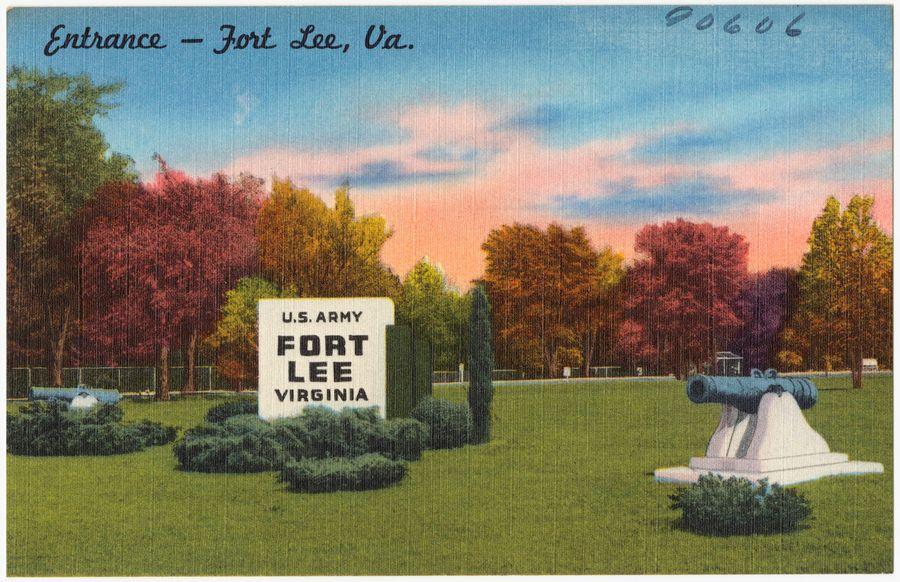
Thoughts on The (Un)Naming Commission
Last updated 08:09 PM EST • Read time: 6m
The congressionally mandated Naming Commission is much in the news. New names are coming to storied U.S. Army posts named for Confederates. Perhaps the first thing to note is the most obvious: this effort was unnecessary. Unlike during the Army’s massive increase of its installations in preparation for war especially in 1917 and the early 1940s, the U.S. military of the 2020s is not in search of names for new stateside bases (except perhaps the U.S. Space Force). Will this initiative increase the U.S. Army’s combat readiness?
The Commission chair’s introductory remarks in the final report deserve repeating: “We were reminded that courage has no boundaries by categories of race, color, [sex], religion, or creed. From privates to generals, we found hundreds of military members who exemplified the core values of the Army.” True enough. In fact, the biographical sketches of numerous valorous military members throughout Army history could have provided the core for a useful book.
Unfortunately, their stories appear to be employed not only for purposes of educating and inspiring, but also for providing the fodder for a politically motivated process. Moreover, those who refrain from jumping on the Commission’s bandwagon may find themselves criticized – albeit unjustly – for supposedly disparaging the record of those whose biographies are contained in the report.
One particularly sobering statement – repeated for each post being renamed – should not go unnoticed:
The Commission recognizes that Department of Defense assets commemorating the Confederacy or an individual who voluntarily served with the Confederacy will continue to be identified after the submission of the Commission plan. The Commission recommends the base rename, remove, or modify any such assets identified in the future [emphasis added].
Don’t miss this. The Commission considers the (politically charged) work it has begun to be ongoing; there’s no end in sight. Should that happen, the reality must be that divisiveness and hard feelings within the Army’s ranks – and reluctance within recruiting circles which has contributed to a near-crisis shortfall of new accessions – will continue to be stoked. An undetermined number of “key influencers” especially in the South will be less likely to encourage family members to “go Army” – and to pursue a combat job. Given the fact that nearly one of every three U.S. combat losses since 2001 hailed from one of the former Confederate States of America – more than four-fifths of whom were white – the Naming Commission’s quest to eliminate Confederate names wherever discovered will most likely prove unhelpful for rebuilding the Army’s manpower. Traditionally, the South has been considerably overrepresented in the armed forces, including the Army.
The Commission’s treatment of those who fought for the South fuels renewed sectional differences, which between 1898 and World War Two were largely rectified by wise policy decisions which once came from Washington. Today’s regressive mindset – shared if not originated by the Congress which directed the renaming initiative – does not bode well for an institution that depends on cohesiveness and mutual trust for effectiveness on the battlefield. Members of Congress who express concern for the near-peer threat of communist China ought not to have voted for this distraction from the Army’s combat readiness created by such a massive, unending renaming campaign.
Far more significant, however, is the matter of staff rides, formal instructional events in which particular roles or aspects of a battle are assigned to individuals for deep reading, later to be briefed to all the participants of the ride at appropriate points as they trek around the battlefield. For more than a century, staff rides have been considered valuable for instructing cadets and military officers, broadening their understanding and appreciation of the timeless elements of battle, including terrain, weather, communications, logistics, morale – and above all, leadership. The U.S. Army’s official staff ride briefing book for the Battle of Chancellorsville (1863) suggests that certain keys to the unlikely victory of R.E. Lee over “Fighting Joe” Hooker’s army – which outnumbered Lee 2 to 1 and was superior in artillery and logistics – may well be “discovered by personal reconnaissance of the actual battlefield. . . . We are convinced that the staff ride is one of the best ways to do this.” For generations, war colleges and other military entities in the United States and overseas have studied Chancellorsville and other key battles from the Civil War, to good effect.
Unfortunately, the fiscal year (FY) 2020 and 2021 national defense authorization acts (NDAA) have jeopardized Chancellorsville and several other staff rides as learning opportunities for the defense department.
Building on the FY20 NDAA (Section 1749) which set the stage for the Naming Commission, the FY21 NDAA (Section 370) stated that “the Secretary of Defense shall implement the plan submitted by the commission . . . and remove all names, symbols, displays, monuments, and paraphernalia that honor or commemorate the Confederate States of America . . . from all assets of the Department of Defense” [emphasis added].
Related to this, the FY20 act stated that a new or existing defense department asset – if named or renamed – must not bear a name referring to “a Confederate battlefield victory.” Clearly, Confederate victories are now toxic.
Without question, the U.S. Army’s staff ride briefing book on the Battle of Chancellorsville constitutes an “asset” or “paraphernalia” – property owned or controlled by the defense department. Since the staff ride asset/paraphernalia whose sole subject is a Confederate battlefield victory seems likely – to some degree, by the nature of the material itself – to “honor or commemorate” the Confederacy, a stricter rather than looser reading of the 2021 defense act argues for the removal of the Chancellorsville briefing book. From now on, staff rides not only at Chancellorsville, but also at First Manassas (1861), Wilson’s Creek (1861, lesser known but highly instructive as I recall from a staff ride there 25 years ago), Ball’s Bluff (1861), Second Manassas (1862), Fredericksburg (1862), and New Market (1864) – all were Confederate victories – may well be viewed as suspect, if not actually deemed prohibited under the law.
In any case, it will take high moral courage for an ambitious Army captain to pursue the action officer’s job for any of those staff rides. Because Pentagon senior leadership views white military members as potential extremists nowadays, why would any officer, especially one who is white, dare to be found anywhere close to a Confederate battlefield victory?
This is irrational. More important, however, is the harm it causes to the Army’s combat readiness. A time-tested method of teaching Soldiers to think deeply about war and their profession – the staff ride – has been jeopardized, if not prohibited altogether with regard to Confederate battlefield victories. The preparation of professional Soldiers for battle – the Army’s raison d’être – has taken a back seat to divisive, partisan politics that interfere with the business of national defense.
Forrest L. Marion, Ph.D., is a retired U.S. Air Force officer and military historian. He is the author of Flight Risk: The Coalition's Air Advisory Mission in Afghanistan, 2005-2015 (Naval Institute Press, 2018), and (forthcoming), Standing Up Space Force: The Road to the Nation's Sixth Armed Service (Naval Institute Press).

A Defense Win for Americans and Israelis in Arkansas
By Bradley Bowman • RealClearDefense
A Path to Success Against Iran
By Michael Schwartz • RealClearDefense
The World Cup Is Over. The Drone Threat Isn’t.
By Mitzi Perdue • RealClearDefense
AI Should Speed Veterans’ Benefits, Not Decide Them
By Rob Schroder • RealClearDefense
Don’t Be Swayed by Tactical Nukes
By Benjamin Giltner • RealClearDefense
Big Surface Combatants are so Hot Right Now
By CDR Salamander
USS Stout Loses Power During Port Visit Due to ‘Engineering Casualty’
By USNI News
Air Force Lessons Learned From Operation Epic Fury
By Tabitha Reeves, National Defense
Marines Need Nine More Amphibious Warships To Carry Out Its Missions
By TWZ
AFRL, ACC Fly XQ-67A Drone To Test Autonomous Teaming
By Airforce Technology