
Beyond Iran and Israel: The Unseen Gulf-Europe Connection
Last updated 07:15 PM EDT • Read time: 6m
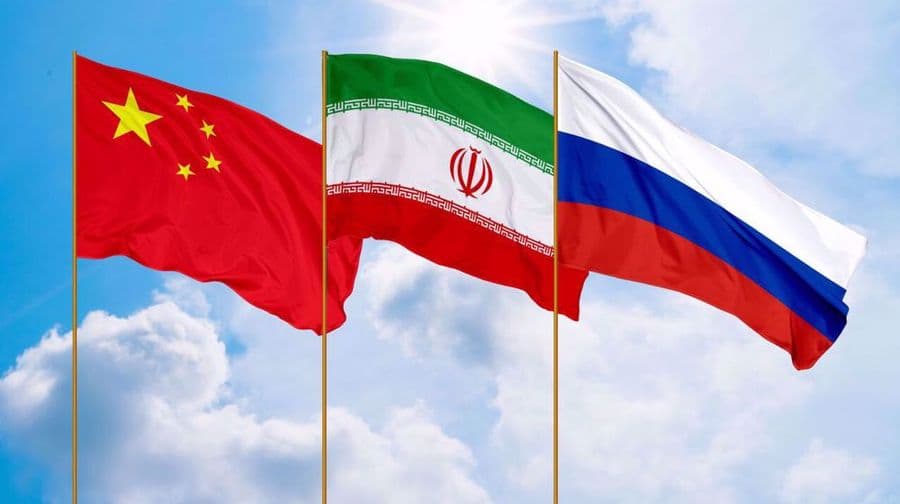
Iran's escalation shows America must bolster ailing Europe to prevail in the global ideological showdown. With Iran now on the brink of war with Israel, the situation could rapidly evolve into a global power struggle. In that case, the involvement of Iran, a close ally of China and Russia, highlights a geopolitical shift, as these nations have formed an ‘Axis of Upheaval’ to overthrow the century of American dominance. In response, America has just reaffirmed its ‘ironclad’ support for Israel. Even Europe, despite its reservations about how Netanyahu wages war, stands behind Israel in confronting the mullahs in Tehran. Therefore as the battle lines are drawn, the Middle East could quickly become the next superpower battlefield. China says it will defend Iranian sovereignty, neither will Russia stand idly by as one of its major drone suppliers buckles under Israeli airstrikes.
This polarization has thus also triggered a diplomatic push to win over regional powers like Saudi Arabia and the UAE. Whatever happens here could shape the course of global confrontations, where the West faces Russia’s advances in Ukraine, seeks to limit its destabilising influence in Africa, and confronts China’s imperial ambitions over Taiwan the South China Sea. Yet, this showdown is more than a struggle for power. Despite what the moral relativists in academia say, this is a battle of values between two global systems: the established liberal order, empowered by globalization, and a rising authoritarian model, characterized by closed economies and centralized power structures.
Globalization, despite its flaws, is one of history’s most transformative forces. Though the recent pandemic exposed dire vulnerabilities in global supply chains, globalization has been instrumental in lifting an estimated 130,000 people out of poverty every day in just 25 years. Contrast this with the death, stagnation and misery spawned from the central control models of the 20th century—models that Moscow and Beijing are dead-set on reviving—and the stakes of this clash become clearer. Having won the last showdown, America is well-positioned to counter this latest evolution of global authoritarianism. Yet, the real challenge lies with its European partners, whose industrial decline has left them dangerously vulnerable to fragmentation under increasing pressure from the East.
In Germany, Europe's economic heartland, industrial output is projected to collapse by 7% this year, driven by the loss of cheap energy and raw materials from Russia after it invaded Ukraine. Thus it is now in its second year of recession. This worrying trend is mirrored in Britain, France and Italy. Without developing a robust industrial base, Europe cannot sustain enough power to counter Russia alone or play a real role in the Middle East without leaning increasingly heavily on U.S. support. In this context, Italy's former PM Draghi, recently said that Europe urgently needs $877 billion in annual investments to revitalize its ailing industries and complete its energy transition project—a sum that the deficit-spending, domestically-focused Americans can scarcely afford.
In this context, an emerging Europe-Gulf axis is emerging as a valuable partnership that America would be wise to foster to create a geopolitical counterweight to the growing Iran-Russia-China axis. The Gulf's value extends beyond its vast energy reserves, though they may prove critical to help diversify Europe’s energy source, currently relying on expensive imports from the U.S. and Norway. The real prize lies in the Gulf’s aggressive foreign investment strategy, seeking to secure their global significance in the looming post-oil future. Their long-term investment ethos may well prove a vital lifeline for Europe’s struggling economies. This budding Europe-Gulf partnership is already bearing fruit. The UAE’s oil giant, ADNOC, has recently closed a $16 billion deal to acquire Covestro, a German chemical legend that plays a pivotal role in Germany’s economy, contributing around 5% to its yearly domestic output. With ADNOC planning to invest $150 billion by 2027, this could be just the beginning of a broader partnership in which Gulf capital helps rejuvenate Europe’s ailing factories.
Embarrassing scandals like Qatargate may have cooled Europe’s enthusiasm for Gulf engagement, but they shouldn't overshadow the potential of partners like the UAE. ADNOC’s ambition of achieving net-zero by 2045 aligns with Europe’s climate agenda that favours an enduring relationship. While challenges will arise, they shouldn't deter Europe from strengthening ties with one of the world’s fastest-growing regions.
For the U.S., fostering a Europe-Gulf alliance could become strategically vital. Strengthening Europe’s economy frees America to focus on the more pressing conflicts in the Indo-Pacific and Middle East. By helping Europe restore its industrial strength, the U.S. can enable its ally to resist Russia’s aggression more independently, reducing reliance on the American security umbrella that shielded Europe for over 75 years. And as the risk of an Israel-Iran conflict escalates, the need to cement partnerships with Gulf allies to counter Iranian-Russian-Chinese militarism is crucial. The Cold War taught us that superpower struggles can take decades to resolve. Europe must be strategically reinforced for the long haul if it is to remain a strong and relevant ally to the U.S.
As for the members of the ‘Axis of Upheaval’, their positioning as the leaders holding America’s imperial misadventures accountable omits how their models of centralized control and exploitation in the Global South reflect the very abuses they accuse the West of. China's abuse of African labour and predatory lending practices often deepen poverty in struggling nations, reveal the hypocrisy of their self-avowed benevolence. The same can be said for Russia’s African neo-imperialism.
While nobody wants an all-out war between Iran and Israel, ignoring the growing Iran-Russia-China axis risks dismantling the liberal world order that has fuelled unprecedented social, technological, and economic progress. The reassertion of globalization and of its demonstrated promise of greater liberalism, freedom, democracy and prosperity, as shown in the examples of heightened European-Gulf and Middle Eastern integration can therefore serve to counter not only the threat of a wider regional war in the Middle East but also reduce the salience of the threat posed by this axis.
Dr. Stephen J. Blank is a Senior Fellow at Foreign Policy Research Institute. He is an internationally renowned expert on Russian and Chinese defense policy. He is the author of "Light from the East: Russia's Quest for Great Power Status in Asia" (Taylor & Francis, 2023). He was a Professor of National Security Studies at the Strategic Studies Institute of the U.S. Army War College.

In Pursuit of Nuclear Abolition
By Peter Huessy • RealClearDefense
Innovation Alone Won’t Prepare the U.S. for the Future Battlefield
By Joshua Segal • RealClearDefense
The sUAS Tactical Trifecta
By Bryan T. Woody • RealClearDefense
The Revolutionary War: When Strategic Options Share the Same Weakness
By Henry Yep • RealClearDefense
The Houthis Are Testing the Limits of Collective Defense
By Saima Afzal • RealClearDefense

Who Shoots Down the Drone Over the Shipyard?
By John Ferrari & Dillon Prochnicki • RealClearDefense
Northrop Grumman Breaks Out the Big Guns at AUSA
By Daniel Terrill, Defense News
Army Pursuing Diverse Array of New Anti-Air Interceptors
By Trevithick, The WarZoneWho Shoots Down the Drone Over the Shipyard?
By John Ferrari & Dillon Prochnicki, RCD
F-35C Lands for the First Time on a Ford-Class Aircraft Carrier
By The Aviationist