
USAID and the Erosion of U.S. Soft Power
Last updated 06:27 AM EDT • Read time: 11m
Foreign aid is a critical tool of national security and foreign policy, both well known and often overlooked. It comprises only about 1% of the U.S. budget, but punches well above its weight in terms of strategic impact. From wars to natural disasters, the U.S. has used foreign aid to project power, complement diplomatic efforts, and enhance the country’s image in vulnerable regions. Foreign aid offers a dual benefit: It can help shape foreign perception in alignment with U.S. interests while also addressing critical humanitarian needs regardless of ideology around the world.
The current administration has prioritized a coherent national security strategy. And foreign aid must be a part of that strategy. Dismantling USAID, especially during a period of heightened global instability, could set U.S. foreign policy back decades. Further, such an effort to shutter the organization encounters institutional questions with regard to the president’s authority and the role of Congress. Closing USAID as part of a broader case of executive branch overreach projects further ambiguity about the state of U.S. policy.
The Strategic Importance of Foreign Aid
Foreign aid has become an essential complement to national security, foreign policy, and broader governmental objectives. In many regions, the contest for influence mirrors a battlefield, where development aid, economic investment, and humanitarian assistance serve as powerful countermeasures against adversarial encroachment. Unlike hard power, which relies on direct coercion and force, soft power cultivates long-term stability, economic growth, and political alignment—all of which reinforce U.S. strategic interests without direct confrontation.
The U.S. has taken a broad view of relief and aid, reflecting the importance of human safety and security over ideological consistency. This is reflected in the US delivering significant amounts of rice and food to North Korea from the mid 1990s-2000s, humanitarian relief after the 2003 earthquake in Bam, Iran, or even food products to Syrians throughout the most recent civil war. Of course, there are calculated geopolitical benefits to the U.S. in wielding aid as a form of “Disaster Diplomacy,” but the effectiveness of aid in this manner requires a clear link to humanitarianism.
Foreign aid enables the U.S. to provide tangible non-military solutions where recipient governments lack capacity, and where the military is poorly suited to operate, thereby preventing adversaries from filling the void. The absence of engagement may result in power vacuums that competitors such as China and Russia will exploit through their own versions of foreign aid, coercive diplomacy, and disinformation campaigns. By positioning aid strategically and with intent, the U.S. will compete in these vulnerable regions, securing footholds that translate into leverage, economic partnerships, and security cooperation.
China, for instance, employs its own version of foreign aid through the Belt and Road Initiative (BRI) to project power and expand its geopolitical reach. The U.S. has sought to counter the influence of BRI in Africa by strengthening healthcare systems, pandemic response, and food security. Initiatives such as PEPFAR (President’s Emergency Plan for AIDS Relief) have saved millions of lives and positioned the U.S. as a trusted partner in public health. Ultimately, through an approach to foreign aid that goes beyond the transactional aspects of China’s, the U.S. seeks to empower recipient states instead of trapping them in exploitative financial agreements.
Additionally, U.S. foreign aid has been instrumental in supporting Ukraine’s reconstruction, humanitarian relief, and economic recovery following the 2022 invasion by Russia. While military assistance is critical, it is not unitary, and the parallel investment in rebuilding infrastructure, governance, and civil society ensures Ukraine’s long-term resilience against Russian aggression, pushing back against future influence or government penetration. Without U.S. aid, Russia could extend its unchecked hybrid warfare tactics. By maintaining a strong aid presence, the U.S. secures its influence and prevents Russia from reasserting dominance over Eastern Europe.
Foreign aid is more than just goodwill or the spoilage of U.S. tax dollars - it is a force multiplier that neatly aligns with diplomatic, economic, and security interests. Foreign aid plays a direct role in: preventing conflicts before they escalate, building alliances and strengthening regional partnerships, expanding economic opportunities, and undermining foreign influence.
The U.S. needs foreign aid to counter its adversaries soft power efforts, particularly when a hard power response would only diminish the perception of the U.S. and bolster that of its adversaries, as in the cases of Russia and China, above. USAID managed around $40 billion in foreign aid in 2023 - only a portion of the $64.7 billion in total foreign aid programs administered across the U.S. government. Given the current political climate, the agency has begun to fall victim to the incumbent administration’s cost-cutting efforts. While concerns over deficits, as well as instances of fraud, waste, and abuse, make scrutiny generally understandable, the effort to scale back USAID is ultimately misdirected, and the cost to U.S. security will prove to be far greater than the meager cost savings achieved.
USAID plays a vital role in distributing aid across 130 countries, allowing the U.S. to project power, build alliances, and advance the core values associated with liberal democracies, including basic human rights. However, it has become the target of severe criticism, often without factual basis or evidence. Dismantling USAID has been justified on rhetoric, opposed to legal principles, on the basis of “fraud” and the claim that the Agency is run by “radical lunatics.” It has even been said that USAID is a "criminal organization” and that it’s “time for it to die.” Of course, such allegations run directly counter to the fact that USAID must adhere to congressional legislation when disbursing funds, to ensure strict oversight, accountability, and compliance. As part of this process, USAID officers undergo rigorous training and often receive diplomatic status similar to Foreign Service Officers. These controls are designed to provide for the methodical distribution of aid in a manner that is strategically aligned with U.S. foreign policy objectives.
Limitations on the Executive Branch
The question of whether the President or Executive Branch can dissolve USAID without congressional approval is a complex legal issue. While the Executive has broad authority over foreign policy and internal agency restructuring, the concept for USAID was established by Congress through the Foreign Assistance Act of 1961 (FAA), to counter Soviet influence abroad. The FAA detailed a structure for allocating foreign aid, and President Kennedy then established USAID as the vehicle for its deployment. However, subsequent legislation under the Foreign Affairs Reform and Restructuring Act of 1998, began referring to USAID by name, which includes authorizing statutes. Related legislation permitted the President to abolish or reorganize USAID (or shift functions into the State Department), but only with a detailed plan and in consultation with Congress. Therefore, any attempt to eliminate it outright or reallocate its functions should require legislative approval and, at a minimum, adequate notice. Legal experts remain divided on the issue, with some arguing that an Executive Order could initiate the process, while others contend that congressional opposition, funding controls and appropriations, and statutory mandates make such a move legally untenable under a sweeping Executive action.
The USAID Administrator and several deputies are Presidentially appointed also require the advice and confirmation of the Senate. Because the position requires Senate confirmation, any effort to dissolve or restructure a codified role or agency would likely run afoul of several congressional authorizations and subvert at least some aspects of legislative process; should Congress elect to raise the issue. USAID already reports to the Secretary of State. And while the State Department could, in theory, absorb USAID’s responsibilities, doing so would necessitate a restructuring process that aligns with statutory frameworks governing foreign aid distribution, oversight mechanisms, and diplomatic engagement.
Even if the Executive Branch has the power to close or restructure USAID, questions remain about whether Elon Musk and his jokingly named Department of Government Efficiency (DOGE) have the necessary legal mandates or even security clearances to do so. The White House created DOGE by simply renaming the U.S. Digital Service, both entities having vastly different mission sets. The U.S. Digital Service, formerly housed within the Office of Management and Budget, had duly appropriated funds by Congress. DOGE has now been allocated $8M of funds Congress appropriated to the Digital Service. Musk has been appointed a “Special Government Employee,” which may skirt certain public financial disclosures, but he would still be subject to confidential filings and conflict of interest recusals - none of which have yet been confirmed. Musk’s companies receive billions of dollars from federal agencies, posing significant ethical concerns.
While there may be pathways for the State Department to assume USAID’s functions, such a transition would present significant challenges. USAID operates with a distinct mission, separate funding streams, and specialized personnel trained in development and humanitarian assistance. Integrating its programs into the State Department could disrupt aid effectiveness, bureaucratic efficiency, and the ability to rapidly respond to crises. Additionally, foreign governments and NGOs accustomed to working with USAID may be reluctant to adapt to a new framework that lacks the agency’s established expertise and operational independence. With the State Department now assuming control of USAID’s remaining programs after widespread cuts, a federal judge in the District of Columbia ruled that the administration lacked the authority to withhold or terminate foreign aid funding already allocated by Congress. The court emphasized that the power to appropriate and direct foreign aid sits with the legislative branch, with the Supreme Court affirming this decision. This ruling reinforces the constitutional principle of congressional control over federal spending, curbing executive overreach and preserving the integrity of foreign aid as a strategic tool of U.S. foreign policy.
Despite the court’s intervention, the State Department is wholly unprepared for the sudden influx of responsibility and will surely face logistical and operational challenges in restoring aid flows. Many programs that have been hastily terminated, leave vulnerable populations without essential support, creating vacuums that adversaries like China and Russia are already exploiting. The judicial rebuke highlights the dangers of circumventing established processes, as the U.S. risks not only legal instability but also a loss of credibility with international partners. Ultimately, the incident underscores the need for durable, congressionally anchored foreign aid policies that withstand political turbulence and affirm America’s commitment to global leadership.
The Stakes of Retreating
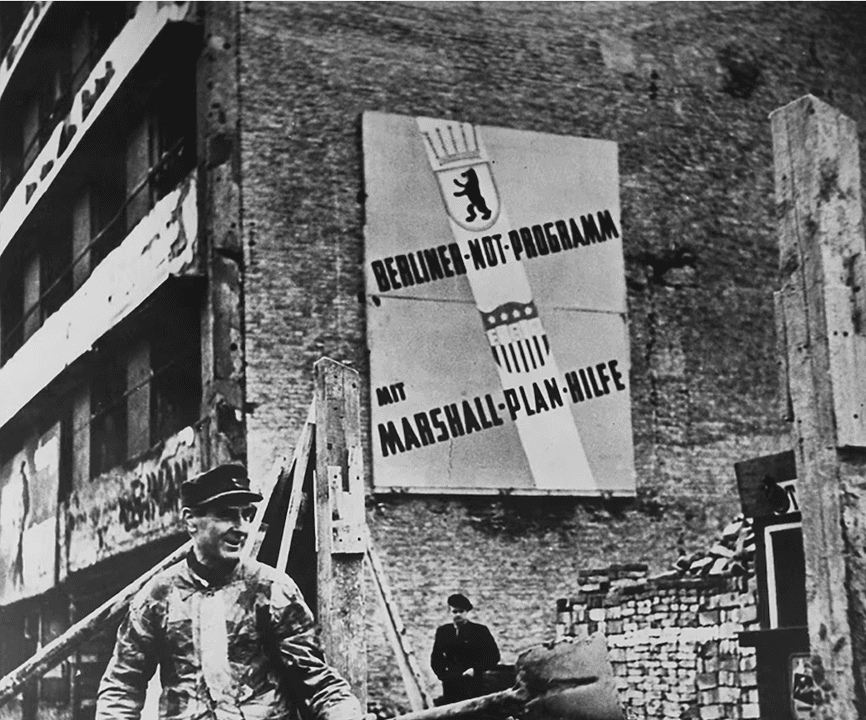
Foreign aid has long been a cornerstone of U.S. foreign policy, particularly during the Cold War, when it was a vital instrument in countering Soviet expansionism. Programs such as the Marshall Plan and FAA were not solely acts of goodwill, but strategic investments in global stability—fortifying allies, preventing the spread of communism, and solidifying U.S. leadership. Aid ensured that vulnerable nations aligned with the U.S. rather than falling into the Soviet sphere.
Today, as the world enters a Cold War 2.0, foreign aid remains an essential tool in the competition against China, Russia, and other adversarial states seeking to reshape the global order. If the U.S. retreats from its soft power commitments, it will cede critical ground to strategic adversaries. Just as Cold War-era assistance helped shape a world order favorable to the U.S., today’s aid programs serve as a proactive defense against adversarial encroachment. In an era where power is projected not just through military might but through economic and diplomatic means, the necessity has never been greater.
If the U.S. abandons its role in providing foreign aid through a specialized agency such as USAID, adversaries like China and Russia will rapidly fill the void—gaining influence in Africa’s resource-rich regions, securing rare earth metals essential for modern technology, and expanding their presence in fragile states. In Europe, a diminished U.S. presence will embolden Russia, increasing pressure on NATO and exacerbating tensions with nationalist governments such as Poland and Hungary. In a world where great power competition increasingly relies on economic statecraft, withdrawing from foreign aid is not a mere policy shift—it is a strategic forfeiture, one that would weaken American security and shift the global balance of influence.
Matthew Flug is an attorney and insurance underwriter focusing on risk transfer solutions for mergers & acquisitions. He is also General Counsel of the Irregular Warfare Initiative think tank. Before venturing into the private sector, Matthew spent several years with the US Department of Defense and Intelligence Community.
Tom Johansmeyer is a Pol&IR PhD candidate at the University of Kent, Canterbury, where he is researching the role of insurance in cyber security strategy. He is also a reinsurance broker based in Bermuda, where he focuses on alternative forms of risk transfer.
The Unfinished Reform
By Mark W. Castillon • RealClearDefense
Winning the Data Advantage
By Turin Pollard • RealClearDefense
The Pentagon’s Quantum Race Needs a Warfighter’s Scorecard
By Burak Oktenli • RealClearDefense
The F/A-XX and the AIM-260 Reclaim the Perimeter
By Bruce Allen Lubbering • RealClearDefense
Iranian Cyber Operations
By Michael Groen • RealClearDefense
Winning the Data Advantage
By Turin Pollard • RealClearDefenseThe F/A-XX and the AIM-260 Reclaim the Perimeter
By Bruce Allen Lubbering • RealClearDefenseWinning the Data Advantage
By Turin Pollard, RealClearDefenseThe F/A-XX and the AIM-260 Reclaim the Perimeter
By Bruce Allen Lubbering, RCD
F-22 Pilot Directs CCA in Flight as ‘Airborne QB’
By Stephen Losey, Air & Space Forces