
'The Risk…Is Not Winning.'
Last updated 09:19 PM EDT • Read time: 4m
It’s rare for a four-star general to speak in such stark, unscripted terms. But when the commander of our nation’s elite special operations forces (SOF) sounds the alarm on deterrence, modernization, and the future of irregular warfare—we should listen. Carefully. Not with partisan ears. Not through budget spreadsheets. But through the sobering lens of a strategic horizon being reshaped not by missiles, but by messages.
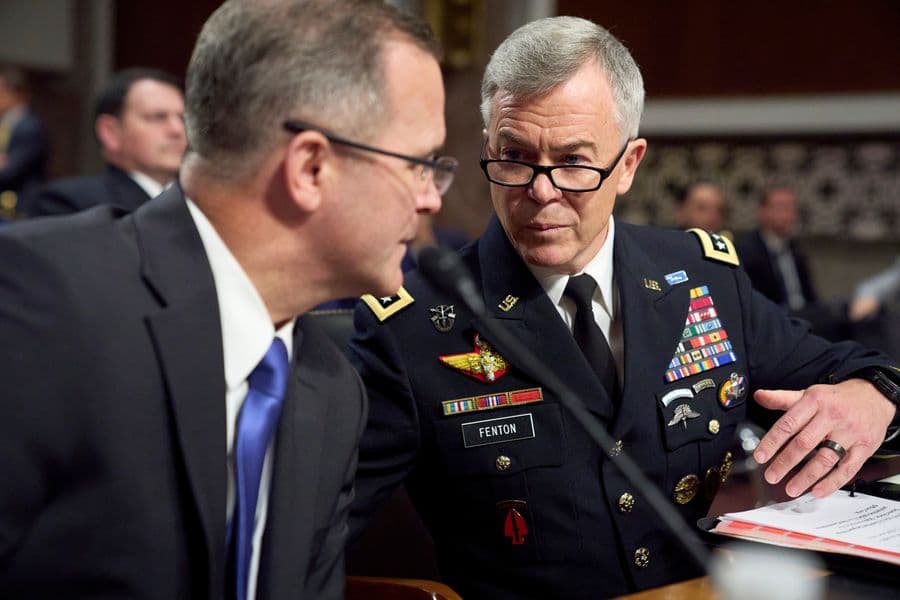
"There is a void out there that’s not being filled by our message," testified General Bryan Fenton before the Senate Armed Services Committee.
Fenton’s testimony pulled back the curtain on a growing reality that in the cognitive domain—where perception, narrative, trust, and truth collide—the United States is not keeping pace. Our adversaries are not just advancing on physical terrain, they are contesting the information space with speed and sophistication.
The general's refrain—"small teams, small footprints, big impact"—captures the asymmetry of the modern battlefield. U.S. Special Operations Forces operate in 80 countries not to dominate but to connect, partner, and amplify. The value of these engagements is not just in capability-building, but in trust-building. And trust, as Fenton reminded the committee, is the true currency of enduring power.
But in today’s budget environment, even that currency is at risk.
Since 2019, SOCOM has suffered a 14% decline in purchasing power—about $1 billion in real terms. Fenton described a growing trend of turning down combatant command requests due to operational risk and fiscal constraints. These aren’t belt-tightening decisions. They are strategic surrenders.
The consequence? Risk accumulates in two critical areas, deterrence, and modernization. In deterrence, it means gaps in campaign plans—missed chances to shape or influence environments before crises erupt. In modernization, it means being outpaced in developing asymmetric capabilities like AI, autonomy, and electronic warfare tools. As Fenton put it plainly, the risk isn’t just to readiness. The risk is not winning at all.
And that risk is compounded by narrative negligence. While China spends over $1.1 billion annually on information operations—deploying digital influence like guided weapons—the United States can’t even account for its spending. Testimony from multiple senators revealed what many in the field already know, the U.S. has dismantled much of its global engagement infrastructure. Voice of America, Radio Free Asia, and the State Department’s Global Engagement Center have seen steep declines or outright closure.
We forfeited the power of story to the power of silence.
This is not just a messaging failure. It is a strategic vulnerability. Fenton acknowledged it clearly in his response to Senator Shaheen, “You may not win a war with information operations like you could with artillery—but you can certainly lose it.”
Special Operations Forces have long proven their ability to lead from behind—quietly shaping coalitions, enabling local actors, and deterring adversaries with minimal footprint. As Senator Ernst recalled, U.S. SOF once unified otherwise disjointed teams in Africa, where others couldn’t even earn the trust of local populations. It wasn’t dominance that made the difference. It was presence, humility, and narrative fluency.
And yet, many of the personnel who support that information space—our military information support operations (MISO) professionals—are the very enablers being cut.
Senator Wicker asked a hard but necessary question, “Do you find that there’s not enough coordination in the irregular warfare field?” Right now, the answer is, sort of. Coordination for information operations falls to SO/LIC (Special Operations/Low Intensity Conflict), which works across the Department of Defense and with interagency partners. But even SO/LIC leaders admit the current structure lags behind the pace of today’s fight.
We are navigating 21st-century threats with 20th-century frameworks and 19th-century assumptions about warfare.
America is not adequately investing in the front lines of narrative. We are not resourcing those who shape and protect perception. We are not modernizing the tools, policies, or talent structures needed to compete in the cognitive domain—where the first casualty of war isn’t truth. It’s trust.
Fenton’s closing words carry weight not just because of his rank, but because of his clarity, “The risk…is not winning.”
In irregular warfare, in deterrence, and in the hearts and minds of allies and adversaries alike, the United States is risking more than just military readiness.
We are risking relevance.
If we don’t win the message, how do we win the mission?
Chad Williamson is a military veteran and graduate student at the RAND School of Public Policy. He is currently pursuing a Masters in National Security Policy.

The Unfinished Reform
By Mark W. Castillon • RealClearDefense
Winning the Data Advantage
By Turin Pollard • RealClearDefense
The Pentagon’s Quantum Race Needs a Warfighter’s Scorecard
By Burak Oktenli • RealClearDefense
The F/A-XX and the AIM-260 Reclaim the Perimeter
By Bruce Allen Lubbering • RealClearDefense
Iranian Cyber Operations
By Michael Groen • RealClearDefense
Winning the Data Advantage
By Turin Pollard • RealClearDefenseThe F/A-XX and the AIM-260 Reclaim the Perimeter
By Bruce Allen Lubbering • RealClearDefenseWinning the Data Advantage
By Turin Pollard, RealClearDefenseThe F/A-XX and the AIM-260 Reclaim the Perimeter
By Bruce Allen Lubbering, RCD
F-22 Pilot Directs CCA in Flight as ‘Airborne QB’
By Stephen Losey, Air & Space Forces