
Buried Lessons: Leading Through Innovation
Last updated 09:29 PM EDT • Read time: 7m
Buried Lessons: What Evans Carlson Can Teach the Marine Corps about Leading Through Innovation
In 1947, the Marine Corps declined to fund the transport of Evans Carlson’s remains from the West Coast to Arlington National Cemetery. Carlson’s exploits won the loyalty of his men, but his maverick tendencies generated resentment among his superior officers. In The Raider, author Stephen R. Platt chronicles the tumultuous life and career of the famed Marine who formed and led the Marine Raiders. Carlson’s career challenged the Corps’ resistance to its mavericks, emphasized the value of working with regional allies, and fostered unit cohesion. More than a combat biography, Platt’s book serves as a case study on partner force development and the challenges of overcoming institutional inertia in order to innovate. As the Marine Corps again prepares for distributed operations across the Pacific, Carlson’s example offers lessons on innovating, partnering, and fighting in the Pacific.
Ralph Waldo Emerson’s writings animated Evans Carlson’s life, inspiring the preacher’s son to run away from his New England home at 14, which served as his moral compass. Guided by self-reliance, an insatiable intellectual curiosity, and a fervent belief in justice, Carlson excelled when partnering with military forces in China and Nicaragua in the 1920s. From writing intelligence reports in Shanghai to quelling unrest in Nicaragua, he proved himself a thoughtful and effective combat leader. These tours gave Carlson an appreciation for the political dynamics and social networks that animate political and military action at the local level. His time on independent duty instilled in him the confidence needed to operate in complex environments, where he trusted his judgment and won the trust of his partners.
A chance posting to the presidential retreat in Warm Springs gave Carlson access to and the ear of President Franklin D. Roosevelt. Carlson’s keen intellect and affable manner helped him build a relationship with the President and his eldest son, James. Before Carlson departed for China in 1937, President Roosevelt requested that Carlson write dispatches on his travel in China to be read only by the commander-in-chief. His dispatches influenced US–China policy; later, Carlson’s advocacy influenced the President to advocate for forming the Raiders. Buoyed by Roosevelt’s confidence, Carlson began his most formative tour to date.
In 1937, Carlson embedded with Chinese forces during the Second Sino-Japanese war, shaping his understanding of the allies’ needs, the enemy’s tactics, and a new way of war. Carlson observed the Chinese Eighth Route Army, gaining insight into the mental and physical demands of combat that his Marines would later face in the Pacific. Carlson traveled with the unit—on horseback and by foot—on a grueling 250-mile march deep into Japanese-controlled territory. Carlson observed the Eighth Route Army’s focus on unit cohesion and decentralized execution, a model that informed the development of the Raiders. The Eighth Route Army found itself fighting far from supporting units. His Chinese counterparts were impressed with Carlson’s unrivaled work ethic and his willingness to share risk. His proficiency in Chinese and his outgoing personality helped him to earn their trust and respect. Later, on Makin Island and Guadalcanal, Carlson’s Raiders faced similar conditions as the unit relied on its morale and the individual skills of its Marines.
Carlson’s on-ground reporting in China during the Sino-Japanese War contradicted the prevailing US diplomatic narrative. In the Eighth Route Army, Carlson found willing, capable partners who made tenuous but meaningful gains. US diplomatic cables ignored nuance while calcifying narratives. However, Carlson’s dispatches to FDR offered a grounded perspective. Carlson’s experiences prepared him for this next challenge: forming the Raiders.
Platt’s background as a Chinese historian is ideal for telling Carlson’s story. To understand the exploits of the Raiders during World War II, one must understand the impression the Sino-Japanese War in the 1930s had on Carlson. Platt supplies the needed context, showing how Carlson’s encounters with the potential Chinese ally and the determined Japanese foe seared lessons into Carlson’s mind. The type of warfare Americans soon would face remained speculative to outside, but Carlson left China with a clear –and chilling– view. His extraordinary intellect captured the lessons of the conflict: the importance of skilled, independent, autonomous units capable of decisive action with little external support. With the goal of building units with initiative, Carlson began rethinking Marine hierarchies. Forging such a unit demanded individual agency, rather blind obedience, and unit cohesion over rigid command. This mindset became the hallmark of the Raiders and would help carry them to victory.
Today, the American military, like in the interwar period, is not directly engaged in conflict but remains a ravenous observer of wars like Ukraine and Gaza. However, interest does not guarantee an understanding or sensible adaptation informed by these wars. What remains unclear is whether the joint force, as Carlson did, can apply the lessons from Ukraine and Gaza – or whether they will simply calcify existing narratives. Platt demonstrates how Carlson the isolation from external influences while embedded with the Eighth Route Army, gave Carlson the mental and physical space to draw incisive observations. Today’s observers of Ukraine and Gaza do not have the same luxury of isolation.
Platt’s most insightful writing focuses on the institutional infighting after Pearl Harbor, from which the Raiders emerged. Carlson and James Roosevelt proposed a Commando-like unit modeled on British counterparts, but the Commandant of the Marine Corps rebuffed the reforms. The commander-in-chief then intervened, making Carlson’s vision a reality.
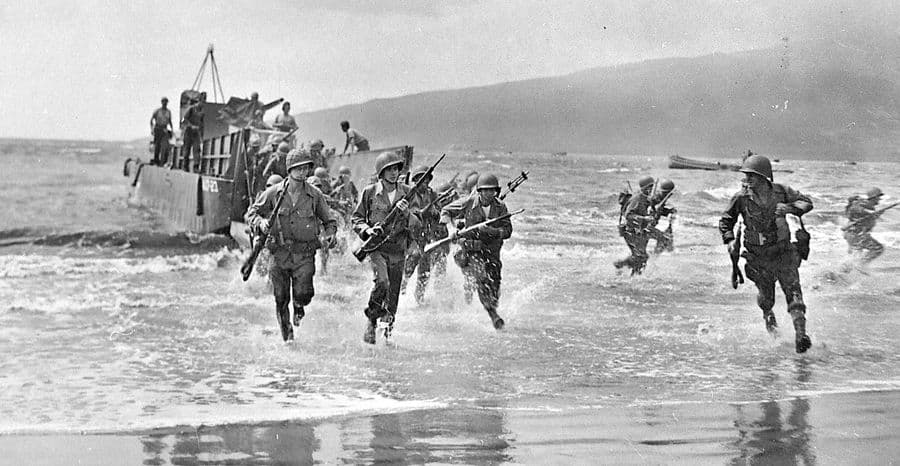
Informed by the Eighth Route Army’s distributed operations, deep in enemy territory, Carlson devised a hellacious pre-deployment training schedule for the Raiders. As a commander, Carlson taught fieldcraft skills, fostered individual agency, and replicated combat conditions. Beyond tactics, however, Carlson cultivated an ethos. The Raiders hosted “Gung Ho” meetings—complete with frank discussions breaking down barriers between officers and enlisted men. Carlson instilled in the unit the belief they were fighting for a more just, equitable America, rather than merely exacting revenge for Pearl Harbor. Senior Marine leaders dismissed Carlson’s methods as a threat to discipline.
The Raiders’ successes on Makin Island and Guadalcanal soon vindicated Carlson’s methods. However, Carlson’s star burned too bright, and the Marine Corps promoted him out of command. His successors soon dismantled the unit’s unique culture, reinstating rigid hierarchies and ending the Gung Ho meetings.
Carlson’s career is not a historical footnote—it is an instructive case study for the Marine Corps and the joint force. Advisors and liaisons in the Pacific face similar challenges when influencing decision making. As the U.S. military reorients its focus toward strategic competition with China, Carlson’s experience offers a blueprint for overcoming bureaucratic inertia, leveraging partner forces, and leading through institutional resistance.
As the Marine Corps undergoes force design changes and prepares itself for future crises, innovation is no longer optional: it is a tactical imperative. Yet tension persists between the reforms the Marine Corps needs and its commitment to maintaining discipline within its ranks.
The internal struggles Carlson faced still echo in the Corps. The debate surrounding the Raiders mirrors the ongoing discourse surrounding Force Design 2030. Under Commandants General David Berger and now General Eric Smith, Force Design has attracted numerous high-profile detractors, notably retired Marine general officers. While some see debate as a symptom of institutional strain, the discourse is an indication of health.
Evans Carlson exemplifies a leader who challenged convention to make the Corps more lethal and agile. Carlson’s career provides a blueprint for reconciling innovation with tradition—a critical lesson as the Corps pivots to Pacific operations against a peer adversary.
A recent War on The Rocks interview with former Marine Corps Commandant David Berger underscored the need for innovation amid turbulence. Platt’s biography of Evans Carlson arrives at an opportune moment, as the Marine Corps navigates new policy guidance from the current Administration, reshapes its force structure, and counters a rising, bellicose China. Carlson’s iron will, intellectual rigor, and combat heroics offer today’s reformers an instructive—yet cautionary—case study of leadership through disruption.
Can the Marine Corps afford to bury its next Evans Carlson?
Major Benjamin Van Horrick, USMC is the 3d Marine Expeditionary Brigade Current Logistics Operations Officer.
The views expressed are those of the author and do not reflect the official position of the United States Military Academy, Department of the Army, or Department of Defense.

Iranian Cyber Operations
By Michael Groen • RealClearDefense
Reflecting on an Epic Horse Campaign in the Mountains of Afghanistan
By Brian Glyn Williams • RealClearDefense
The Godfather of American Foreign Policy Realism Speaks to Today’s World
By Francis P. Sempa • RealClearDefense
In Pursuit of Nuclear Abolition
By Peter Huessy • RealClearDefense
Innovation Alone Won’t Prepare the U.S. for the Future Battlefield
By Joshua Segal • RealClearDefense

26th MEU – U.S. Needs Crisis Response MAGTF
By Marine Corps Compass Points
The Influence of History on a Sea Power
By CDR Salamander
Navy Civilianizes Six Former Flag Billets, Reduces Six to Captains
By Mongilio, USNI N.
Raytheon's $8B Contract for Strategic Comms Terminal Modernization
By M+A El
America’s Maritime Moment Will Not Wait
By CDR Salamander