
Following Maduro's Capture
Last updated 06:07 AM EST • Read time: 4m
It’s Time for Congress to Get Serious About Foreign Debt Repayment
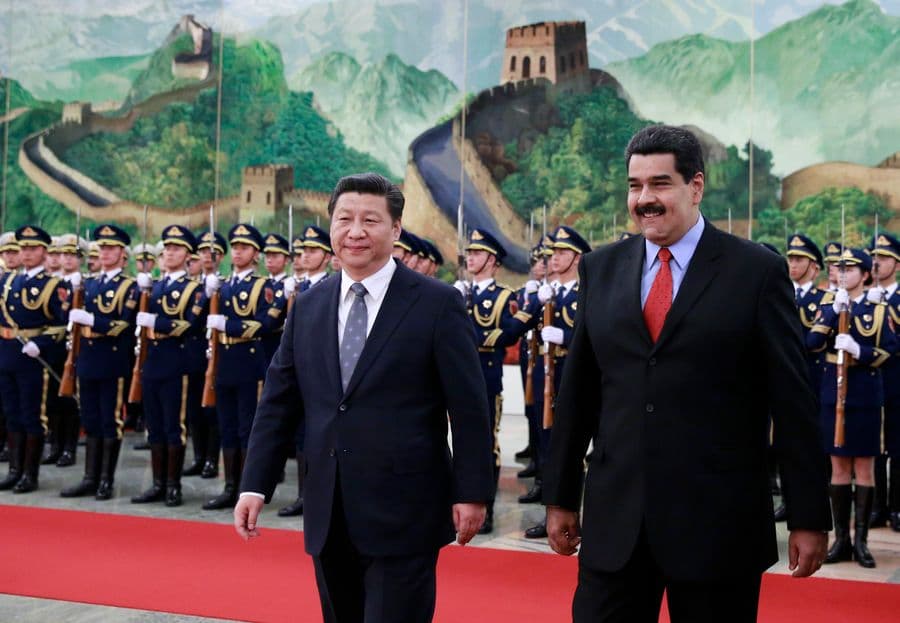
The U.S. special forces' recent capture of Venezuelan strongman Nicolás Maduro following years of documented misconduct. Maduro has long been accused of facilitating narcotics trafficking, deepening cooperation with China’s People’s Liberation Army, and seizing American-owned assets without compensation.
But on the latter point, he’s hardly alone. In a recently released national security and State Department appropriations report, lawmakers named a handful of countries where similar issues have occurred.
Reports of repeated failures by Mexico to meet cross-border obligations and unpaid claims tied to the Al Zour refinery project in Kuwait are just some of the examples, but this problem extends far and wide. The national security and State Department appropriations report directs the Office of the Secretary of State to “to utilize the various tools of diplomatic engagement to work with such governments to facilitate the timely resolution of such disputes.” Now, it falls to the full Congress to follow through and pass the measure.
At some point, accountability has to matter.
Americans are generous people. We give more, volunteer more, and shoulder more global responsibility than any nation on earth. That generosity has long been one of our greatest strengths, both at home and abroad.
In matters of foreign aid, Americans understand that circumstances differ. We do not expect struggling nations to repay assistance on rigid timelines, and good-faith efforts are enough. The purpose of aid is helping countries stand on their own, not to function as a debt trap.
But that flexibility does not extend to private, binding commercial obligations. When foreign governments enter into agreements with American businesses to build infrastructure, provide capital, and ensure services, this work does not constitute an act of charity. The agreements they make form binding obligations. American taxpayers and businesses should not have to foot the bill for the effects of unenforced contracts and debts.
Undermining U.S. firms through nonpayment or expropriation harms the American economy, weakens confidence in lawful commerce, and discourages the kind of private investment that development policy is supposed to encourage.
That is dangerous.
This is not an argument against American leadership abroad or U.S. assistance to allies. I support both. Most of our treaty partners understand that shared responsibility and good faith are essential to lasting cooperation. The worry expressed by Congress in its appropriations report is about a different set of relationships, with which countries outside our core alliances systematically enjoy the U.S’ support yet routinely fail to meet their financial commitments.
That is precisely why, in its appropriations report, Congress is spot-on in giving the State Department the authorization and tools it needs to seek quick, just resolutions of these disputes through all the diplomatic means at its disposal. It is making it clear that the promises made to the U.S. are not optional and that accountability is not negotiable. Engagement abroad must rest on fairness, discipline, and respect. These values that matter just as much in international affairs as they do in everyday life.
America should continue to lead, to help, and to stand with those who share our values. But real leadership also means refusing to excuse broken promises.
Generosity guided by accountability is not weakness. It is how strong nations endure. Congress deserves credit for putting this principle back at the center of U.S. foreign engagement, and the full legislature should follow the committee’s — and the Department of Defense’s — lead by moving quickly to approve the appropriations report and make that commitment real.
Steve Diminuco is a foreign policy analyst. He is a former Deputy Director for Global Intergovernmental Affairs and Senior Conferences Coordinator at the U.S. Department of State.

In Pursuit of Nuclear Abolition
By Peter Huessy • RealClearDefense
Innovation Alone Won’t Prepare the U.S. for the Future Battlefield
By Joshua Segal • RealClearDefense
The sUAS Tactical Trifecta
By Bryan T. Woody • RealClearDefense
The Revolutionary War: When Strategic Options Share the Same Weakness
By Henry Yep • RealClearDefense
The Houthis Are Testing the Limits of Collective Defense
By Saima Afzal • RealClearDefense

Who Shoots Down the Drone Over the Shipyard?
By John Ferrari & Dillon Prochnicki • RealClearDefense
Northrop Grumman Breaks Out the Big Guns at AUSA
By Daniel Terrill, Defense News
Army Pursuing Diverse Array of New Anti-Air Interceptors
By Trevithick, The WarZoneWho Shoots Down the Drone Over the Shipyard?
By John Ferrari & Dillon Prochnicki, RCD
F-35C Lands for the First Time on a Ford-Class Aircraft Carrier
By The Aviationist