
Terrorism
RealClear Context
Click below to continue reading this story, discover more Terrorism stories from over 25 years of RealClear archives, or follow this topic to stay in the know.
The Rocky Path to Prosecuting Terror
The 9/11 attacks were not a standalone
1d agoRead it on The Washington Free BeaconWhy U.S. Airstrikes Are Failing to Stop the Global Cocaine Boom
Smugglers are shifting routes and using new tactics to evade military targeting, resulting in record supplies, plunging prices and high purity in...
1d agoRead it on The Wall Street Journal
Entebbe and the Genesis of U.S. National Counterterrorism
Appropriately, several fine articles have remembered this year’s 50th anniversary of the Israeli Defense Force’s successful rescue of more than one hundred Israeli hostages from the jaws of terrorists aided by Uganda’s reprehensible Idi Amin. But none have noted, to my knowledge, the connection between this worldwide attention-grabbing event and the awakening of official Washington to the need for a national counterterrorism (CT) capability.
As the heroic FlyDubai Flight 1073 in-flight incident reminds civilized societies everywhere, successful, manly ad hoc valor certainly is inspiring, lifesaving, and heart-warming—yet such can in no way substitute for the maintaining of national CT forces capable of responding to larger scale, sophisticated terror attacks.
Entebbe and the Genesis of U.S. National Counterterrorism
As the heroic FlyDubai Flight 1073 in-flight incident reminds civilized societies everywhere, successful, manly ad hoc valor certainly is...
2d agoRead it on RealClearDefense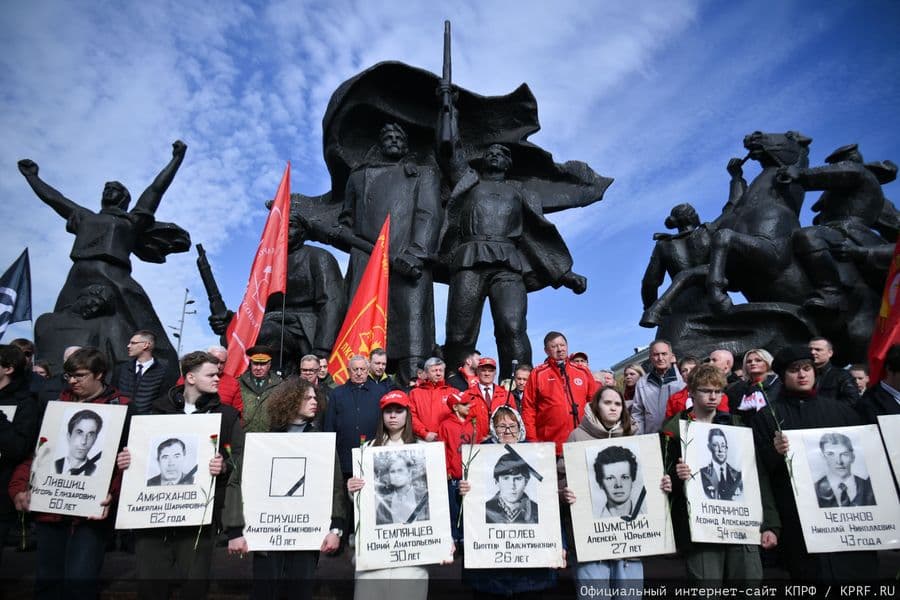
An Asymmetry of Existential Fear
Twenty-five years ago, nineteen men brought down two towers in lower Manhattan and launched a war the United States is, in some sense, still fighting. This year's 9/11 anniversary has produced the usual retrospectives on Afghanistan, Iraq, and the sprawling counterterror apparatus constructed in their wake. But the American war on terror was not the only one of its kind. Within its own borders, largely against its own citizens, in the same era, Russia fought its own war on terror: one that is all too often ignored in the American reckoning with its struggle.
1956: Crises and the Steady Statesmanship of Eisenhower
As we enter the fall of 2026, it is turning out to be a year of crises.
1w agoRead it on RealClearDefense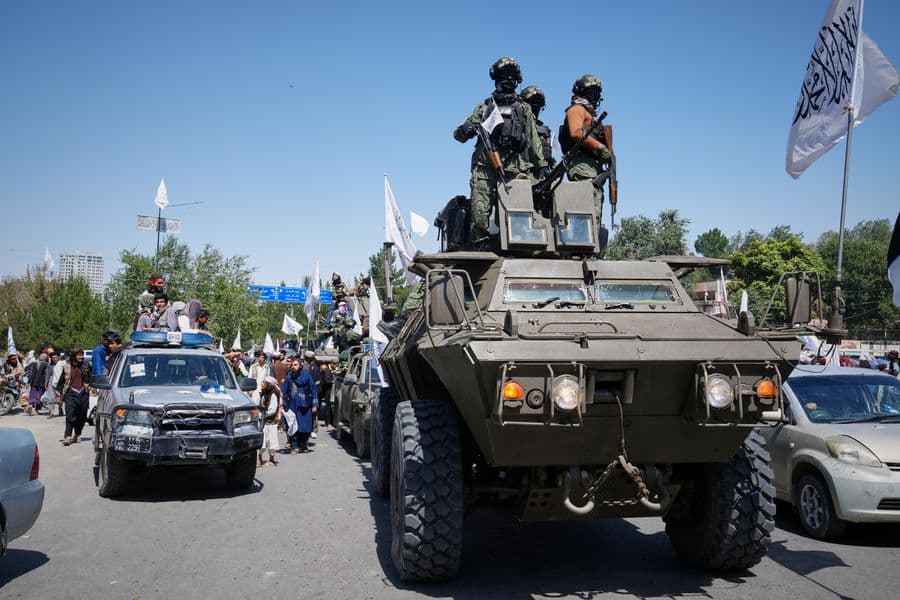
Partnering With the Taliban
The United States and the Taliban signed the Doha Accord on 29 February 2020 to end the war that began after al-Qaeda, then sheltered by the Taliban, carried out the 11 September 2001 attacks. The accord committed the U.S. to withdraw within fourteen months, and it obligated the Taliban to conduct peaceful negotiations with the democratically elected Afghan government, to deny Afghan soil to al-Qaeda and other terrorist adversaries, and to negotiate with Kabul. The U.S. honored the withdrawal timeline, but the Taliban seized the country by force, instead of diplomatic means, in August 2021. This is concerning because the Taliban chose to discard the part of the agreement on negotiation, so it is reasonably safe to assume they may restore Afghanistan as a terrorist sanctuary.
Why Did the U.K. Release the U.S. Air Base Terrorism Suspects?
Five suspects believed to have been planning an attack on a U.S. Air Force base in the United Kingdom have been released on bail
2w agoRead it on Washington Examiner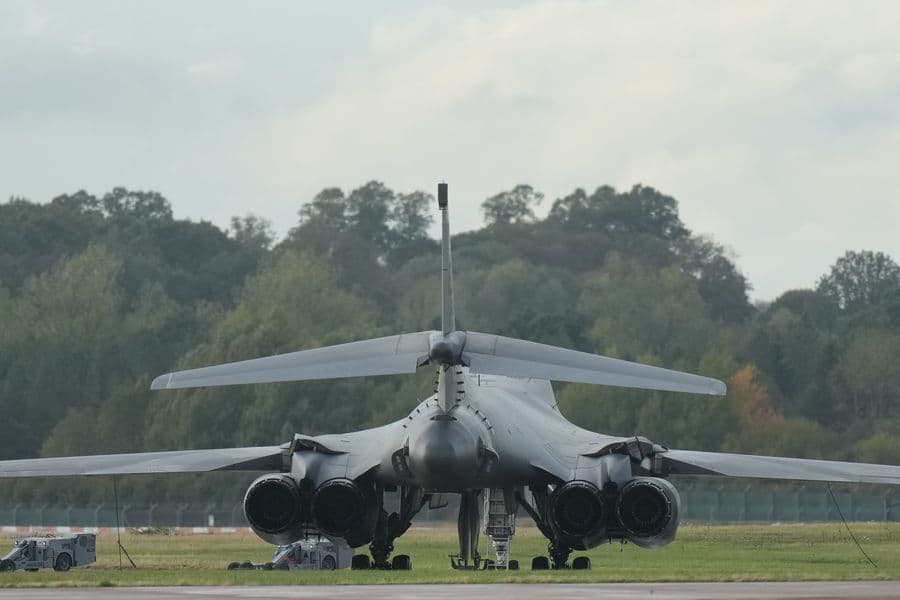
Congress Ordered an Annual Accounting of Terrorism. The Counting Has Stopped.
On May 1, 2026, the State Department released the 2024 edition of the Country Reports on Terrorism — a full year past the deadline in effect when the report came due, and months past even the more forgiving date Congress has since written into law. No Annex of Statistical Information, the report’s statistical backbone in years past, has been published with it. And the report’s own pages cite terrorism-incident rankings from the Global Terrorism Trends and Analysis Center, or GTTAC — the same data program whose funding the department allowed to lapse in March.
The report is not optional. Federal law — 22 U.S.C. § 2656f, on the books since 1987 — directs the secretary of state to transmit to Congress each year “a full and complete report” on terrorism worldwide, including, “to the extent practicable, complete statistical information” on those killed, injured, or kidnapped “by each terrorist group during the preceding calendar year.”

In Pursuit of Nuclear Abolition
By Peter Huessy • RealClearDefense
Innovation Alone Won’t Prepare the U.S. for the Future Battlefield
By Joshua Segal • RealClearDefense
The sUAS Tactical Trifecta
By Bryan T. Woody • RealClearDefense
The Revolutionary War: When Strategic Options Share the Same Weakness
By Henry Yep • RealClearDefense
The Houthis Are Testing the Limits of Collective Defense
By Saima Afzal • RealClearDefense

Who Shoots Down the Drone Over the Shipyard?
By John Ferrari & Dillon Prochnicki • RealClearDefense
Northrop Grumman Breaks Out the Big Guns at AUSA
By Daniel Terrill, Defense News
Army Pursuing Diverse Array of New Anti-Air Interceptors
By Trevithick, The WarZoneWho Shoots Down the Drone Over the Shipyard?
By John Ferrari & Dillon Prochnicki, RCD
F-35C Lands for the First Time on a Ford-Class Aircraft Carrier
By The Aviationist