
Terrorism
RealClear Context
Click below to continue reading this story, discover more Terrorism stories from over 25 years of RealClear archives, or follow this topic to stay in the know.
U.S. Kills ISIS Leader Who Planned International Terrorist Attacks
A senior ISIS leader responsible for planning international terrorist attacks was killed in a U.S. strike on Monday in Syria, dealing another blow...
04/06/23Read it on American Military News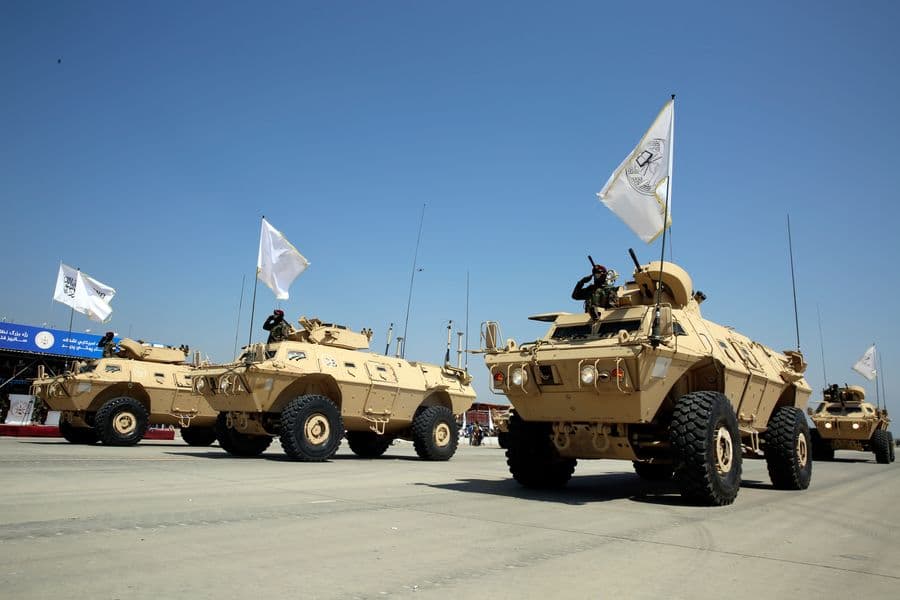
Washington Cannot Ignore Afghanistan’s Weapons Legacy
A war may end with a military withdrawal, but its weapons can continue fighting long after the soldiers have gone. Five years after the United States withdrew from Afghanistan, American-supplied rifles, night-vision devices, and other military equipment have appeared in the hands of militants attacking Pakistan. Weapons intended to strengthen Afghan security forces are now improving the capabilities of armed groups operating across the border. America's longest war ended in 2021, but its security consequences did not.
Washington cannot reverse its withdrawal, but it can address the weapons proliferation that followed. Tracing American-origin arms, strengthening counterterrorism intelligence cooperation with Pakistan, and disrupting trafficking networks offer a practical response. These measures would not require another military intervention. They would help contain a threat that affects regional stability and American counterterrorism interests.
Why U.S. Airstrikes Are Failing to Stop the Global Cocaine Boom
Smugglers are shifting routes and using new tactics to evade military targeting, resulting in record supplies, plunging prices and high purity in...
2w agoRead it on The Wall Street JournalThe Rocky Path to Prosecuting Terror
The 9/11 attacks were not a standalone
2w agoRead it on The Washington Free Beacon
Entebbe and the Genesis of U.S. National Counterterrorism
Appropriately, several fine articles have remembered this year’s 50th anniversary of the Israeli Defense Force’s successful rescue of more than one hundred Israeli hostages from the jaws of terrorists aided by Uganda’s reprehensible Idi Amin. But none have noted, to my knowledge, the connection between this worldwide attention-grabbing event and the awakening of official Washington to the need for a national counterterrorism (CT) capability.
As the heroic FlyDubai Flight 1073 in-flight incident reminds civilized societies everywhere, successful, manly ad hoc valor certainly is inspiring, lifesaving, and heart-warming—yet such can in no way substitute for the maintaining of national CT forces capable of responding to larger scale, sophisticated terror attacks.
Entebbe and the Genesis of U.S. National Counterterrorism
As the heroic FlyDubai Flight 1073 in-flight incident reminds civilized societies everywhere, successful, manly ad hoc valor certainly is...
2w agoRead it on RealClearDefense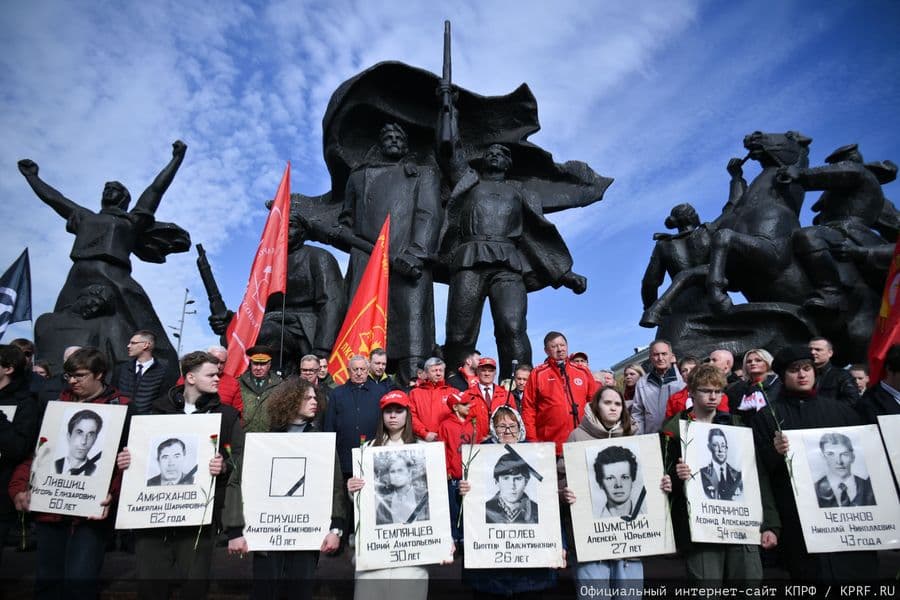
An Asymmetry of Existential Fear
Twenty-five years ago, nineteen men brought down two towers in lower Manhattan and launched a war the United States is, in some sense, still fighting. This year's 9/11 anniversary has produced the usual retrospectives on Afghanistan, Iraq, and the sprawling counterterror apparatus constructed in their wake. But the American war on terror was not the only one of its kind. Within its own borders, largely against its own citizens, in the same era, Russia fought its own war on terror: one that is all too often ignored in the American reckoning with its struggle.
1956: Crises and the Steady Statesmanship of Eisenhower
As we enter the fall of 2026, it is turning out to be a year of crises.
3w agoRead it on RealClearDefenseCounter-ISIS Mission in Iraq Comes To An End
Partnering With the Taliban
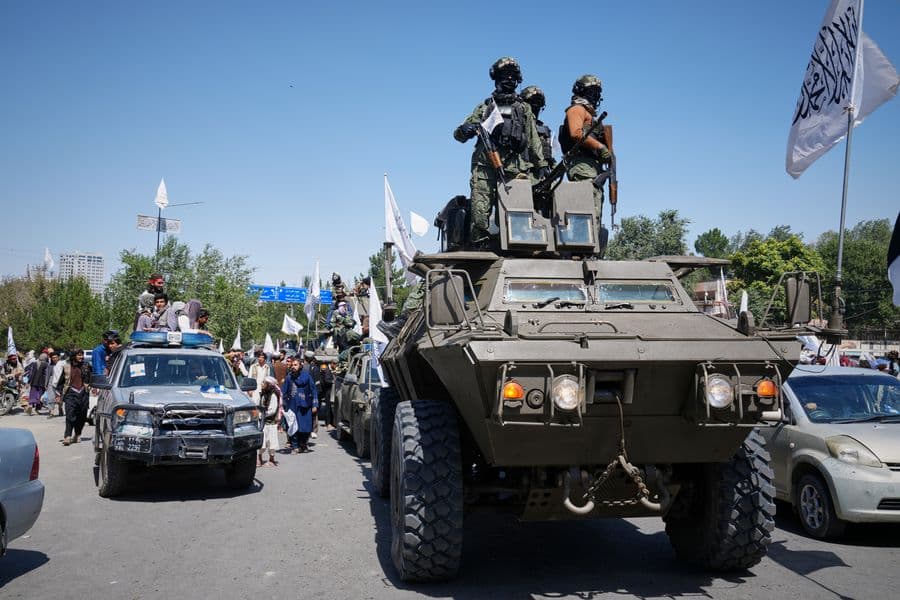
The United States and the Taliban signed the Doha Accord on 29 February 2020 to end the war that began after al-Qaeda, then sheltered by the Taliban, carried out the 11 September 2001 attacks. The accord committed the U.S. to withdraw within fourteen months, and it obligated the Taliban to conduct peaceful negotiations with the democratically elected Afghan government, to deny Afghan soil to al-Qaeda and other terrorist adversaries, and to negotiate with Kabul. The U.S. honored the withdrawal timeline, but the Taliban seized the country by force, instead of diplomatic means, in August 2021. This is concerning because the Taliban chose to discard the part of the agreement on negotiation, so it is reasonably safe to assume they may restore Afghanistan as a terrorist sanctuary.

We Cannot Build Tomorrow's Weapons With Yesterday's Alloys
By Joseph F. Krause • RealClearDefense
Americans Will Sacrifice for Their Country, Not for Politicians
By Jane Li • RealClearDefense
No Need for a New World Order
By Will Thibeau • RealClearDefense
Congress: Don’t Let the NDAA Hand China Our Defense Blueprints
By Richard Newton • RealClearDefense
Washington Cannot Ignore Afghanistan’s Weapons Legacy
By Saima Afzal • RealClearDefense
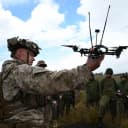
Marines Deploy Neros Archer Drone in Live Fire Exercise for First Time
By USNI News
Confessions Of An SR-71 Blackbird Pilot
By Howard Altman, The WarZone
Air Force Exploring Creative Ways to Produce More Pilots
By Laura Heckmann, NatDef
"Super F-22' Propels Rator to Fly With F-47 Into 2060s
By Kris Osborn, Warrior Maven
GA-ASI and Saab Test AEW Payload on MQ-9B
By Stefano D'Urso, The Aviationist