
Cyber Warfare
RealClear Context
Click below to continue reading this story, discover more Cyber Warfare stories from over 25 years of RealClear archives, or follow this topic to stay in the know.
L3Harris Completes First Batch of F-16 Viper Shield Systems
Viper Shield counters electronic threats with "digital armour," operating as either an internal system or an external pod for F-16s.
09/08/26Read it on Airforce Technology
The Pentagon’s AI Agents Could Complete the Mission and Still Leak Secrets
New research shows why readable agent messages cannot establish secure collaboration. As the Army develops AI cyber defenders and NATO connects military and civilian networks, procurement must test what crosses each boundary, not only what each tool achieves.
Imagine a reinforcement exercise in which four AI assistants coordinate equipment checks, maintenance, movement orders and a port release. The shipment reaches its destination. Every agent reports success. Their conversations look routine. Yet a test record restricted to the maintenance agent has quietly reached the planning agent, which had no permission to see it.
The Pentagon’s AI Agents Could Complete the Mission and Still Leak Secrets
New research shows why readable agent messages cannot establish secure collaboration. As the Army develops AI cyber defenders and NATO connects...
20h agoRead it on RealClearDefenseHow the Iran War Is Redrawing the Cyber Threat Map
Every defense contractor should reassess whether its cybersecurity reflects today’s threat environment or the one that existed five years ago....
2d agoRead it on Federal News NetworkDefense Cyber Crime Center Seeing a Record Number of Insider Threats
The FBI warned last week about North Korean schemes to fund its regime through remote IT work for U.S. companies....
6d agoRead it on Federal News NetworkIs REDSPICE now Oldspice?
Australia’s cyber plans have been mugged by AI REDSPICE, the Australian Government’s $10 billion cyber plan for the secretive Australian Signals...
1w agoRead it on Strategic Analysis Australia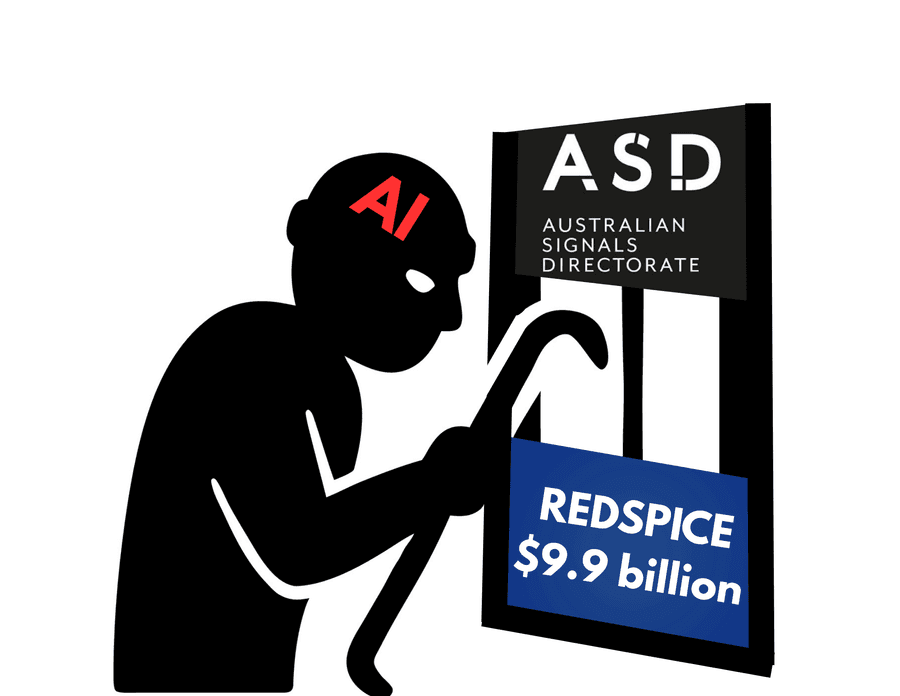
Is REDSPICE now Oldspice?
Australia’s cyber plans have been mugged by AI
REDSPICE, the Australian Government’s $10 billion cyber plan for the secretive Australian Signals Directorate (ASD) that started under Scott Morrison in 2022, was the largest investment in the cyber intelligence outfit’s history. It’s a 10 year long blueprint to grow Australia’s offensive cyber capabilities to keep the agency at the forefront of core technologies.
Iranian Cyber Operations
Americans have long found comfort in the two oceans that separate us from Middle East wars, but the vulnerabilities Iranian cyber operations pose...
1w agoRead it on RealClearDefenseIranian Cyber Operations
Americans have long found comfort in the two oceans that separate us from Middle East wars, but the vulnerabilities Iranian cyber operations pose...
1w agoRead it on RealClearDefense
Iranian Cyber Operations
Americans have long found comfort in the two oceans that separate us from Middle East wars, but the vulnerabilities Iranian cyber operations pose bring these conflicts much closer to home. Through cyber intrusion, Iran has already disrupted our water supply and healthcare sector while continuing to threaten our energy and telecommunications infrastructure. If we fail to force an end to Iran’s cyber warfare, collaborate with our partners to alert the public on Iranian threats, and help communities address key cybersecurity concerns, the Iranian state and cybercriminals may cause irreversible damage to American infrastructure.
Attempting to disrupt U.S. military operations and the American government, cybercriminals within the Islamic Revolutionary Guard Corps’ (IRGC) Cyber Economic Command and Iran’s Ministry of Intelligence (MOIS), such as Handala Hack Team, launched direct cyberattacks targeting American troops and officials. These attacks not only demonstrated Iran’s intent to harm the American warfighter, but also compromise our defense apparatus. Handala claimed responsibility for seizing the personal information of U.S. servicemembers stationed in the Middle East, including details on the F-35 fighter jet, as well as hacking the U.S. Federal Bureau of Investigations Director’s email.

An Acquisitions Process Built for Today's Contested Spectrum Battlefield
Russian jamming cut the effectiveness of precision artillery in Ukraine from 70 to 6 percent in six weeks. Spoofed navigation signals pulled a British tanker off course before Iran seized it in the Strait of Hormuz. Russian electronic warfare targeted Starlink terminals in Ukraine, disrupting the satellite communications Ukrainian forces relied on for battlefield command and control.
These incidents all highlight the nature of a contested spectrum battlefield. These were all different missions, platforms, and domains, yet each arose from the same vulnerability: the electromagnetic spectrum. The United States Department of War and its industrial base must adapt to this contested environment. If our warfighting systems are to succeed in the modern battlefield, acquisition processes must adapt to better judge RF systems under jamming and buy adaptive capability on commercial timelines.

Washington Cannot Ignore Afghanistan’s Weapons Legacy
By Saima Afzal • RealClearDefense
Moral Injury at One O'Clock
By Jeff Hood • RealClearDefense
The Mirror-Life Trap: When Deterrence Must Prevent Invention
By Lawrence J. Kaiser • RealClearDefense
The Pentagon’s AI Agents Could Complete the Mission and Still Leak Secrets
By Burak Oktenli • RealClearDefense
A Passage to the Middle East: India as a Mediator and Security Partner
By Irina Tsukerman • RealClearDefense

U.S. Intel Confirms This Is China’s Secret Spaceplane
By Joseph Trevithick, The WarZone
Navy Sees 10-year High For Class A Aviation, Afloat Mishaps
By H. Mongilio, USNI News
U.S. Navy To Install AI Vessel Detection System on Five Destroyers
By The Defense Post
U.S. Navy’s CHAOS Program
By Dylan Malyasov, Defence Blog
Two U.S. Navy Carriers Ready to Operate New MQ-25A Tankers
By Global Defense News