
Moscow Places Growing Priority on UAV Strike Groups
Last updated 04:58 PM EDT • Read time: 6m
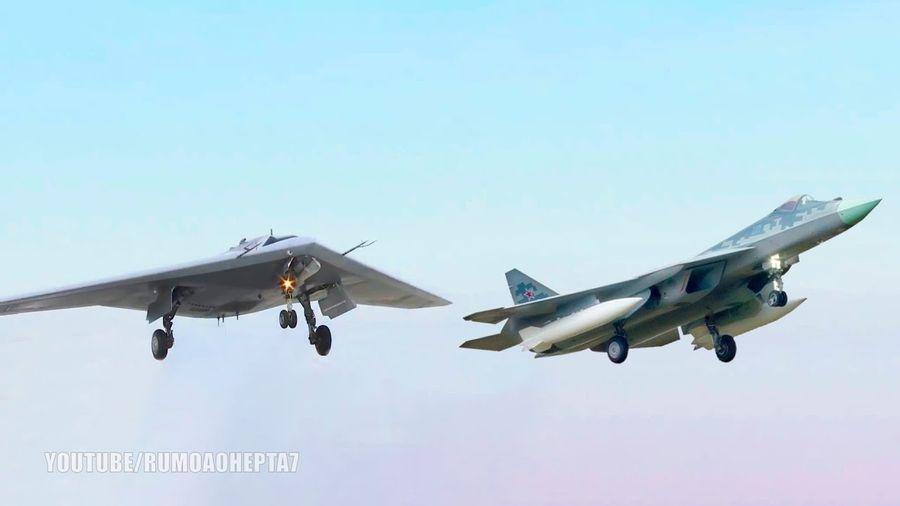
Russia’s Armed Forces are placing increased emphasis on the introduction of greater numbers of unmanned aerial vehicles (UAV) both for reconnaissance and combat strike purposes. A critical element in this process is the design and development of “heavy strike” systems, with the capability to operate not only in conjunction with other platforms in a network-enabled operational environment, but also to form an independent strike group. Experimental designs such as the heavy strike, reconnaissance, unmanned combat air vehicle (UCAV) S-70 Okhotnik (“Hunter”), first publicly seen in early 2019, underwent its first test flight in August. But the recent strategic exercise Tsentr 2019, occurring a month later, revealed a deeper and more complex vision for how these and similar UAVs will fit into future Russian war planning (see EDM, October 9). The Tsentr 2019 experiment with heavy strike drones is critical in understanding how the Russian top brass see the role of these systems in future warfare (C-inform.info, November 7).
On November 7, Russian defense ministry sources leaked to Izvestia the specifics of how UAVs were tested during this year’s Tsentr maneuvers (see EDM, September 18). They intimated that, for the first time in such an exercise, the UAV component was a prime focal point in the context of future war (voyny budushchego), examining the actions of UAV strike groups. The innovative factor was that during the exercise, the UAV strike group “fought autonomously,” without resorting to other weapons systems, as they launched a search-and-destroy mission against enemy air-defense platforms as well as command, control and communications (C3) centers (C-inform.info, November 7).
Separate units of UAVs formed a strike group during the exercise tasked with searching for and destroying key targets. These were, for example, targets in the enemy rear, such as headquarters and communications centers. In addition, they attacked enemy supply lines and actively interfered with the arrival of reinforcement units; additionally, they targeted the hypothetical adversary’s tactical air-defense systems. The former commander of the 4th Army Air Force and Air Defense Forces, Lieutenant General Valery Gorbenko, explained, “Existing drones are hard to spot for air defense, and for this reason, the apparatuses cause many problems. Even a weakly armed drone can inflict losses, destroy or damage expensive equipment. Although, so far ,they are more dangerous as air reconnaissance and fire spotters” (Izvestia, November 7).
Moscow-based military expert Anton Lavrov noted the use of the Orlan-10, which carries on-board ammunition. “The flight range of such vehicles allows operations up to 100 kilometers deep,” he told Izvestia. “This makes it possible for them to strike in the operational rear of the enemy and keep tens of kilometers of the frontline in tension,” Lavrov added. Their ordinance is not as powerful, but an accurate strike can damage equipment, fuel depots or ammunition. Lavrov and other military specialists believe that, in the future, the role of UAVs on the battlefield will only increase (Izvestia, November 7).
The Orlan-10 can independently conduct radio or visual reconnaissance, tracking the coordinates of cell phones or radio devices. It is equipped with 12 high-resolution cameras to increase its target-detection capability. These tend to be used to conduct attacks in groups of UAVs. One platform conducts visual reconnaissance at a distance of 1–1.5 km from the ground, the second carries Leer-3 electronic warfare (EW) equipment to suppress enemy ground communications, and the third, from a height of 4.5– 5 km, relays information to the base. Additional UAVs, Granat, Zastava and Eleron, with a radius of up to 30 km, also took part in the maneuvers. These unmanned aerial systems were responsible for tactical reconnaissance in the area of the enemy front line and made patrol flights. Forpost UAVs are superior to the Orlan in reconnaissance, as their flight range exceeds 250 km. Two cameras are installed on these drones, including infrared, making possible their use around the clock (Izvestia, November 7).
In August, the Russian Ministry of Defense announced that serial delivery of the Forpost-R reconnaissance drone would begin in 2020. “Testing of the new unmanned system, Forpost-R, is nearly complete. Its serial delivery to the army, under a contract signed between the Russian defense ministry and the Urals Civil Aviation Plant, will begin from 2020.” The ministry added, “This is an entirely renewed modification of the well-proven Forpost system, only the external outlines remained the same. The system has received new capabilities thanks to the latest Russian developments, enabling it to conduct reconnaissance round the clock using radio and radar tools as well as optical ones. These are unique capabilities for this class of UAV,” according to the ministry statement. It appears that EW assets are included to protect the drone, while radio technology helps extend its range (Interfax, August 24).
“The aerial vehicle was constructed out of domestically produced material and fitted with modern radio-electronic equipment, communication lines, a ground control system, and software, all Russian made. The Forpost-R also has a domestically produced engine, the APD-85,” the defense ministry stated. The Forpost drone is a licensed replica of the Israeli Searcher MkII, assembled at the Urals Civil Aviation Plant since 2010. Since 2018 the Russian military has around 30 Forpost systems assembled from imported parts. The first fully Russian-made Forpost-M, upgraded based on the experience of military action in Syria, were due to be delivered for the Russian defense ministry in 2019 (Interfax, August 24).
Tsentr 2019 offers a unique insight into how Russia’s General Staff sees UAVs playing an increasingly important role in future combat operations. This involves using UAVs to increase the targeting accuracy of artillery or other fires, or to conduct reconnaissance, but it also extends into autonomous strike groups acting independently within the theater of military operations as an additional applied layer of combat power against an adversary. It seems certain that UAVs have a bright future in the Russian military.
Roger N. McDermott specializes in Russian and Central Asian defense and security issues and is a Senior Fellow in Eurasian Military Studies, The Jamestown Foundation, Washington DC, Senior International Research Fellow for the Foreign Military Studies Office (FMSO), Fort Leavenworth, Kansas, and Affiliated Senior Analyst, Danish Institute for International Studies, Copenhagen. McDermott is on the editorial board of Central Asia and the Caucasus and the scientific board of the Journal of Power Institutions in Post-Soviet Societies. He recently wrote The Reform of Russia’s Conventional Armed Forces: Problems, Challenges and Policy Implications (October 2011).
This article appeared originally at The Jamestown Foundation's Eurasia Daily Monitor.

A Defense Win for Americans and Israelis in Arkansas
By Bradley Bowman • RealClearDefense
A Path to Success Against Iran
By Michael Schwartz • RealClearDefense
The World Cup Is Over. The Drone Threat Isn’t.
By Mitzi Perdue • RealClearDefense
AI Should Speed Veterans’ Benefits, Not Decide Them
By Rob Schroder • RealClearDefense
Don’t Be Swayed by Tactical Nukes
By Benjamin Giltner • RealClearDefense
Big Surface Combatants are so Hot Right Now
By CDR Salamander
USS Stout Loses Power During Port Visit Due to ‘Engineering Casualty’
By USNI News
Air Force Lessons Learned From Operation Epic Fury
By Tabitha Reeves, National Defense
Marines Need Nine More Amphibious Warships To Carry Out Its Missions
By TWZ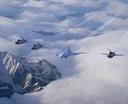
AFRL, ACC Fly XQ-67A Drone To Test Autonomous Teaming
By Airforce Technology