
A Prescription for Attrition
Last updated 07:13 AM EST • Read time: 3m
A Prescription for Attrition: Proactive Mental Health Treatment Increased Combat Effectiveness on Okinawa and Can on Today's Battlefields.
Attrition changed the dynamics of the battlefield in Ukraine. Attrition thinned the front line and reduced the available reserve to close critical gaps in the defensive lines or maintain momentum to achieve the goals of an offensive, as demonstrated in the actions of both the Russian and Ukrainian formations. More importantly, attrition removes tacit knowledge from the battlefield. War memoirs and after-action reports from numerous conflicts unanimously suggest that the most significant causalities are among replacement soldiers.
How can modern armies keep their experience where it is needed?
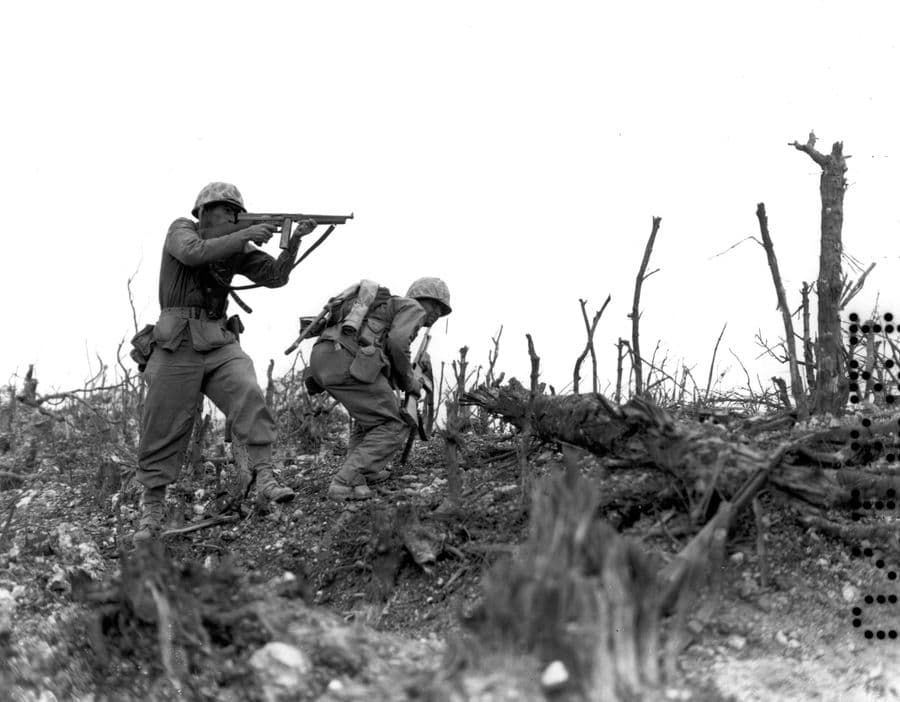
During operations on Okinawa in 1945, planners learned from the mistakes of past operations. Replacement soldiers increased the casualty bill during the operation, and evacuating soldiers tied up the logistics routes and hubs. Since experience in combat demands a blood price, keeping experienced soldiers engaged with the enemy is critical. Proactively treating mental health during combat can promote keeping experienced soldiers in the fight.
Casualties enjoyed immediate evacuation in early battles in the Central Pacific were immediately evacuated and often lost to their units for long periods. During the operation on Okinawa, two measures helped to stem this tide. First, planners recognized the need for neuropsychiatric treatment and facilities to extend forward along with the Army's operations. For this purpose, divisions and corps set up rest and treatment areas. As a further measure, the Tenth Army dedicated a whole field hospital to neuropsychiatric cases.[i]
The results were astounding.
Of the cases reported, half received treatment at division facilities. The other half and more severe cases received care at the corps and army field hospitals; of this population 80 percent returned to duty within ten days.[ii] Thus, valuable experience returned to the battle instead of formations dealing with the friction of integrating replacements.
Secondly, units experienced the operational benefits of keeping Soldiers in the fight and putting them back in familiar areas of operation with their units. Commanders realized the need to instill an attitude in soldiers that "hospitalization is primarily a means for restoring a soldier to duty rather than a pathway to evacuation."[iii] The planning produced significant results, with one division in particular. Despite previous combat experience, seven days into the operation, 17 percent of its casualties were designated psychiatric cases. Due to the immediate treatment received, none of these cases were evacuated. Moreover, doctors reported these men's desire and even a spirit of anxiousness to return to their units.[iv]
More research could determine that significant benefits come from rotating troops off the front line to systematically move them through mental health evaluation and treatment when needed. This assessment might find that even fewer combatants succumb to the mental strain of combat.
Nevertheless, on Okinawa in 1945, fighting men returning to the battlefield allowed the military to retain the tacit knowledge necessary for formations to integrate all the capabilities and experience available while using rapidly evolving tactics to break through the complex defensive array on Okinawa. Retaining the same experiential knowledge in Ukraine will support the navigation of the dynamic change in capabilities and operational approaches in Ukraine.
S.L. Nelson has served from the tactical to strategic level as a military officer. His views are his own and do not represent the position of the U.S. DoD.
Notes:
[i] Roy Appleman, Okinawa: The Last Battle, 414.
[ii] Ibid., 415.
[iii] HQs Army Ground Forces, Report on the Okinawa operation, 15.
[iv] Ibid., 15.

In Pursuit of Nuclear Abolition
By Peter Huessy • RealClearDefense
Innovation Alone Won’t Prepare the U.S. for the Future Battlefield
By Joshua Segal • RealClearDefense
The sUAS Tactical Trifecta
By Bryan T. Woody • RealClearDefense
The Revolutionary War: When Strategic Options Share the Same Weakness
By Henry Yep • RealClearDefense
The Houthis Are Testing the Limits of Collective Defense
By Saima Afzal • RealClearDefense
Navy Civilianizes Six Former Flag Billets, Reduces Six to Captains
By Mongilio, USNI N.
Raytheon's $8B Contract for Strategic Comms Terminal Modernization
By M+A El
America’s Maritime Moment Will Not Wait
By CDR Salamander
Armor Up?
By Marine Corps Compass Points
Who Shoots Down the Drone Over the Shipyard?
By John Ferrari & Dillon Prochnicki • RealClearDefense