
Preparedness for the Nation's Hidden Threats
Last updated 06:38 AM EDT • Read time: 4m
In 2001, when the anthrax attacks hit cities across America, mayors across the nation watched in horror as we all wondered: would our city be next, and if so, are we prepared? It was already an incredibly challenging time for the nation as we had been reeling from the September 11th terror attacks that had killed nearly 3,000 Americans.
Envelopes containing anthrax, a deadly biological weapon with catastrophic consequences, were distributed to newsrooms and Congressional offices. In total, five Americans who had inhaled the anthrax spores died, and thousands more were given 60-day antibiotic treatment courses, entirely preventatively. It was the deadliest bioterrorism event in our nation’s history. The nation was completely unprepared.
As mayor of Charlotte, one of the nation’s largest cities, the threat of man-made disasters like anthrax kept me awake at night. At the time, I wrote then soon-to-be Secretary of Homeland Security Tom Ridge, calling for a coordinated federal, state, and local collaboration to ensure cities had the resources and plans to respond. These threats were already at the top of my mind as Charlotte and the State of North Carolina obsessed over stadium security threats when the Panthers had their opening debut in 1996.
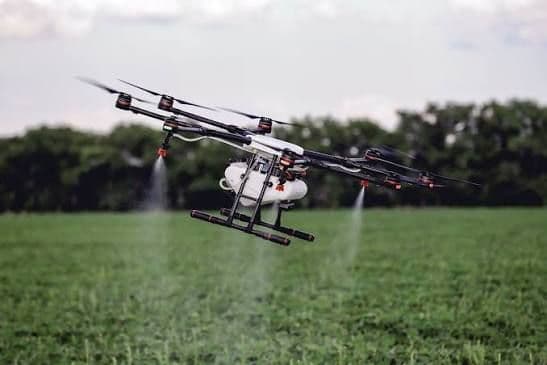
I would later go onto serve on President Bush’s Homeland Security Advisory Council, where we advised the Administration on combatting deadly bioterrorism threats like anthrax. At the time, we had the luxury of limited technology -- AI chatbots that provide instructions to make anthrax and readily available drones that could disseminate it, simply did not exist in the way they do today. My successors on the Advisory Committee are now having to grapple with these technological advances, which single-handedly elevate the anthrax threat paradigm. Major events, like America 250, the on-going World Cup, or the 2028 Olympics, promise to bring even larger crowds than Panthers games, offering easy targets for adversaries.
Yet, despite the vast growth of the anthrax threats, the nation remains less prepared than ever before to respond. The Biden Administration catastrophically attempted to eliminate anthrax antitoxin from the Strategic National Stockpile, a decision which publicly signaled to our adversaries that we are more vulnerable than at any point for this top biological threat. Countermeasures levels in the Strategic National Stockpile broadly remain at record lows and are actively depreciating further. We lack the robust federal-state-local infrastructure required to adequately respond to these threats, and epidemiological modeling of the true anthrax threat fallout continues to lag.
I cannot fail to mention the AI-drone anthrax vulnerabilities: even an intercepted drone falling out of the sky could still be spewing toxins that can blanket entire cities. We have only few plans for these scenarios.
Given the threat, now is the time for solutions that harness bipartisan and multilateral collaboration that avoids the worst-case scenarios.
At the national level, Congress continues to work to fix America’s anthrax preparedness vulnerabilities, with U.S. Representatives Don Davis (D-NC) and Jen Kiggans (R-VA) introducing the Protecting American Families and Servicemembers from Anthrax Act, bipartisan legislation which would create a long-term strategy on anthrax preparedness. This federal leadership is crucial at a moment when adversaries, such as China, Russia, Iran, and North Korea, all have active biological weapons programs. Thankfully, Congress included versions of this bill in the report of the nation’s FY27 annual defense bill, in both the U.S. House and U.S. Senate versions, and in the FY27 LHHS Appropriations package.
As Governor, my motto on disaster preparedness was to be overprepared and hopefully underwhelmed. The only way to achieve this is by preparing in advance. In the case of anthrax, this means stockpiling medical countermeasures, developing anti-drone technologies, ensuring anthrax threat modeling is accurate for this day and age, and developing plans to respond alongside state and local partners.
To that end, Congress should immediately pass the Rep. Davis and Kiggans’ bipartisan bill that bolsters anthrax countermeasure stockpiling. Federal government agencies, including but not limited to the Departments of War, Homeland Security, and Health and Human Services, need to extend their collaborations through interagency groups, like the PHEMCE. State and local government must take an active role in equipping, preparing, planning, and coordinating.
These threats can be neutralized, but it will take bipartisan, bicameral efforts and sweeping federal-state-local coordination. Given the vast anthrax threat to American families, we have no other choice.
Pat McCrory served as Governor of North Carolina from 2013-2017, Mayor of Charlotte from 1995-2009, and as a member of President George W. Bush's Homeland Security Advisory Council.

Reflecting on an Epic Horse Campaign in the Mountains of Afghanistan
By Brian Glyn Williams • RealClearDefense
The Godfather of American Foreign Policy Realism Speaks to Today’s World
By Francis P. Sempa • RealClearDefense
In Pursuit of Nuclear Abolition
By Peter Huessy • RealClearDefense
Innovation Alone Won’t Prepare the U.S. for the Future Battlefield
By Joshua Segal • RealClearDefense
The sUAS Tactical Trifecta
By Bryan T. Woody • RealClearDefense

Navy Civilianizes Six Former Flag Billets, Reduces Six to Captains
By Mongilio, USNI N.
Raytheon's $8B Contract for Strategic Comms Terminal Modernization
By M+A El
America’s Maritime Moment Will Not Wait
By CDR Salamander
Armor Up?
By Marine Corps Compass Points
Who Shoots Down the Drone Over the Shipyard?
By John Ferrari & Dillon Prochnicki • RealClearDefense