
The Reform Penalty: Is Congress Punishing the Army for Fixing Its Budget?
Last updated 06:50 AM EDT • Read time: 11m
Congress is always asking the military for transparency and simplicity. It’s a constant refrain from both sides of the Hill that the Pentagon needs to do more to pass its budgetary audits. Incentives matter, even for an organization as large as the Department of War. Congress should reconsider the signals it is sending across the Potomac as it’s marking up defense budgetary materials. As the Army consolidates fragmented budget lines, Congress should be rewarding modernization and clarity, rather than viewing them as a larger target to pay for special interests.
When I deployed as an Infantryman to Afghanistan, communications and situational awareness were always top of mind. There was no shortage of equipment, each purpose-built to solve a singular problem: MBITR for platoon comms, TACSAT for higher headquarters, SINGARS for fires, Blue Force Tracker for situational awareness, etc. I didn’t realize until I went to Capitol Hill as a policy advisor in the House and then for a Senate Appropriator, the budget lines for those programs were equally convoluted. Reams of paper were required to lay out budget justifications of the various programs of record, commercial off-the-shelf equipment purchases, and other transaction authority. But that is about to change if Congress puts its money where its mouth is.
Next Generation Command and Control (NGC2)
The Army has been working to modernize its systems through a new initiative called Next Generation Command and Control (NGC2). This initiative is meant to bring Army unit communication into the next century, with four foundational layers, to enable real-time information sharing, including AI-driven decision-making. The Army is actively testing and prototyping to give soldiers on the ground more capability. But the Army is not just streamlining comms systems; it’s also streamlining its budget request. For the 2027 Fiscal Year (FY27) request, the Army consolidated over a dozen procurement budget lines into just two: C2 Infrastructure and C2 Transportation.
The real challenge, however, may be communicating with Members of Congress. In the House FY27 National Defense Authorization Act (NDAA) Committee Report, NGC2 was hit with a whopping $820 million authorization decrease. In the Army’s FY26 request, this equipment covered at least 13 separate line-item requests, ranging from a few million dollars to a few hundred million, but totaling about $2.5 billion. My analysis looked at just the procurement lines for the NGC2 effort, so Research and Development (R&D) funding would edge that total higher. With those 13 differentiated justifications, the House Armed Services Committee (HASC) did their due diligence for FY26 and authorized $138 million less across the programs, practically a rounding error, in an NDAA perhaps ironically titled: Streamlining Procurement for Effective Execution and Delivery.
This year, for FY27 planning, the same programs were actually streamlined. The combined budget request for Procurement of NGC2 was $2.8 billion, a relatively modest increase, but spread across only two accounts. Yet the House NDAA report authorized just a hair more than $2 billion for NGC2. So, what accounts for the nearly billion-dollar gap between FY27 request and HASC authorization? Does Congress not approve of the modernization effort NGC2? Hardly, the report specifically notes that “the committee remains supportive of the Army's initiative to modernize the Department's command and control.”
Congress Exercising Oversight
Congress has a responsibility to conduct oversight, and it often does so through the authorization process. A report from the Acquisition Research Symposium found that consolidating program elements gave an agency “more flexibility to successfully navigate program developments, but external stakeholders who seek to impact programs sometimes prefer a divided [program element] structure.” The justification documents and posture hearings are for the benefit of the legislature, which has the final say. The responsibility to convince Members of Congress falls to the Pentagon and the administration. So, more budget lines with more granularity may be necessary to achieve Congressional approval.
In last years’ NDAA Report, the Senate Armed Services Committee (SASC) expressed emphatic support for the network modernization push and requested more information in the form of a formal report. The Joint Explanatory Statement (JES) for the FY26 NDAA included a funding limitation, restricting 50% of the NGC2 funds, until that report was made available to the Defense Committees. At over a billion dollars, that report would have been one of the highest grossing books of all time. While we don’t have access to that report, it required the Army to supply Congress with detailed procurement plans, encryption, interoperability, and operational test and evaluation information. Additionally, we did see this year HASC express a preference for the Army to explore “commercial cellular connectivity” as part of the overall NGC2 project. Even if that could lower costs, it conjures the image of Soldiers recreating the “Can You Hear Me Now?” advertisement in a contested environment.
There is further evidence that Congress is wary of NGC2 for substantive reasons. Recently, the Government Accountability Office (GAO) reviewed the modernization efforts at the behest of Congress. The report to Congress was critical of the NGC2 efforts, specifically around the Army’s schedule of deployment and visibility of long-term costs. Their main argument was that the “Army lacks information to determine if it can scale the effort.” In hindsight, the Army issued a press release before the GAO report, in what may have been a prebuttal, claiming that NGC2 was “ready to scale.” So there exists an alternative to Congressional disapproval: Congressional incapacity.
Appropriators Prefer Granularity
For FY27, we don’t yet have a clear picture of where the Appropriators will land when it comes to NGC2. However, the House Appropriations Defense Subcommittee (HAC-D) released their report which takes a different approach than HASC. Helpfully, early in the HAC-D report, the committee addressed budget line-item consolidation head on. They explain that they are supportive of the efforts to create agile funding, but that comparing different budget line items across fiscal years makes “oversight more cumbersome and less transparent.” Their solution was to fracture NGC2 into six separate program elements and address each one individually. The subcommittee notes that there are some specific program excesses and funding that are needed early. Ultimately, the HAC-D cut to NGC2 procurement is about half that of the HASC. If Congress is going to recreate legacy budget structure or arbitrarily cut the top line, the message to program managers is clear: take the safe route of conventional program lines rather than reforming them. Congress will get the product they are incentivizing the Army to create.
This additional data point shows us that budget consolidation creates structural vulnerability as it concentrates previous lines into large accounts. The larger budget lines at HASC produced larger cuts, while HAC-D took a closer look at smaller lines and trimmed only what was necessary. Institutional knowledge degrades with turnover so a long paper trail is needed for historical continuity and to meet committee staff needs. Staff capacity is a key driver here, where Congress may not intend to penalize reform efforts, but may be doing so inadvertently. A 2023 Congressional Research Service Report noted that committee staff levels decreased by nearly 40% since 1977 and more than 7% since 2014. Because of this, the Pentagon needs to do more to increase oversight and transparency in the budget request process. Looking again at the FY26 JES limitation on funding, the provision was a request for more information rather than an expression of disapproval with the direction of the program. Let’s examine what Congress did over what they said.
The Reform Penalty in Action
HASC pulled at least $110 million from the NGC2 effort to make room for other priorities. The NDAA legislative history shows us that Congressional staff saw a large program, without a clear history, and used it to make sizable cuts for other programmatic adds. The Chairman’s Mark had already set the NGC2 authorization levels at a reported $710 million below the Army’s request. This was substantially lower than levels coming out of the other three corner committees. HASC provided no explanation for that decrease, but we do see a pattern emerge in the House markup process, where an additional $110 million was pulled from the C2 Infrastructure and C2 Transportation lines to make room in the topline for other priorities like the Improved Turbine Engine Program and the Next Generation Combat Vehicle.
These cuts were not made to curtail the NGC2 or conduct oversight, rather they styled the NGC2 funding lines as a payfor, prioritizing other Member priorities. Hill staff are trained to offer budget neutral amendments by targeting programs that are large enough to absorb a cut and lacking a staunch defender on committee. Most programs of record have a contractor waiting in the wings that is a constituent of one or more Members. NGC2 is large enough that there just may be too broad of a delegation, with reportedly over 60 vendors working on NGC2 projects.
For years, analysts have recommended that DOD consolidate budget lines, while also warning of Congressional resistance. Additionally, the legislative Commission of Planning Programming, Budgeting, and Execution (PPBE) Reform Final Report noted that previous attempts to consolidate budget line items had met with “mixed success.” The most successful examples were “characterized by sustained engagement and collaboration with the congressional defense committees even before consolidation occurs,” implying that fewer pages sent to Congress needed to be replaced by additional meetings. If larger budget lines create larger targets for cuts, then Congress is creating a reform penalty for defense planners.
Similarly, the Acquisition Research Symposium, mentioned above, shared lessons learned on dealing with Congress, particularly around consolidated program elements for the Army’s Robotic Combat Vehicle (RCV), which also experienced arbitrary cuts. They recommended “more frequent interaction with Hill staffers.” Sustained engagement needs to be driven by the military strategists to fully communicate plans to restructure. The Army believes they have done their part to lay the groundwork for congressional buy-in. Earlier this year, Michael Obadal, Under Secretary of the Army, told stakeholders that “Congress believes in the importance of this program because of our continued engagement with them.” If the engagement was present in the NGC2 case, cutting the program sends a clear message to the program managers and budget innovators: keep your programs small, because larger numbers become larger targets.
Oversight that Supports Modernization
That sustained engagement and communication responsibility falls in part to Congress as well. The House Armed Services Committee had multiple hearing opportunities to express concern about the pace or course of NGC2. In fact, General LaNeve, the Vice Chief of Staff of the Army, mentioned NGC2 in his opening statements to the HASC Subcommittee on Military Readiness, yet he received no questions on the topic from Members in open session. The same is true for other Army confirmation hearings in the Senate, when nominees regularly point to the importance of NGC2, and seldom get questions on the topic. Also, the JES from last year shows us that Congress is able to use more precise tools if they had a need for more information. If Congress is reducing authorization for a legitimate reason that is well within their remit. Every budget process requires prioritization, and there will be winners and losers. However, the report language reads as an endorsement of the NGC2 effort, while the funding tables read like an admonishment. The Department of War is adept at responding to Congress, when Congress makes its intent clear. Lacking that communication, military planners are operating through the fog of war, right here in Washington.
With the documents we have publicly available and without being in staff posture meetings, we don’t know the full justification the $820 million drop in authorization. We must come to the same conclusion that future Program Managers will come to, Congress demands reform and candor, but rewards tradition and complexity. For the next generation of warfighters to be able to adapt, Congress needs to align incentives to support consolidated budgets and modernized procurement.
Graham Markiewicz is the Executive Director of the Security and Democracy Forum and Adjunct Professor at Boston College Law. He is an attorney and national security policy professional who has served as a defense policy advisor in both the U.S. House and Senate. He previously served as an Infantry officer in the U.S. Army, deploying twice to Afghanistan with the 10th Mountain Division and holds Airborne, Air Assault, and Ranger qualifications.
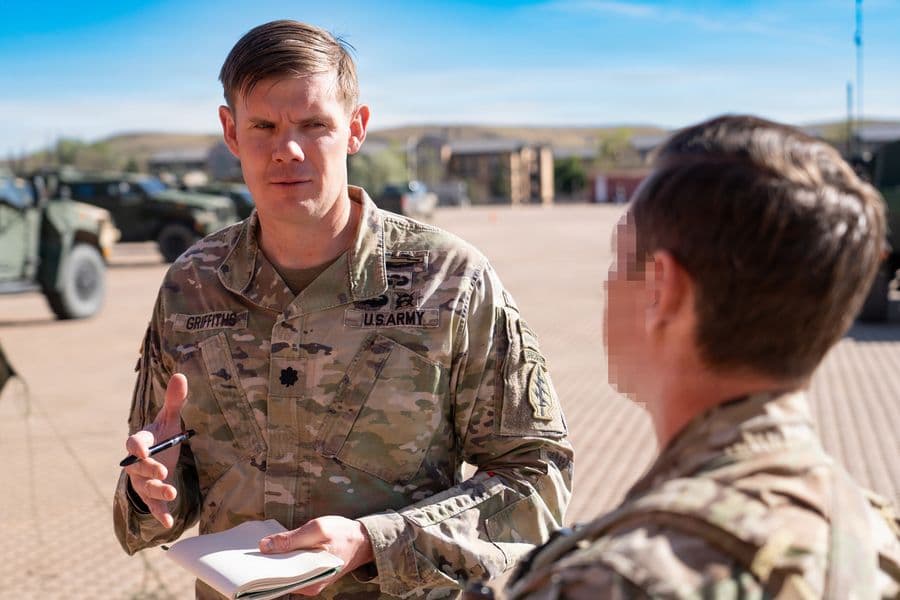
image: U.S. Army Lt. Col. Zachary Griffiths, commander of 4th Battalion, 10th Special Forces Group (Airborne), receives a training brief from one of his Soldiers at the Mission Training Center, Fort Carson, Colorado, May 7, 2026. Their training focused on setting up a tactical operations center and integrating Next Generation Command and Control (NGC2). (U.S. Army photo by Sgt. Casey Dinnison)

In Pursuit of Nuclear Abolition
By Peter Huessy • RealClearDefense
Innovation Alone Won’t Prepare the U.S. for the Future Battlefield
By Joshua Segal • RealClearDefense
The sUAS Tactical Trifecta
By Bryan T. Woody • RealClearDefense
The Revolutionary War: When Strategic Options Share the Same Weakness
By Henry Yep • RealClearDefense
The Houthis Are Testing the Limits of Collective Defense
By Saima Afzal • RealClearDefense

Who Shoots Down the Drone Over the Shipyard?
By John Ferrari & Dillon Prochnicki • RealClearDefense
Northrop Grumman Breaks Out the Big Guns at AUSA
By Daniel Terrill, Defense News
Army Pursuing Diverse Array of New Anti-Air Interceptors
By Trevithick, The WarZoneWho Shoots Down the Drone Over the Shipyard?
By John Ferrari & Dillon Prochnicki, RCD
F-35C Lands for the First Time on a Ford-Class Aircraft Carrier
By The Aviationist