
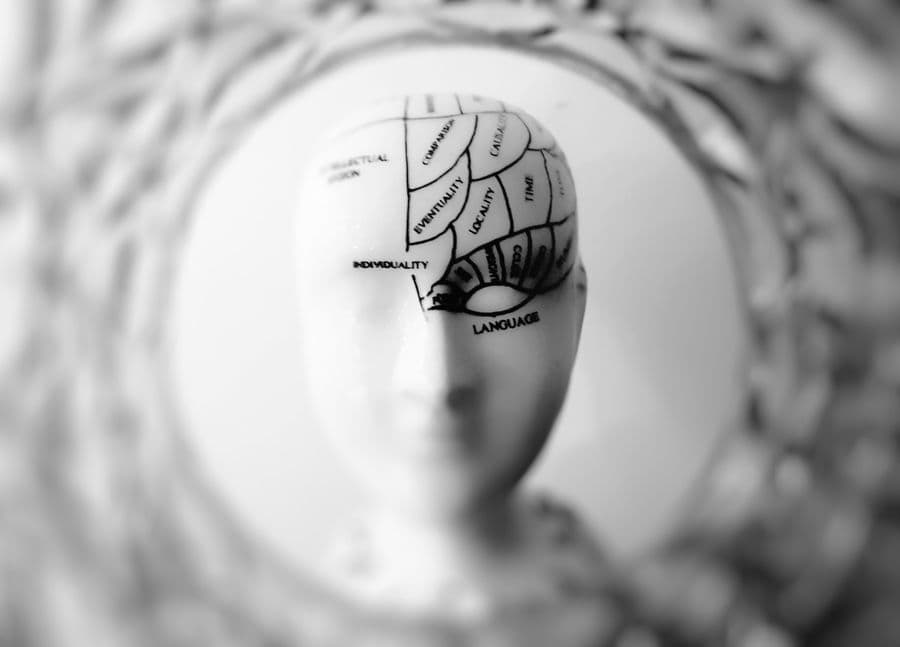
The Brain Is a Battlespace
Last updated 06:02 PM EST • Read time: 7m
“The most important six inches on the battlefield is between your ears.” – General James Mattis
Nothing could be more true today than this quip from the former U.S. Marine icon and former Secretary of Defense General James Mattis. In an age of pervasive information flows and global connectivity, our ability to process and validate information is vital to our national security. This raises an important issue in the current strategic competition between today’s great powers. The problem is two-fold; first, the United States and its partners and allies are under a relentless assault in the information sphere. Information is used as a weapon to weaken our resolve and confuse our responses. Second, it is an insidious assault below the headline horizon and thus not widely recognized or acknowledged by policymakers, let alone their constituents. To be more precise, the United States and its allies and partners—supporters of the liberal, rules-based world order—are under attack from determined authoritarian adversaries like China, Russia, and Salafist Jihadists that use information warfare intending to replace that world order with an alternative, authoritarian vision, and we are not defending ourselves.
In this information war, the West is handicapped by its narrow and binary understanding of war. We are most comfortable with the simple view that we are either at war or at peace, and if our armed forces aren't fighting, it must mean we are at peace. Note how our national security leaders desperately insist that we are not in and don't want a new cold war. Our adversaries do not suffer from this handicap. Any honest examination of what they say amongst themselves—be it Russian, Chinese, or Wahhabist/Salafist Jihadi leaders—shows that they believe they are in an existential struggle for global dominance.
While less tangible than other forms of warfare, information warfare is neither new nor inherently difficult to understand. Put simply, information warfare is the use of information to wage war. Russia is a master of this art; though blunted recently, Russia’s interference in the U.S. elections of 2016 was a brazen attack on the validity of American elections—one of the cardinal elements of democratic governance; and its results must have pleased the Kremlin. Russia did the same with lesser fanfare in multiple European elections. In 2020 China was using as many as 23,750 primary accounts and approximately 150,000 booster accounts to conduct a campaign aimed at applauding China’s COVID-19 response while discrediting Western responses, as well as attacking traditional targets such as Hong Kong pro-democracy activists and Taiwan. During its ascendence, the Islamic State masterfully used social media platforms to recruit, to propagandize, and to incite violent acts against its enemies. These are all instances of information warfare: There are many, many more.
In a blunt sense, the way information warfare works is to either make the adversary do something contrary to its interest or fail to do something in its interest. Emerging technologies have added new techniques to the toolbox of the information warrior. In addition to the traditional tactics of propaganda, misinformation, and disinformation, we are now assaulted by trolling, catfishing, gaslighting, and spamouflaging.
In addition to influencing opinions with these new techniques of manipulating information, there is the frightening prospect of neurological advances enabling warfighter performance enhancement, or conversely, adversary performance suppression. The pharmaceutical industry is now studying drugs that can dramatically increase attention span and significantly improve concentration in sleep-deprived conditions. We are still studying the causes and effects of the mysterious Havana Syndrome on the mental performance of diplomats, intelligence, and military personnel. Chinese scientists working for the China Communist Party are allegedly developing genetic manipulation techniques to improve its armed forces' cognitive and physical capabilities. If successful, these new techniques could lead to information-processing overmatch in terms of speed and volume of data processed by Chinese warfighters and commanders.
How can we counter the onslaught of information warfare if we do not even recognize it as warfare? The first step is intellectual; we must expand our understanding of the meaning of war. The word war itself comes from ancient roots connoting confusion and disruption—not necessarily physical violence. Confusion and disruption are the precise intentions of the information warrior. We must accept what our adversaries believe: we are already engaged in war, a struggle for global dominance between two competing visions of order. But how can we persuade the general public that we are in a war that doesn't entail bombs or missile strikes yet is existential to our way of life? Through consistent and persistent public information campaigns, including repeated public service announcements and educational programs, persuaded the public of the importance of sanitation, education, seat belts, the dangers of tobacco, and many other beliefs that were once not widely held. Through such campaigns, we have made our populations more informed consumers and citizens. Our governments should be able to devise similar campaigns to make people better consumers of information, advise them on reliable sources, detect and discern dis- and misinformation, and better judge the reliability of the information they encounter.
Technology can help; for example, applications that detect deep fakes would be useful or inform users when information comes via automated bots or other deceptive sources. Social media companies, too, can and should be doing a much better job monitoring the content on their platforms. Tobacco companies were forced to warn smokers of the dangers of tobacco; all social media companies should be responsible for warning users when content is deceptive or from devious sources.
Technological and educational measures will strengthen our defense against information warfare, and as such, may constitute a version of deterrence by denial. We can hope that our defenses will discourage our adversaries if they doubt their efforts will accomplish significant outcomes. These measures will not contribute, however, to deterrence by punishment, which assumes we have some capability to retaliate and make our adversaries pay inordinately for their information warfare attacks. The United States once had a robust and extensive information warfare capability with the United States Information Agency (USIA) and the radio programs Radio Free Europe and Radio Liberty that unveiled many of the lies that communism was built upon and discredited the ideology among the Soviet Union’s and the Warsaw Pact’s own people. Such information warfare capabilities should be resurrected along with the technological tools to help penetrate Russian, Chinese, and Jihadist brain space.
To make any retaliatory capability or campaign effective will require an institutional owner granted the authority and resources to partner with the private sector. The owner must support developing and utilizing the most advanced technology available to meet the information warfare challenge, from both a denial and punishment posture. America's current national security architecture cannot resolve the organizational issue of ownership, an architecture designed in the ashes of World War II. The State Department cannot meet this challenge, whose efforts to take on the activities once performed by USIA have been unsuccessful. Nor should these responsibilities be given to the Department of Defense, which is too immersed in a binary and narrow paradigm of warfare. Following the al-Qaeda attacks of 9/11, the Department of Homeland Security was established. Also, established-for-purpose was the National Counterterrorism Center. The information warfare challenge requires a similar designed-for-purpose institution.
This effort will require significant dedicated resources, legal authorities, and leadership to defend us from the information war being waged against us by authoritarian adversaries. China, Russia, and other authoritarians are sparing no effort to cause us to lose faith in and abandon the protection of the liberal rules-based world system that has served so many so well.
Michael Miklaucic is a Senior Fellow at National Defense University and the Editor-in-Chief of PRISM, NDU’s journal of national and international security affairs.

Iranian Cyber Operations
By Michael Groen • RealClearDefense
Reflecting on an Epic Horse Campaign in the Mountains of Afghanistan
By Brian Glyn Williams • RealClearDefense
The Godfather of American Foreign Policy Realism Speaks to Today’s World
By Francis P. Sempa • RealClearDefense
In Pursuit of Nuclear Abolition
By Peter Huessy • RealClearDefense
Innovation Alone Won’t Prepare the U.S. for the Future Battlefield
By Joshua Segal • RealClearDefense

Navy Civilianizes Six Former Flag Billets, Reduces Six to Captains
By Mongilio, USNI N.
Raytheon's $8B Contract for Strategic Comms Terminal Modernization
By M+A El
America’s Maritime Moment Will Not Wait
By CDR Salamander
Armor Up?
By Marine Corps Compass Points
Who Shoots Down the Drone Over the Shipyard?
By John Ferrari & Dillon Prochnicki • RealClearDefense