
Lost in Mediation: Why Pakistan Is the Wrong Messenger to Tehran
Last updated 06:33 AM EDT • Read time: 8m
Washington may finally have Iran under the kind of sustained pressure that months of negotiations failed to produce. Renewed U.S. sanctions, restrictions on Iranian financial and commercial networks, pressure on oil revenues, and the cumulative economic costs of war have narrowed Tehran’s room for maneuver. Iran tried to push those costs outward through restrictions on the Strait of Hormuz, raising expenses for shipping, Gulf exporters, insurers, and Asian energy consumers. Gulf producers and commercial operators have adapted sufficiently to keep substantial volumes moving, eroding Tehran’s ability to turn maritime disruption into the economic stranglehold it sought. Serious negotiations may resume after the U.S. midterms, giving Washington an opportunity to convert accumulated economic pressure into Iranian concessions. The previous negotiating process repeatedly converted pressure into pauses before Tehran had paid the political and economic price Washington was trying to extract.
Pakistan is the wrong country to entrust with converting that pressure into practical next steps. Islamabad needs a workable relationship with Tehran for its own economic and security interests, while Iran possesses several ways to make deterioration painful for Pakistan. American sanctions obstruct Pakistani plans for Iranian energy and expanded trade. Confrontation threatens Balochistan and could force Islamabad to divert security resources toward an already unstable frontier. Pakistan’s Makkah defense commitments to Saudi Arabia at least theoretically expose it to Iranian support for the Houthis, making Iranian restraint valuable to Islamabad regardless of what Tehran gives Washington. China, Pakistan’s indispensable strategic partner, purchases Iranian petroleum and wants reliable Gulf energy flows. Pakistan’s military leadership has also used mediation to rebuild its political relevance in Washington by presenting access to Tehran as a valuable diplomatic asset. These interests have consistently pushed Islamabad toward de-escalation at precisely the point when sustained pressure had the potential to force Iran into harder choices.
Pakistan helped broker the earlier ceasefire while Iran remained under acute military and economic pressure and before Tehran had accepted the technical concessions Washington sought. Iranian institutions received time to assess damage, reorganize vulnerable operations, adjust procurement, identify exposed sanctions-evasion routes, disperse assets, and redirect commerce through viable channels. Iranian officials could also study which governments suffered most from regional disruption and which commercial actors remained prepared to deal with Iran. The subsequent framework gave negotiators 60 days to produce a final agreement. The deadline expired while disputes over enrichment, verification, sanctions, and implementation remained unresolved. Islamabad had secured an end to immediate fighting near its western frontier, while Tehran had received time to adapt to the pressure campaign.
Technical negotiations then exposed the limits of Pakistani access. Decisions over enriched material and centrifuges affected Iran’s nuclear capabilities directly. Verification required agreement over access and enforcement. Sanctions relief would have been linked decisions about timing, compliance, and consequences for violations. Washington controls the economic measures Tehran wants removed, Israel controls its own military decisions, and China provides a petroleum market, and commercial relationship Pakistan cannot match. Iranian officials can receive Pakistani envoys, hear American proposals through them, reject provisions they consider too costly, and remain confident that Islamabad will continue searching for another formula.
Pakistan is far from neutral and has its own reasons for pushing to loosen American economic pressure. The Iran-Pakistan gas pipeline has spent years caught between Islamabad’s demand for Iranian energy and U.S. sanctions. Iran built substantial infrastructure on its side while Pakistan repeatedly delayed its portion. Tehran has pressed Islamabad over contractual obligations and potential penalties, while chronic Pakistani energy shortages keep Iranian gas attractive. Sanctions relief for Tehran could therefore remove an obstacle facing Pakistan’s own energy plans. Pakistani officials advising Washington about the economic price required for an agreement are discussing restrictions that affect their government’s ability to purchase Iranian energy.
Iranian petrol and diesel already enter Pakistan through entrenched smuggling networks across Balochistan. Price differences and Pakistani demand support drivers, traders, storage operators, retailers, and communities that derive income from the traffic. Pakistani authorities occasionally seize fuel and conduct enforcement operations while leaving the commercial networks largely intact. Stronger restrictions on Iranian petroleum reach beyond Tehran’s revenues into a Pakistani border economy whose disruption creates problems for Islamabad. Iranian authorities can also tighten fuel flows, customs procedures, or border commerce from their side. Parts of Pakistani Balochistan rely on Iranian electricity, including areas around the Makran coast, giving Tehran additional means of creating economic pressure in a province where Islamabad already faces separatist violence and weak development.
Security cooperation along the 909-kilometer frontier adds another source of Iranian leverage. Terrorists, separatists, smugglers, and traffickers operate across Balochistan and Sistan-Baluchestan, and Pakistani security agencies benefit from Iranian intelligence and interdiction. Reduced cooperation would require Islamabad to commit additional personnel, surveillance, and intelligence resources. Iran demonstrated the sensitivity of that frontier in January 2024 when it struck inside Pakistan after accusing Jaish al-Adl of operating from Pakistani territory. Pakistan retaliated inside Iran and then moved rapidly to restore relations, leveraging Iranian assistance before another active front consumed additional Pakistani military resources.
Pakistan’s Makkah defense commitments, however, have created an even more consequential conflict of interests. Islamabad has assumed greater responsibility for Saudi security while Iran continues supporting the Houthis with weapons technology, components, technical expertise, training, and political backing. Pakistani officials have discussed Yemen with Tehran and carried Iranian ideas concerning engagement with the Houthis to Saudi and Turkish partners. Renewed Houthi attacks against Saudi cities, energy infrastructure, or holy sites could produce requests for Pakistani military, intelligence, air-defense, or logistical assistance. Islamabad would then have to meet obligations toward Riyadh while managing the consequences of confrontation with its western neighbor.
If the Saudi-Yemeni offensive to retake Bab Al-Mandeb not only succeeds, but holds, reduced Houthi activity would lower the chance that Saudi Arabia will request a larger Pakistani military contribution under the Makkah arrangements. Iran can offer restraint in Yemen while seeking movement on sanctions, maritime access, or other issues, giving Islamabad an immediate security benefit before Washington receives a meaningful nuclear concession. Pakistani officials assessing such an offer therefore have to calculate what renewed Houthi attacks could mean for Pakistan’s obligations to Riyadh. An Iranian proposal that offers Washington relatively little may solve a serious problem for Islamabad and influence what Pakistani mediators describe as sufficient Iranian flexibility.
Beijing remains Pakistan’s principal strategic partner, a major investor in the China-Pakistan Economic Corridor, and a large purchaser of Iranian petroleum. Disruption around Hormuz have increased Chinese energy costs, while instability along the Iranian-Pakistani frontier threatens Chinese personnel and infrastructure in Balochistan. Still, Beijing managed to stockpile oil and has for now avoided having to make serious concession over Iran despite U.S. pressure. Pakistan has already commited substantial resources to protecting Chinese projects there from terrorist attacks. A wider confrontation with Iran would require additional security deployments in the same province and could undermine Islamabad’s assurances to Beijing that it can protect Chinese investments. Pakistan therefore enters Iran diplomacy with China’s interests in mind.
Shipping disruption also raises Pakistan’s own energy costs and damages Gulf economies that employ Pakistani workers, generate remittances, invest in Pakistan, and periodically provide Islamabad with financial support. Tehran can offer selective passage, temporary arrangements, or broader reopening while attaching demands for sanctions relief or other concessions. Pakistan has powerful reasons to favor an early agreement because prolonged disruption imposes costs on Islamabad and several of its most important partners. Washington faces a different calculation as commercial adaptation keeps more traffic moving and reduces the leverage Tehran derives from its attempt to choke Hormuz.
The earlier rounds raise a harder question: how reliably did Pakistan transmit American messages? Pakistani officials carrying deadlines also conveyed judgments about U.S. resolve, military escalation, and Washington’s willingness to keep bargaining. If Islamabad delivered a hard demand while suggesting another round remained possible, Tehran could discount the consequences Washington intended. American officials can compare their instructions with Tehran’s subsequent behavior.
Tehran could exploit the return channel as well. Pakistani officials may have treated Iranian ambiguity as flexibility, emphasized tentative signals that produced no concrete concessions, or urged Washington to revise proposals after Iranian refusals. If rejection repeatedly sent Islamabad searching for another compromise, Tehran learned that holding firm could move Washington first.
Field Marshal Asim Munir has meanwhile parlayed access to Tehran into a larger role in Washington and the Middle East. U.S. reliance on Islamabad has drawn Pakistani officials into negotiations beyond their traditional South Asian remit and increased the political value of keeping that channel active.
Washington can now match Pakistani reports of Iranian flexibility against Tehran’s eventual positions on enrichment, verification, sanctions, and enforcement, while tracing how Iranian procurement and sanctions-evasion networks adapted during the ceasefire. Continued economic pressure and the weakening coercive value of Iran’s Hormuz restrictions give Washington room to conduct that review before another Pakistani-brokered pause gives Tehran more time.
Irina Tsukerman is a U.S. national security lawyer, geopolitical analyst, President of Scarab Rising, Inc., a security and geopolitical risk strategic advisory, and Board Member of The Washington Outsider Center for Information Warfare.
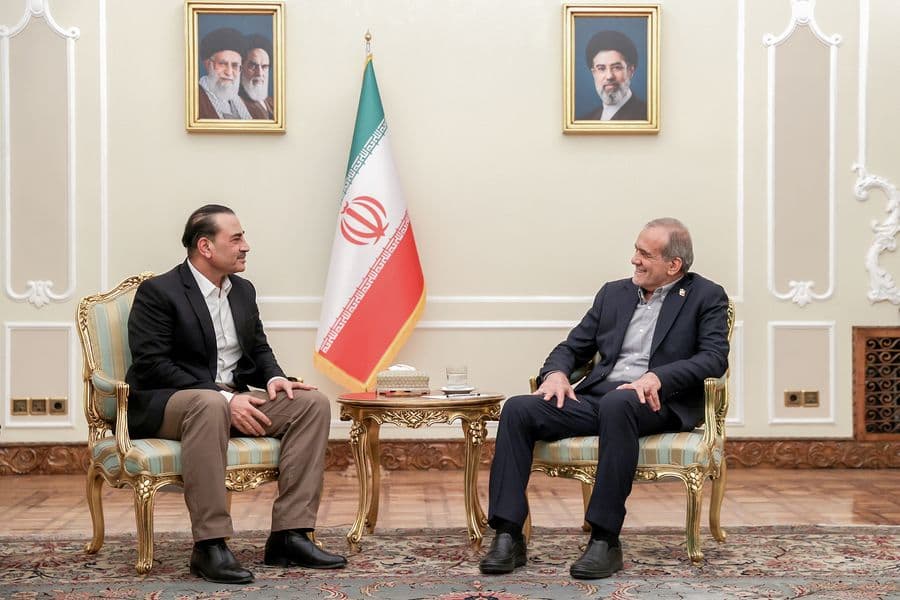
image: In this photo released by the Iranian Presidency Office, President Masoud Pezeshkian, right, meets Pakistan's Army Chief Field Marshal Gen. Asim Munir in Tehran, Iran, Monday, Aug. 24, 2026. (Iranian Presidency Office via AP)