
Competing Visions for a ROK SSN
Last updated 05:42 AM EST • Read time: 6m
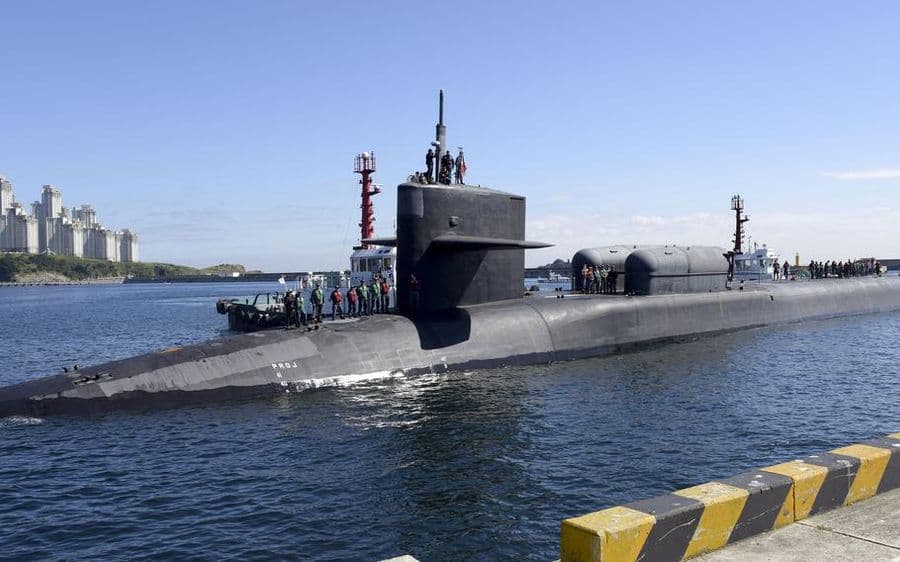
With the Trump administration undertaking a wide range of foreign policy initiatives over the past several months, its announcement in November that it would support the Republic of Korea’s (ROK) acquisition of a nuclear-powered attack submarine (SSN) has received only limited attention. Nevertheless, this decision is of great significance for the future of the Indo-Pacific. Seoul has sought US support for its SSN ambitions for years. These platforms remain some of the most sensitive, sophisticated, and capable assets in modern naval warfare. Why has the ROK pursued an SSN, and how does this platform fit within its broader regional strategy?
We argue that two distinct but competing visions have shaped ROK thinking on SSNs and their role.
The first situates the SSN within the ROK’s Three Axis system. This vision identifies the Democratic People’s Republic of Korea’s (DPRK) nuclear forces as the primary threat to be addressed. The DPRK has deployed an expanding, increasingly sophisticated range of delivery systems that complicate the ROK’s ability to deter aggression by its northern neighbor. Particularly concerning is the DPRK’s continued progress toward a ballistic missile submarine (SSB) that could give it a more survivable sea-based deterrent.
This first vision would task the ROK SSN with tracking and, if necessary, neutralizing DPRK SSB’s. Compared to diesel-electric submarines (SSKs), an SSN offers far greater endurance and speed. An SSN would be capable of remaining concealed and on station for extended periods of time, continuously shadowing a DPRK SSB in port or at sea without needing to snorkel or recharge batteries.
Ultimately, this mission would aim to reinforce deterrence against the DPRK as part of the Three Axis system. The ROK’s Three Axis system would utilize a mix of defensive and offensive capabilities designed to preempt, defend against, and retaliate for a DPRK nuclear attack. By holding DPRK sea-based nuclear assets at risk, SSNs would increase the credibility of the ROK’s preemptive capabilities. Alternatively, SSNs could also provide a highly survivable platform for retaliatory strikes against the DPRK.
The second vision, by contrast, situates the SSN within a broader regional coalition designed to balance a rising China. This perspective identifies China’s rising assertiveness and the rapid growth of China’s conventional naval power as the central strategic challenge. As Chinese maritime power expands and the US Navy struggles to keep pace, the ROK faces a growing risk that China could utilize aggression to achieve regional hegemony.
Rather than focusing narrowly on the Korean Peninsula, this vision would employ ROK SSNs in close coordination with the US and its other allies across a wider operational theater that would include the Taiwan Strait and South China Sea. As part of a coalition, ROK SSNs would contribute to intelligence, surveillance, and reconnaissance (ISR), anti-submarine warfare (ASW), and anti-surface warfare (ASuW) to deny China sea control in the event of Chinese aggression.
In this role, SSNs offer decisive advantages over SSKs: significant endurance, higher sustained transit speeds, and greater survivability through evasive maneuvering if detected. These characteristics make SSNs uniquely suited for the high-tempo, geographically expansive operations likely to define a major maritime conflict. By strengthening the coalition’s ability to detect, track, and neutralize Chinese naval forces, this vision emphasizes integrated alliance deterrence against China rather than peninsula-focused deterrence against the DPRK.
Both visions have shaped ROK thinking about SSNs. Both have strategic merit. Nevertheless, the second vision is ultimately the more prudent and sustainable foundation for a ROK SSN program.
First, the regional deterrence approach advances a critical ROK interest. The ROK is deeply dependent on maritime trade and a stable Indo-Pacific order. Chinese aggression anywhere in the region would threaten these interests regardless of whether hostilities directly involve the Korean Peninsula. Just as concerning, a successful Chinese bid for hegemony would put the ROK in a precarious position where its continued sovereignty would effectively be subject to the whims of the Chinese Communist Party. Ultimately, by contributing high-end undersea capabilities to a broader coalition, the ROK can help avoid these perils.
Second, this vision is more palatable for the United States given Washington’s shift toward strategic competition with China. The US had previously withheld support for the ROK’s SSN ambitions due in part to concerns involving technology transfer, regional escalation, and nuclear nonproliferation. By emphasizing that the SSN will be employed in concert with Washington to help maintain a regional balance of power, the ROK can help offset these concerns. This approach can help improve US-ROK alliance cohesion and is more likely to lead to sustained political and technical support from Washington.
Third, this coalition-focused approach makes better use of the comparative advantages of SSNs. As analysts have pointed out, the ROK can make use of its advanced SSKs and a range of surface-based ASW assets to counteract the DPRK’s emerging SSB capability in the coastal waters surrounding the Korean Peninsula. SSNs are ideal for long-range, sustained operations in contested waters; they would be ideal for ROK efforts to contribute to coalition operations against China further from Korean shores in locations like the Taiwan Strait or the East China Sea.
Adopting this second vision, however, is likely to prove challenging for the ROK. First, this approach requires that the ROK work more closely with the US at a time when the Korean public’s trust in the US is on the decline. Second, integrating the ROK into a regional coalition will necessitate closer ties with Japan despite historical grievances and unresolved territorial disputes. Third, regional balancing will inevitably raise tensions with China, the ROK’s chief trading partner. Indeed, China has already voiced concerns about the ROK’s development of this capability. Given the Lee administration’s efforts to improve relations with China, this second vision could prove politically difficult.
Despite these challenges, we believe that the ROK should aim to make its planned SSN the centerpiece of a regional effort to balance China’s ongoing rise. By integrating its naval forces into a broader coalition, the ROK can help forestall the possibility of Chinese regional hegemony and contribute to a more stable Indo-Pacific region.
Erik French is an Associate Professor of International Studies at SUNY Brockport. His areas of expertise include deterrence and alliance politics.
Jihoon Yu, Ph.D., is a research fellow at the Korea Institute for Defense Analyses. He served in the ROK Navy for 27 years as a submarine officer and a strategic officer. He was a member of the Task Force for South Korea’s light aircraft carrier project and Jangbogo-III submarine project. He is the main author of the ROK Navy’s Navy Vision 2045. His area of expertise includes the ROK-U.S. alliance, the ROK-Europe security cooperation, inter-Korean relations, national security, maritime security, hybrid-threats, and strategic weapons systems.

In Pursuit of Nuclear Abolition
By Peter Huessy • RealClearDefense
Innovation Alone Won’t Prepare the U.S. for the Future Battlefield
By Joshua Segal • RealClearDefense
The sUAS Tactical Trifecta
By Bryan T. Woody • RealClearDefense
The Revolutionary War: When Strategic Options Share the Same Weakness
By Henry Yep • RealClearDefense
The Houthis Are Testing the Limits of Collective Defense
By Saima Afzal • RealClearDefense

Who Shoots Down the Drone Over the Shipyard?
By John Ferrari & Dillon Prochnicki • RealClearDefense
Northrop Grumman Breaks Out the Big Guns at AUSA
By Daniel Terrill, Defense News
Army Pursuing Diverse Array of New Anti-Air Interceptors
By Trevithick, The WarZoneWho Shoots Down the Drone Over the Shipyard?
By John Ferrari & Dillon Prochnicki, RCD
F-35C Lands for the First Time on a Ford-Class Aircraft Carrier
By The Aviationist