
Planning Beyond First Contact
Last updated 06:51 AM EST • Read time: 10m
When the Second Shoe Drops: Considerations for Simultaneity
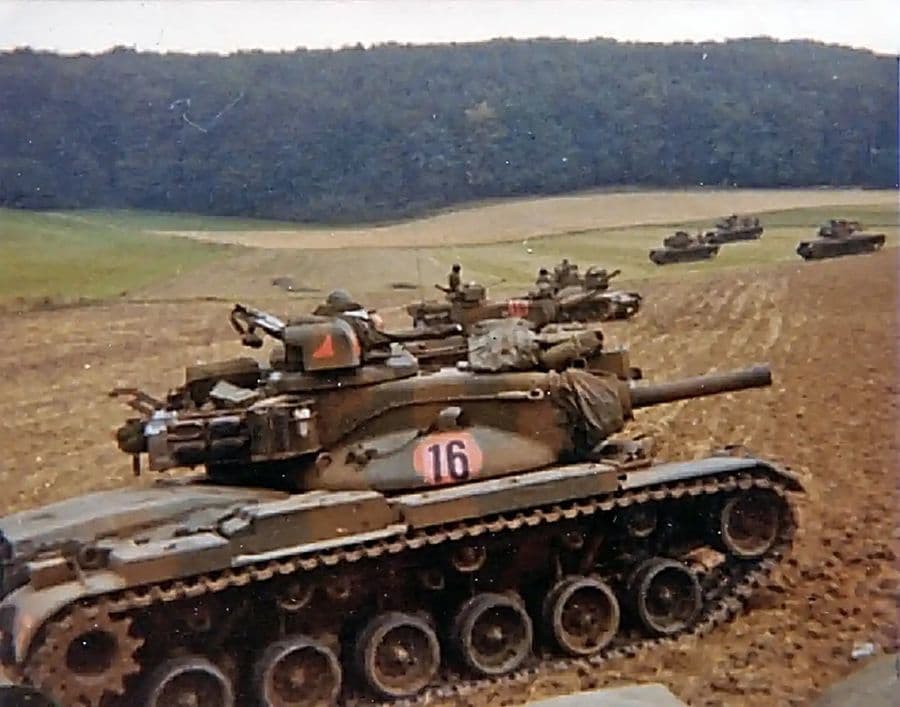
During the Cold War, American defense planners expected the primary fight to break out along clear front lines in Europe. The Fulda Gap became shorthand for the central risk: a decisive fight in a defined place and an institutional planning archetype, despite the uncertainties of escalation and duration. While the Taiwan Strait is not a direct analogy to the Fulda Gap, it has become a comparable focal point for U.S. planning. This kind of focal point invites planning for concentrated effort and early decision.
In the event of a conflict over Taiwan, both the United States and China would likely seek to pursue a short, sharp war. The American preference for such outcomes aligns with a familiar strand of broader American strategic culture. The 1992 National Military Strategy’s “Decisive Force” embodies this theory of victory: “Once a decision for military action has been made, half-measures and confused objectives exact a severe price in the form of a protracted conflict which can cause needless waste of human lives and material resources, a divided nation at home, and defeat." As that logic has echoed across three decades, the objective of executing decisive force for political aims encourages planners to design campaigns that ensure success quickly. Moreover, a rapid outcome reduces the risk of early political and societal fatigue. The American experience in the Global War on Terror significantly shaped these strategic factors. These considerations are represented in contemporary public polling: 70% of voters oppose military action against Iran, 57% are against the United States running Venezuela, and 86% oppose the United States seizing Greenland by military force. These results suggest that the United States is not interested in foreign intervention, especially if it extends into another “forever war”. Public skepticism about new interventions raises the premium on quick, decisive outcomes and lowers tolerance for open-ended commitments.
For China, an amphibious invasion of Taiwan would likely be one of the most demanding and high-risk military undertakings of the modern era. However, a rapid victory would deliver immediate strategic gains; control of Taiwan provides key access to break out of the First Island Chain. Such control would likely strengthen its claim to regional primacy and global influence. Politically, such an outcome is almost necessary for the Chinese Communist Party (CCP). A failure to achieve its stated aims of national rejuvenation and territorial consolidation could trigger internal pressure that undermines regime control. While public polling of China’s citizenry should consider the CCP’s domestic information control efforts, a 2025 poll shows 91% hold favorable views of Taiwan. Such sentiment indicates the public may be more hesitant to pursue a military solution. It remains unclear whether China’s public is prepared to absorb the human and societal costs that a long struggle in the Taiwan Strait would likely impose.
Considering these factors, planning for a short, sharp war provides a baseline that reflects current political considerations and what both parties would likely attempt to achieve. However, an exclusive focus on such a scenario risks overlooking how quickly a conflict can expand, protract, or shift. Those conflicts from World War I to the Iraq War, initiated under the premise of rapid victory, counsel caution for both sides.
While there have been greater efforts to consider various forms of conflict with China, recent military activities indicate that the American focus extends beyond any one geographical region. In the Middle East, Operation Rough Rider targeted Houthi efforts to attack maritime shipping, while Operation Midnight Hammer used precision strikes to degrade and destroy Iranian nuclear sites. In Africa, U.S. strikes in Nigeria targeted ISIS personnel and infrastructure. Operation Southern Spear continues to target transnational criminal organizations in the Western Hemisphere, while Operation Absolute Resolve culminated in the capture of Nicolas Maduro in Venezuela. Although these operations remain limited, the sum of these actions depicts how concurrent demands consume political attention and materiel. As the Chairman of the Joint Chiefs of Staff, General Dan Caine, recently stated, “Tom Clancy could not have come up with the multiple, simultaneous issues that we’re facing today in our security environment.”
These examples illustrate that the United States already operates in a security environment where major commitments ripple across geography and time. The 2025 National Security Strategy (NSS) frames U.S. interests in global terms, emphasizing the need to exercise “positive influence throughout the world that furthers our interests.” While the document advises against maximal effort in all regions, it provides a comprehensive list of political aims. These are described and categorized by global regions, including the Western Hemisphere, Asia, Europe, the Middle East, and Africa. The Department of State’s recently published Agency Strategic Plan reinforces this perspective by describing American prosperity and security as “a prerequisite for a powerful global presence,” while focusing on a reinvigorated approach to commercial diplomacy to “protect American businesses, workers, and economic interests across the world.” Consider American interests extend across multiple theaters, the question that then remains is: “How should decision-makers grapple with simultaneity in the event that a potential Taiwan conflict no longer remains the United States’ sole demand signal?”
Simultaneous conflict (referred to here as “simultaneity”) is a condition in which an ongoing conflict coincides with one or more additional state-driven challenges that impose competing strategic demands, up to and including a two-front war. This is not simply about violence happening elsewhere at the same time. Such events would be categorized as crises: episodic, containable contingencies that do not materially alter American force posture nor impose sustained competing demands but still require tailored response options. Instead, simultaneity occurs when another state opens a parallel line of coercion while the United States remains primarily committed to the ongoing conflict. In extreme cases, that parallel pressure can escalate into a second major theater of combat.
Simultaneity does not require a formal coalition or explicit coordination among adversaries. A second actor can act opportunistically to achieve its desired objectives by exploiting U.S. distraction and resource consumption. The intent and effort can differ, but the outcome converges. The United States faces multiple demands it cannot satisfy simultaneously without accepting risk.
While both broadly introduce similar effects, simultaneity remains distinct from horizontal escalation. Horizontal escalation describes a primary belligerent expanding the battlespace to gain advantage during the main fight. This escalation pathway can extend the front into other geographical regions to impose costs in peripheral theaters or to relieve pressure in the primary theater. The defining feature is driver and purpose: with horizontal escalation, the same belligerent that is already at war widens the contest as part of its strategy. With simultaneity, a separate state actor creates additional strategic demand signals that compete with the ongoing conflict. In both scenarios, leaders must triage between political attention and military resources.
In the event of a Taiwan conflict, a second state can impose competing strategic demands directly through military posturing or attributable coercive actions. These state-level moves force the United States to absorb additional costs and make triage decisions while the primary war continues. A second state’s use of proxy forces further distorts the picture of simultaneity. If China funds and directs a proxy force, American actions that constrain China’s war economy or sustainment can degrade China’s ability to employ that asset. If another actor, such as Russia or Iran, funds and sustains the same proxy force, China-focused measures may have little effect on that force’s readiness. This distinction determines whether the United States can address the problem by pressuring the primary belligerent or must manage a second state-driven front that requires separate targeting, resourcing, and escalation management. Because simultaneity involves a second state, China-focused pressure may not sufficiently address the driver of the additional strategic costs.
This dynamic also underscores the broader limitations of viewing China’s actions solely in the Indo-Pacific. Historical cases in Habsburg Austria and Byzantium show leaders conceptualized their threats in distinct theaters. These leaders relied on theater-based threat framing and selective diplomacy to preserve decision space and concentrate resources against the main threat. This approach can preserve strategic flexibility, but it can also obscure intertheater connectivity and downplay how actions in one theater create or exacerbate vulnerabilities in another. While Taiwan may be the most acute military flashpoint, China’s leverage and the strategic openings it creates for partners and opportunistic actors are not necessarily nested in a single region or distinct theaters. In the environment described by General Caine, shocks in one sector or theater can cascade rapidly into others, turning what appears to be a discrete regional contingency into wider political, economic, and security effects. As adversaries adapt and learn, they can deliberately operate in the seams between regions and domains. They need not coordinate their timing perfectly; they need only recognize when American strategic attention has become a scarce resource and act accordingly.
The character of a conflict over Taiwan that begins with both actors vying for a short, sharp victory can quickly alter when early assumptions fail or when neither side can impose decisive effects at an acceptable cost. American political bandwidth and resource constraints make simultaneity more attractive to opportunistic or aligned challengers. The core implication is that planning against any single scenario does not automatically hedge against the others. Planners should assume that conflict pathways will evolve and compound, forcing trade-offs that shift over time, theaters, and instruments of national power. Strategy should hedge across these pathways while anticipating significant fiscal constraints. The American security apparatus operates inside a broader national balance sheet. That balance sheet includes significant financial commitments and persistent economic uncertainty, as evidenced by the exorbitant national debt and the repeated use of continuing resolutions. In this environment, planners must treat each major decision as a tradeoff. While some investments span scenarios, including logistics, munitions, surveillance assets, and maritime platforms, this overlap has limits.
The United States can shape the environment, but it cannot script the war. Throughout this timeline, adversaries retain the option to pick the form of conflict that best exploits U.S. constraints and will adapt when American plans show signs of success. Put simply, the enemy has a vote. A force built for a short, sharp campaign may not sustain a conflict of a different character. The point is not that planning is futile, but that exclusive focus creates blind spots. A balanced approach to American defense planning should mitigate multiple risks. It should reduce exposure to peripheral shocks that can trigger simultaneity. A strategy that does not consider this reality presents significant risk: building a force that appears sufficient on paper but cannot be employed effectively once cumulative strain rewrites the conflict's character. In a world filled with simultaneous threats, the real test is not whether the United States can win quickly. It is whether the nation can fight through complexity and still translate military action into its political aims, no matter the challenges it faces.
Ian Whitfield is an Army Reserve officer and a graduate of Georgetown University’s Security Studies Program. The views expressed in this article are solely those of the author and do not necessarily reflect the opinions or beliefs of Georgetown University, the Department of Defense, or any other organization the author is associated with.

Iranian Cyber Operations
By Michael Groen • RealClearDefense
Reflecting on an Epic Horse Campaign in the Mountains of Afghanistan
By Brian Glyn Williams • RealClearDefense
The Godfather of American Foreign Policy Realism Speaks to Today’s World
By Francis P. Sempa • RealClearDefense
In Pursuit of Nuclear Abolition
By Peter Huessy • RealClearDefense
Innovation Alone Won’t Prepare the U.S. for the Future Battlefield
By Joshua Segal • RealClearDefense

26th MEU – U.S. Needs Crisis Response MAGTF
By Marine Corps Compass Points
The Influence of History on a Sea Power
By CDR Salamander
Navy Civilianizes Six Former Flag Billets, Reduces Six to Captains
By Mongilio, USNI N.
Raytheon's $8B Contract for Strategic Comms Terminal Modernization
By M+A El
America’s Maritime Moment Will Not Wait
By CDR Salamander