
Taking Xi at His Word: War in 2027
Last updated 05:37 AM EST • Read time: 14m
Leaders of both China and the United States[i] have opined about the possibility of a Cross (Taiwan) Strait invasion in early 2027. While there are historical examples of countries having deadlines internally (famously, Hitler’s four year plan for Germany[ii]), having both sides of a potential conflict agree – at least in rhetoric – when the war should start is novel.
In this piece, we explore what happens when we take both President Xi and his prospective opponents at their word; that a cross-straits invasion of Taiwan will begin approximately 750 days from press time; Friday, 1 January 2027. Specifically, we would like to explore two issues:
- If we really believe this war is upon us on this timescale, what should we do, and what are the risks of being wrong?
- If China really believes that, what would they do that we could observe to know they are serious? What would be the risks to believing them?
But first, a short primer in:
How militaries spend money
Note: If you are a longtime “Pentagon Warrior” you might feel this section is a review; you should read it anyway. Defense budgets are both huge and notoriously opaque. Perhaps surprisingly and counter to popular sentiment, it is straightforward to understand how the United States spends its’ defense budget. You can get an exhaustive briefing here[iii]; and the items not covered in the budget are notable by their rarity. Conversely, it is nigh on impossible to figure out how China spends their defense budget (we’ve tried)[iv]. Regardless of what the bottom line is, we can bin any modern defense budget in three broad categories:
- Acquisition. this is the ‘stuff’ that a military buys. Ships, aircraft, ground equipment, and so on. Acquisition for the United States is notoriously slow, mostly due to regulations that were generated by moving too rapidly in the past. Blessedly, the Chinese are beginning to feel the sluggishness that comes with regulation as well. Both countries have large - but not infinite - industrial bases. Both nations have to reconcile their military aspirations with competition for resources (specifically, talent) from the non-defense sector. In China, the industrial base is constrained by – perhaps shockingly – workforce. While China has a large population, not all of its workforce is suited – educationally, physically, and perhaps most importantly, politically – to work in Defense. Acquistion programs in both the U.S. and China are tied to large scale industrial projects and have multi-year (or even multi-decade) time horizons. Acquisition is not immediately responsive to change; there are very few ways that a dollar – or a yuan – can harvest a benefit within a relevant time period, which is ~30 months in this example.
- Manpower. these are the ‘people’ that serve in the Military. The United States enjoys an all-volunteer force, and maintaining the AVF is a priority[v] both politically and operationally. Depending on the Service, most military members in the United States serve between 4 and 30 years, with the Marine Corps having – by design – the most turnover in junior ranks. Manpower for the United States is expensive and is one of the major cost-drivers for the budget overall. Perhaps one of the most important facets of the U.S. Military manpower construct is the strength of the Non-Commissioned Officers (NCOs) throughout all the Services, and how the relationship between Senior NCOs and Officers is a partnership. China has a different system, relying heavily on conscription with high turnover. In many ways, their mindset towards military power is still based in the Soviet System, which itself still carries wounds from the Battle of Stalingrad. Thus, they see the importance of military manpower in mass over quality. Similar to acquisition, manpower takes place over long time horizons for both the U.S. and Chinese, but for different reasons.
- Readiness. The first two features are somewhat easy to understand and quantify; we can easily look out at the waterfront (or flightline) and estimate how many ships we have, what their state of repair is, and finally how modern it is. Readiness is the confluence of training and maintenance; its value is notoriously difficult to understand[vi]. Perhaps most important for our current discussion, readiness is responsive to input; you can increase readiness dollars and see a near-instantaneous (at least compared to other categories) response. Sadly, it is frequently the opposite mechanism that takes place; readiness accounts may be ‘robbed’ to make way for more acquisition and manpower.
Between now and 2027, the United States will spend roughly 1.7 Trillion dollars on defense[vii]. How much of this can be brought to bear on a specific problem?
Given the backdrop of the ways that militaries spend money, it is almost certain that the majority of money spent specifically for conflict in the Taiwan Strait would be best placed towards readiness. The ships and aircraft the U.S. Navy will have in inventory will be nearly identical to those we have today. Similarly, the Sailors and Airmen who fight those systems will also be nearly identical to those we have currently serving. So, what can be done?
The crux of this issue: indefinite vs. fixed time horizons for readiness
The key difficulty in planning for conflict in 2027 is that the U.S. Military Establishment does not think on finite timelines; specifically, planning for a readiness crescendo on a given date. U.S. Military Planning for budget and force development purposes focuses on a ‘cycle of research’[viii]; which is – generally – a good thing. Planning to be ready ‘forever’ is decidedly not the same as planning to be ready at a certain moment. This may lead to strategic mismatch. The U.S. ‘forever’ timeline seeks to balance the three legs of the budgetary stool; an adversary with a fixed endpoint will stop focusing on long-term acquisition in favor of increased manning and readiness as the so-called ‘strike time[ix]’ nears. Students and participants in this process will immediately respond with ‘but our analyses are tied to dates.’ Respectfully, those planning dates are used to set force structure, but do not explicitly consider readiness in time, as we are encouraging here. U.S. forces are truly ‘rotational;’ both in the micro- and macro-senses. To the best of our corporate knowledge, we have not within the careers of anyone currently serving, planned for conflict on which the other side was ‘nothing.’ In poker terms, we do not plan to go ‘all in.’
Another perspective (from a Clausewitzian point of view) is that China may be looking to ‘culminate’ on a given day, while the United States is seeking to hold at steady state indefinitely. Figure 1 shows the current ‘binning’ of the U.S. Defense budget in three broad categories:
Figure 1: Allocation of the FY25 Defense budget along three major categories. For this plot, Procurement and RDTE are combined to create ‘Acquisition.’ ‘Manpower’ is the sum of manpower costs, family housing and ½ of MILCON. ‘Readiness’ are the Operations and Maintenance accounts and the other ½ of MILCON. Data from defense.gov[x]
An Equivalent chart for China?
Estimating China’s defense budget is notoriously difficult[xi]; it is our opinion that the Chinese themselves don’t know the true extent of their budget. Currently, we do not have sufficient information to create – or even hypothesize – an equivalent chart to Figure 1. That might not matter anyway. In the West, we use money as a proxy for how much attention differing aspects of Defense policy – and Defense writ large – matter to our leaders and the body politic. And regardless of money, China’s leadership is paying attention to Defense in a huge way. By our tally, since 2014, Xi has expelled approximately 80 flag- and minister- level defense officials[xii]; this is significant in China’s history.
Figure 2: Firings of senior military officials by date and category of duty[xiii]. After a flurry of activity at the beginning of Xi’s tenure, there was a lull for several years. Xi’s firings of military officials have once again picked up steam. The best thing we can infer from this plot is that Xi’s attention is once again on military reform.
Thus, we contend that it is likely that the Chinese political and military establishment sees a cross-straits invasion as an ‘endpoint’ – that further military conflict external to its’ borders may not need to be planned for if they are successful; or at least, not immediately planned for. China’s rapidly expanding nuclear arsenal[xiv] provides a ‘hedge’ against expanding of the conflict. The Chinese may assess that a rapid fait accompli against Taiwan - and her allies in INDOPACOM – combined with the threat of nuclear escalation may leave the U.S. at a so-called ‘missing rung’ on the ladder of escalation[xv].
Thus, mismatches on strategic timelines are perhaps the critical tension in this conflict, and one that the U.S. and Allies need to understand. In summary, the ability to pick ‘the’ day gives China a substantial advantage. Choosing when to attack is the attacker’s privilege; defenders need to be ready to defend at a moment’s notice; this is the defender’s burden.
If this is the state of the world, what is to be done?
The short answer is that the U.S. Military establishment – particularly the Navy – has a massive task in front of them. What is foremost in our minds as we write this; and perhaps on the Leaders of the Navy and Defense Department as well is that very few of the Sailors who man today’s ships and squadrons would be the ones to fight them should conflict erupt. Now, given the long-term rotational policies of the U.S. Military in general and specifically regarding manning ships[xvi], our steady-state readiness comes from these rotational policies. It is unclear that the (likely relatively small) advantages to readiness would be worth large-scale upending long-standing manpower policies. Having said this, it might be useful – both as an operational factor as well as a strong signal to the PRC – to selectively accelerate the arrival and delay the departure of specific key positions, specifically capital ship COs, etc.
As an aside, it is unlikely that policies such as stop loss[xvii] would be much help, as by the time they would be effective, the question of a cross-straits invasion would have been resolved. Therefore, it is unlikely that we will be able to make any meaningful in readiness by broadly altering personnel rotation policies.
The side of manpower that we have not discussed is what the Navy referrers to as “Shore Duty.” Shore Duty is a many-faceted beast. Some shore duty – one example being graduate pilot (FRS) instructor for Aviators – has near-immediate transferability back to the Fleet. Other duties, such as being a student at NWC, NPS or NDU, expand students’ strategic knowledge and is a ‘down payment’ - helping them prepare for their next level (or perhaps, several next levels) of leadership. Therefore, we need to be intentional and understand this mix of shore duties – most of which is actively underway and is unlikely to change between now and 2027,
Given that we are not changing the makeup of sea/shore duty between now and 2027, and we are unlikely to change assignments in a meaningful way, what is to be done?
Recommendation: Create incentives to force the shore establishment to study future conflict – specifically the cross-straits invasion scenario – with the same immediacy and vigor that the sea establishment does
Our thinking towards major power competition has been mired in our previous conflicts, most notably Iraq, Vietnam, and WWII. In these conflicts, the United States enjoyed – to some measure – the ability to set our pace for operations. In Vietnam and the most recent wars, the Naval Component of conflict was at most an afterthought; there were no large-scale, credible attempts by the adversary to interdict or destroy shipping in and out of Theatre. Thus, in times of high-intensity conflict, the Navy could enjoy what the late Wayne Hughes called the ‘sanctuary of the sea’[xviii] This allowed the U.S. to build materiel at our leisure as well as to enjoy a somewhat unencumbered ability to deliver. The Second World War was different in that the crossing of the Atlantic was fraught with danger[xix]. The United States was able to combat the battle of the Atlantic both with Naval power but also with raw industrial power; we were able to produce ships and munitions at a pace that is unheard today.
Our first and most important action to be ready for conflict in 2027 is to revitalize and reinvigorate the Sealift Functions of the Nation. We have previously argued[xx] that sealift as a military strategy carries the unique characteristic of being ‘good’ regardless of the future state of the world. Said a different way; expanded focus on sealift will pay dividends in both peace and war, both as an instrument of policy and as well as (re)invigorating the industrial base. With a Second Trump Administration beginning in January 2025, there is a limited opportunity to make a rapid move. This administration has a focus on ‘bending metal’[xxi], but not all metal is bent the same and at the same rate. A hedge against a near-term cross-straits invasion should focus on increasing the sealift capability of the U.S., as it is the fastest action that can be taken with near-immediate impact.
Our second recommendation also has to do with ‘bending metal,’ and it is deceptively bland: Measure the results of large-scale analyses in terms of munitions expended/remaining and not combatant ships remaining. The way our analytic tools tackle war is to count the number of ships and aircraft expended, with munitions as an afterthought. A small but important change would be to make munitions the primary ‘thing.’ This would change our thinking and make us more focused not on what can be achieved, but on what we have ‘left over’ after doing so. This idea of considering campaign analysis as both analytics and senior officer training should be explored more[xxii].
Recommendation: Move away from thinking of campaign termination with a ‘return to steady state.’ Realize that a Cross-Straits invasion will be ‘all in’ for the PRC and will likely require a similar level of commitment from the U.S..
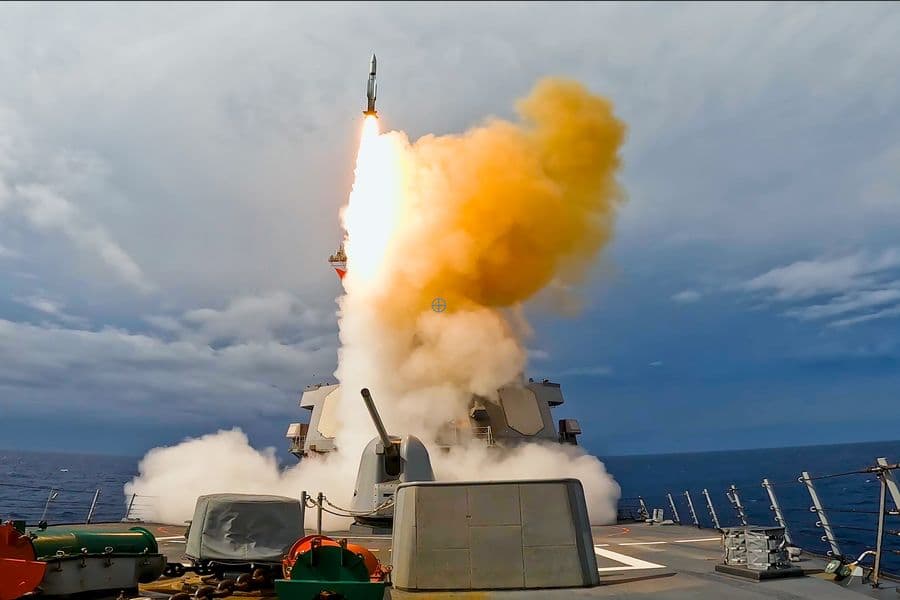
Our final recommendation will require a minor reallocation of procurement; focus on increasing the arsenal of Standard-series missiles, which have been used to near-amazing effect in the current Israel/Hamas conflict[xxiii]. These missiles have a long procurement tail, but if we get started right now, we may be able to increase procurement[xxiv] sufficiently to make a difference.
Recommendation: Increase the buy of Standard-series missiles. Work with industry to make arrangements that are beneficial for the Navy (by increasing numbers) as well as to Industry (by providing stability in procurement).
In summary, we should take China’s leaders at their word in the sense that if war is not coming exactly in 2027, it is definitely on their ‘to-do’ list. China and the U.S. have differing ideas about procurement, and this leads to the possibility of a strategic mismatch. China is likely to push for a rapid, fait accompli strategy using their growing nuclear weapons arsenal as a ‘hold card’ against expanding the conflict. The U.S. has finite – but effective – opportunity to maneuver between now and 2027, chiefly by focusing on readiness, strategic sealift, and Standard series missile procurement.
Harrison Schramm is a statistician and frequent commentator on defense policy. He is a Senior Lecturer in the Operational Logistics Group at the Naval Postgraduate School, past vice-president of Military Operations Research Society, and past President of the Analytics Society of INFORMS. He is the 2018 recipient of the Clayton Thomas Prize for contributions to the Profession of Operations Research.
The author is indebted to Larry Jackson and Geraldo Ferrer, whose ongoing collaboration on these issues, as well as discussion and review of an early manuscript greatly improved this work. This article was inspired by a seminar discussion held at the Naval Postgraduate School.
The views and opinions expressed here are solely the author’s own, and do not represent the U.S. Navy, Naval Postgraduate School, or (to the best of our knowledge) the People’s Republic of China.
Notes:
[i] https://thehill.com/policy/defense/4547637-china-potential-taiwan-invasion-2027-us-admiral-warns/
[ii] https://www.theatlantic.com/magazine/archive/1937/06/the-german-four-year-plan/652607/
[v] https://www.defense.gov/News/News-Stories/Article/Article/3316678/all-volunteer-force-proves-successful-for-us-military/
[viii] https://warontherocks.com/2019/10/can-the-cycle-of-research-save-american-military-strategy/
[ix] In this context, we use the term both in it’s meaning in options pricing, as well as its’ literal meaning for military action.
[x] https://comptroller.defense.gov/Portals/45/Documents/defbudget/FY2025/FY2025_Budget_Request_Overview_Book.pdf
[xi] An excellent primer on the difficulties is here: https://tnsr.org/2024/06/estimating-chinas-defense-spending-how-to-get-it-wrong-and-right/
[xii] https://www.newsweek.com/what-chinas-historic-firing-two-defense-ministers-means-taiwan-opinion-1921799; https://warontherocks.com/2024/01/rocket-powered-corruption-why-the-missile-industry-became-the-target-of-xis-purge/ ; https://www.rand.org/pubs/commentary/2016/04/xis-purge-of-the-military-prepares-the-chinese-army.html ; https://www.9dashline.com/article/xis-purge-and-corruption-in-the-pla
[xiii] Data consistent with other sources, published at: https://www.hindustantimes.com/world-news/president-xi-jinping-purges-pla-generals-in-massive-military-overhaul-101720940056680.html
[xiv] https://www.defensenews.com/pentagon/2024/10/24/china-leading-rapid-expansion-of-nuclear-arsenal-pentagon-says/
[xv] Kahn, H. (2010). On Escalation: Metaphors and Scenarios (1st ed.). Routledge. https://doi.org/10.4324/9781315125565
[xvi] https://www.navytimes.com/news/your-navy/2019/12/02/what-you-need-to-know-about-the-navys-sea-and-shore-tour-reforms/
[xix] https://www.realcleardefense.com/articles/2020/06/20/echoes_of_the_past__naval_convoys_in_great_power_competition_115399.html
[xx] https://csbaonline.org/research/publications/sustaining-the-fight-resilient-maritime-logistics-for-a-new-era
[xxi] https://www.nationaldefensemagazine.org/articles/2020/12/10/trump-administration-unveils-new-30-year-shipbuilding-plan

Iranian Cyber Operations
By Michael Groen • RealClearDefense
Reflecting on an Epic Horse Campaign in the Mountains of Afghanistan
By Brian Glyn Williams • RealClearDefense
The Godfather of American Foreign Policy Realism Speaks to Today’s World
By Francis P. Sempa • RealClearDefense
In Pursuit of Nuclear Abolition
By Peter Huessy • RealClearDefense
Innovation Alone Won’t Prepare the U.S. for the Future Battlefield
By Joshua Segal • RealClearDefense

26th MEU – U.S. Needs Crisis Response MAGTF
By Marine Corps Compass Points
The Influence of History on a Sea Power
By CDR Salamander
Navy Civilianizes Six Former Flag Billets, Reduces Six to Captains
By Mongilio, USNI N.
Raytheon's $8B Contract for Strategic Comms Terminal Modernization
By M+A El
America’s Maritime Moment Will Not Wait
By CDR Salamander