
U.S. Approves $1.4B Arms Deal to Taiwan
Last updated 05:49 PM EDT • Read time: 3m
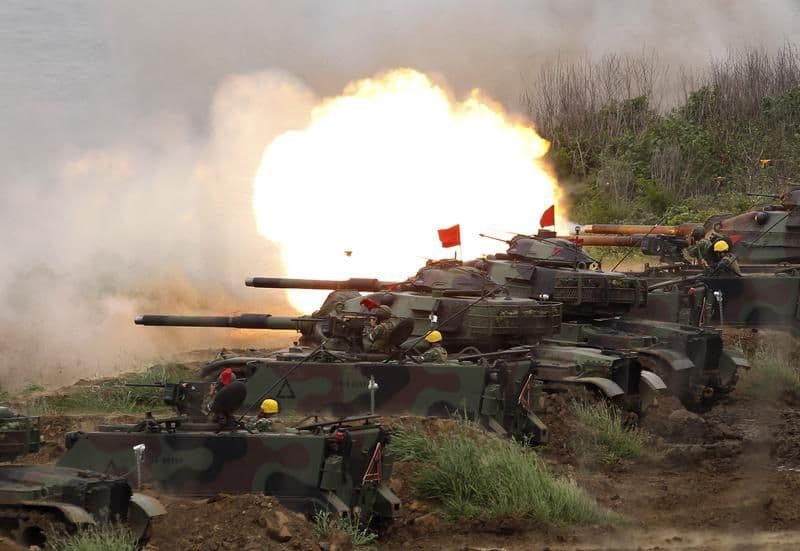
WASHINGTON (AP) — The State Department has approved arms sales to Taiwan worth a total of $1.4 billion, the first such deal with the self-governing island since President Donald Trump took office, officials said Thursday.
The sale will anger China, which regards Taiwan as part of its territory. It comes at a delicate time for relations between Washington and Beijing over efforts to rein in nuclear-armed North Korea.
The sale to Taiwan comprises seven items, including technical support for early warning radar, anti-radiation missiles, torpedoes and components for SM-2 missiles, according to a U.S. official who requested anonymity to discuss the details before they were formally announced.
State Department spokeswoman Heather Nauert said the Trump administration had notified Congress of its intent to approve seven proposed deals now valued at around $1.4 billion. Nauert said the approvals did not violate the Taiwan Relations Act that governs U.S. contacts with the island.
“It shows, we believe, our support for Taiwan’s ability to maintain a sufficient self-defense policy,” Nauert said. “There’s no change, I should point out, to our ‘one-China policy.’”
Taiwan’s defense ministry on Friday thanked the U.S., saying, “The arms sale will help strengthen our country’s self-defense capability and maintain the peace on Taiwan strait.”
Lawmakers, which are generally strongly supportive of such sales, have 30 days to object. The U.S. is legally obligated to sell weapons to Taiwan for its self-defense.
The U.S. official said the sales represented upgrades, converting existing systems from analog to digital. The total includes roughly $1.3 million in transactions that are considered “foreign military sales,” plus another commercial deal that also requires U.S. government approval and brings the total to $1.4 billion.
The last U.S. arms sales to Taiwan, worth $1.8 billion, were announced in December 2015. They included two decommissioned U.S. Navy frigates, anti-tank missiles, amphibious assault vehicles and Stinger surface-to-air missiles, and was the first sale for four years.
China objected strongly, but it did not notably set back U.S.-China relations and military ties, which has happened after past arms sales to Taiwan.
However, relations across the Taiwan Strait have deteriorated since then, as Taiwan last year elected a leader from an independence-leaning party, Tsai Ing-wen. China has increased diplomatic pressure, cut off its contacts with the island’s government and discouraged travel there by Chinese tourists.
Associated Press writer Josh Lederman in Washington and video journalist Johnson Lai in Taipei contributed to this report.
© 2017 The Associated Press. All rights reserved. This material may not be published, broadcast, rewritten or redistributed. Learn more about our Privacy Policy and Terms of Use.

In Pursuit of Nuclear Abolition
By Peter Huessy • RealClearDefense
Innovation Alone Won’t Prepare the U.S. for the Future Battlefield
By Joshua Segal • RealClearDefense
The sUAS Tactical Trifecta
By Bryan T. Woody • RealClearDefense
The Revolutionary War: When Strategic Options Share the Same Weakness
By Henry Yep • RealClearDefense
The Houthis Are Testing the Limits of Collective Defense
By Saima Afzal • RealClearDefense

Navy Civilianizes Six Former Flag Billets, Reduces Six to Captains
By Mongilio, USNI N.
Raytheon's $8B Contract for Strategic Comms Terminal Modernization
By M+A El
America’s Maritime Moment Will Not Wait
By CDR Salamander
Armor Up?
By Marine Corps Compass Points
Who Shoots Down the Drone Over the Shipyard?
By John Ferrari & Dillon Prochnicki • RealClearDefense