
Weekly Recon 8 July 2017
Last updated 05:49 PM EDT • Read time: 4m
Good Saturday morning and welcome to Weekly Recon. On this day in 1853, Commodore Matthew Calbraith Perry, representing the U.S. government, sails into Tokyo Bay, Japan, with a squadron of four vessels. For a time, Japanese officials refused to speak with Perry, but under threat of attack by the superior American ships, they accepted letters from President Millard Fillmore, making the United States the first Western nation to establish relations with Japan since it had been declared closed to foreigners two centuries before.
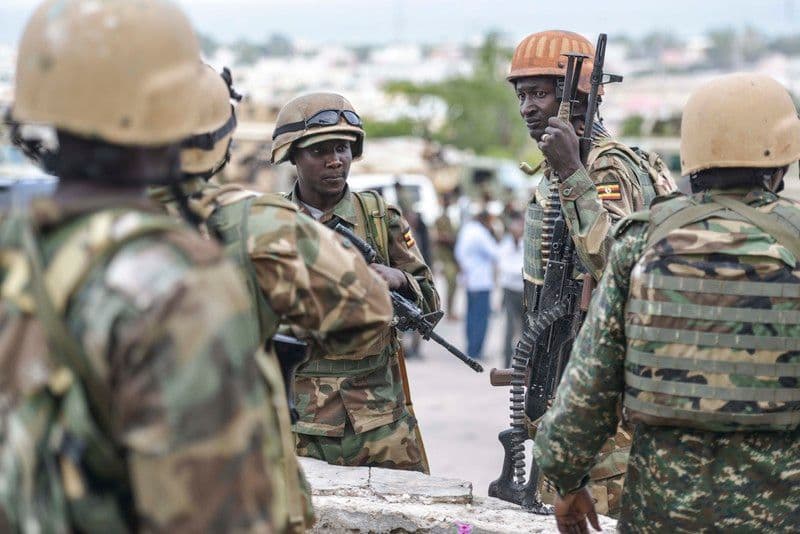
Somalia: America’s “Forever War” – The U.S. launched fresh airstrikes against al-Shabaab, Somalia’s al Qaeda affiliated group, this week, marking an uptick in ongoing hostilities in an often forgotten theater of the so-called “forever war.” These strikes follow a similar airstrike launched in June. Earlier this year the Trump administration declared Somalia an area of active hostilities. That decision was designed to give ground commanders more latitude regarding offensive airstrikes. Stars and Stripes reports that AFRICOM has not changed the guidelines for the decision to launch strikes, but the easing of restrictions has allowed AFRICOM to respond more quickly.
Al-Shabaab has been able to operate effectively in Somalia due to the country’s weak and often corrupt central government. The country has found new hope in its new president, Mohamed Abdullahi "Farmajo" Mohamed, who enjoyed popular support at the time of his election in February. Since then, the initial sense of promise has waned, and the political situation now verges on crisis. Thus far, “Farmajo” has not proven to be a source of political stability, which has always been elusive in post-colonial Somalia. Furthermore, the Somali military, greatly affected by the political instability, is not yet capable of keeping al Shabaab in check on its own.
Writing in the Washington Post, Tricia Bacon of American University offers her recent experiences in the region to show that al Shabaab won’t be going anywhere anytime soon. Barring a drastic change in the situation, the U.S. military is likely to remain in Somalia for the foreseeable future, especially following the expected withdrawal of African Union (AMISOM) troops in 2020. Although largely ineffectual, AMISOM has been responsible for the brunt of counterinsurgency operations in Somalia since 2007.
Does the U.S. Army Have What It Takes to Fight? – The U.S. Army faces a daunting problem – its potential enemies are getting much better at challenging its ground-to-ground weapons systems. The Army once comfortably overmatched any potential adversary, but Sandra Erwin reported this week on the diminishing qualitative technological edge that the U.S. Army holds over its near-peer adversaries in ground combat. The Abrams tank is increasingly vulnerable to advanced anti-armor missiles. Russian anti-tank missiles outrange U.S. “armor by two kilometers.” Furthermore, Russia currently deploys land attack missiles that, in defiance of the Intermediate-Range Nuclear Forces (INF) Treaty, can travel over 500km. In comparison, the current U.S. long-range land attack rocket has a range that is less than 320km.
The gaps have been identified, and the Army is taking steps to close them. As the Army receives more funds for modernization it tasking industry with developing better protection for its armor, as well as developing next-generation “long-range ground fires” capabilities. But the Army has a poor record of accomplishment when it comes to fielding new ground platforms. Furthermore, it is yet to be seen if the Army will prioritize growing the size of the force over modernizing weapons systems.
As adversaries close technological gaps in the area of ground-to-ground combat at ever increasing speeds, time is a luxury the Army can no longer afford. As Erwin astutely points out, “This is not just a budget issue, but also one of military strategy.”
SEND RCD YOUR INPUT: Please send your tips, suggestions, and feedback to editors@realcleardefense.com. Make sure to follow us on Twitter at @RCDefenseand follow Blake Baiers @BlakeBaiers

In Pursuit of Nuclear Abolition
By Peter Huessy • RealClearDefense
Innovation Alone Won’t Prepare the U.S. for the Future Battlefield
By Joshua Segal • RealClearDefense
The sUAS Tactical Trifecta
By Bryan T. Woody • RealClearDefense
The Revolutionary War: When Strategic Options Share the Same Weakness
By Henry Yep • RealClearDefense
The Houthis Are Testing the Limits of Collective Defense
By Saima Afzal • RealClearDefense

Who Shoots Down the Drone Over the Shipyard?
By John Ferrari & Dillon Prochnicki • RealClearDefense
Northrop Grumman Breaks Out the Big Guns at AUSA
By Daniel Terrill, Defense News
Army Pursuing Diverse Array of New Anti-Air Interceptors
By Trevithick, The WarZoneWho Shoots Down the Drone Over the Shipyard?
By John Ferrari & Dillon Prochnicki, RCD
F-35C Lands for the First Time on a Ford-Class Aircraft Carrier
By The Aviationist