
Let's Not Die on Red Hill
Last updated 08:15 AM EST • Read time: 3m
We Need a Smart Way To Address Federal Negligence in Hawaii
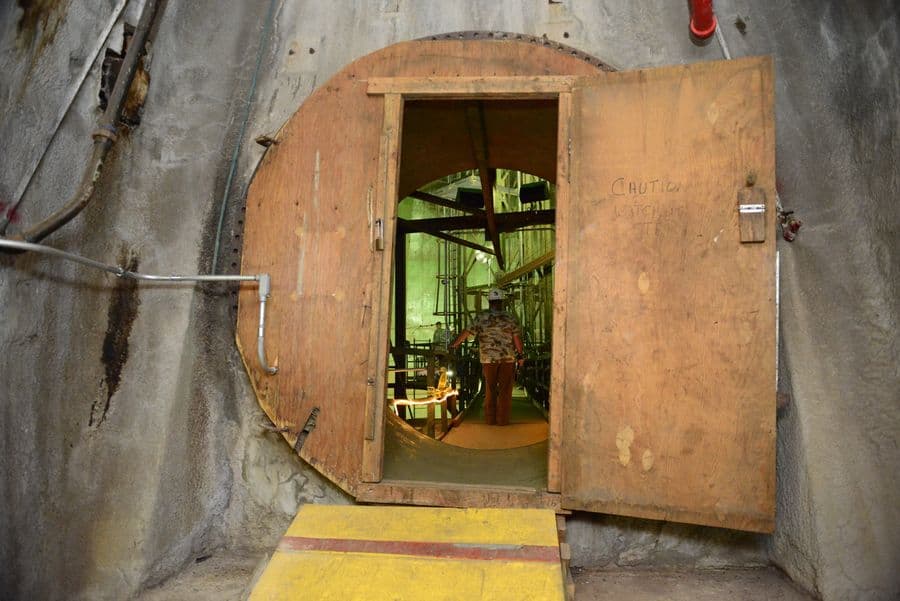
Red Hill has been leaking for years due to crumbling infrastructure. Yet the problem at this important Navy underground fuel storage facility in Hawaii went unaddressed for years. Now, it threatens the island’s major aquifer, forcing the government’s hand.
Sadly, the government has reacted in a typical knee-jerk fashion. We must do better to deal with all the dangers involved.
The facility now poses a serious health risk. But there is more at stake than drinking water. Red Hill plays a critical part in meeting the logistic needs of the Navy. It is where we store the fuels that keep the Pacific Fleet sailing. This critical military asset looms even more important as war rages in Europe and tensions with China grow. The nation needs a smart solution that addresses the health concerns of those living on the island without endangering national security.
Built in 1943, Red Hill today is surrounded by family housing. Two major leaks occurred last year, threatening to contaminate the island’s main aquifer. They were by no means the first leaks. Concerns with Red Hill contaminating drinking water date back to at least 2002, when groundwater monitoring was begun.
The latest leaks, however, galvanized local leaders to demand action. On March 7th, they got it. Defense Secretary Lloyd Austin ordered that the World War II era facility be emptied and abandoned within a year. He set a May 31 deadline for coming up with a plan that would assure the safety of Hawaii’s drinking water without jeopardizing the fleet’s ability to serve its vital security mission.
The Defense Department has released a fact sheet giving some clues on what this plan may look like. The key appears to be distributing fuel storage among various commercial sites (assumed to be in Hawaii) and tankers.
Tankers can provide a viable and mobile option, but their use raises several questions. Where will the tankers load and where will they transfer fuel to the warships? Will these tankers be newly acquired and crewed or drawn from an already inadequate fleet of commercial ready reserve vessels?
Lots of details need to be worked out to ensure the Navy remains ready amidst a rapidly worsening security environment. It seems quite doubtful that relying on tankers alone can address the logistic needs of the Pacific Fleet. Moreover, the fact sheet did not address the need for secure drinking water in Hawaii.
And therein lies the problem. We have set a deadline for closing Red Hill without conditioning that on having a viable and proven alternative in place. That is dangerous. A more prudent course of action would have been to set a deadline for providing an alternative water source in Hawaii and a Red Hill replacement.
Congress and the Department of Defense both bear responsibility for neglecting military infrastructure for decades. Now, they must act. But they need not—and must not--act rashly.
Brent D. Sadler is the senior fellow for naval warfare and advanced technology at The Heritage Foundation’s Center for National Defense.

Innovation Alone Won’t Prepare the U.S. for the Future Battlefield
By Joshua Segal • RealClearDefense
The sUAS Tactical Trifecta
By Bryan T. Woody • RealClearDefense
The Revolutionary War: When Strategic Options Share the Same Weakness
By Henry Yep • RealClearDefense
The Houthis Are Testing the Limits of Collective Defense
By Saima Afzal • RealClearDefense
Radio Frequencies in the Intelligence Ecosystem
By Craig Brower • RealClearDefense

Who Shoots Down the Drone Over the Shipyard?
By John Ferrari & Dillon Prochnicki • RealClearDefense
Northrop Grumman Breaks Out the Big Guns at AUSA
By Daniel Terrill, Defense News
Army Pursuing Diverse Array of New Anti-Air Interceptors
By Trevithick, The WarZoneWho Shoots Down the Drone Over the Shipyard?
By John Ferrari & Dillon Prochnicki, RCD
F-35C Lands for the First Time on a Ford-Class Aircraft Carrier
By The Aviationist