
Uncategorized
EUCOM Boss Lays Out His Plan To Defeat a Russian Invasion
NATO would seek to defeat invading Russian forces, sever their supply lines and cripple their command systems, but stop short of pursuing a wider...
2d agoRead it on Stars and StripesNuclear Order and Global Disorder
How long can the international nuclear order survive?
6d agoRead it on Orbis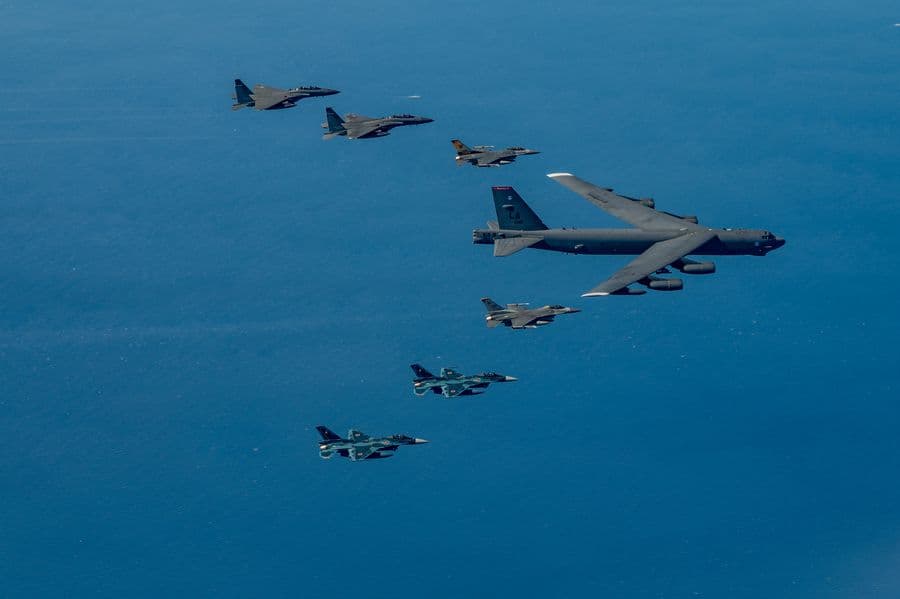
As Allies' Capabilities Grow, They Need To Work With U.S. on Nuclear Signalling
The Indo-Pacific’s next deterrence problem may be a shortage not of military capability but of coordination. As Australia, Japan and South Korea acquire long-range strike, missile defence and other strategic conventional capabilities, they are increasingly becoming mixed up in U.S. nuclear signalling. Yet the U.S. alliance network lacks mechanisms for coordinating how use of allies’ capabilities is interpreted and communicated during a crisis.
This gap should be addressed before it becomes a wartime liability. U.S. allies should strengthen peacetime and pre-crisis signalling, including through wargames that focus on escalation management and consider how that signalling might be interpreted. Partners should also develop a common deterrence vocabulary and understanding. This would help ensure consistency in messaging to adversaries and avoid miscommunications that could undermine joint efforts.
How One Word Built FEMA's Billion-Dollar Gravy Train
Go to any FEMA location nationwide, peek through the window, and that's what you see inside: aimless action and paper churn
1w agoRead it on Washington ExaminerThe Odyssey as American Epic
Patrick Deneen's new book explores how home makes us human
1w agoRead it on Modern AgeMan, Still Falling
People move forward. When children grow into adults, leave home, and start families of their own, they civilize and re-civilize the world through...
1w agoRead it on RealClearHistory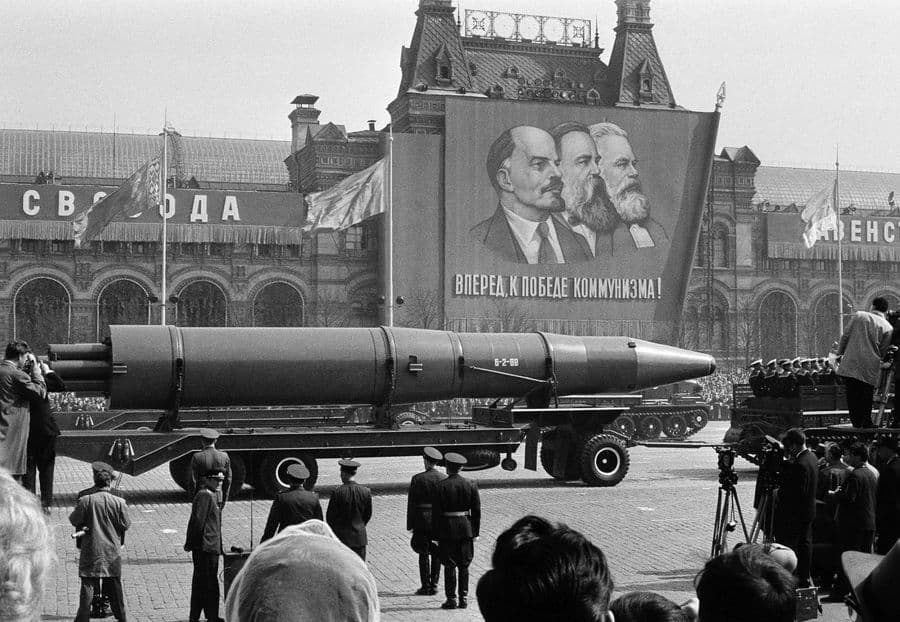
President Kennedy: MAD & the Lessons of Berlin and Cuba
Nuclear weapons and the deterrent strategy accompanying their deployment are sometimes poorly understood. For the general public that is understandable given the complexities of preventing nuclear war. What is most worrisome are those “experts” who widely seek the abolition of nuclear weapons but are often confused about the real American nuclear deterrent necessary to prevent war.
For example, the most misunderstood idea is often referred to as MAD or mutual assured destruction. This is the assumption that U.S. strategy relies on the idea that should the U.S. be attacked with nuclear weapons, our only option would inevitably lead to the exchange of such overwhelming nuclear force as to destroy both our own country and the adversary nation. A second bad assumption is that since MAD if carried out would get us all killed, reductions toward zero nuclear weapons—abolition--should be our highest priority. And since it’s still an all or nothing MAD strategy, prudence would jettison the idea of nuclear deterrence altogether. Including any call for any flexible or limited regional response capability.
$11.7M Deal Boosts First-of-its-Kind 3D Hologram Defense Tech
U.S. Conducts Explosion Experiment at Nuclear Test Site
Non-nuclear test aimed at better detecting covert Chinese nuclear blasts
1w agoRead it on The Washington Times
Innovation Alone Won’t Prepare the U.S. for the Future Battlefield
By Joshua Segal • RealClearDefenseThe sUAS Tactical Trifecta
By Bryan T. Woody • RealClearDefense
The Revolutionary War: When Strategic Options Share the Same Weakness
By Henry Yep • RealClearDefense
The Houthis Are Testing the Limits of Collective Defense
By Saima Afzal • RealClearDefense
Radio Frequencies in the Intelligence Ecosystem
By Craig Brower • RealClearDefense

Who Shoots Down the Drone Over the Shipyard?
By John Ferrari & Dillon Prochnicki • RealClearDefense
Northrop Grumman Breaks Out the Big Guns at AUSA
By Daniel Terrill, Defense News
Army Pursuing Diverse Array of New Anti-Air Interceptors
By Trevithick, The WarZoneWho Shoots Down the Drone Over the Shipyard?
By John Ferrari & Dillon Prochnicki, RCD
F-35C Lands for the First Time on a Ford-Class Aircraft Carrier
By The Aviationist