
U.S. Space Force
Don't Let a Commercial Space Grab Put American Aviation at Risk
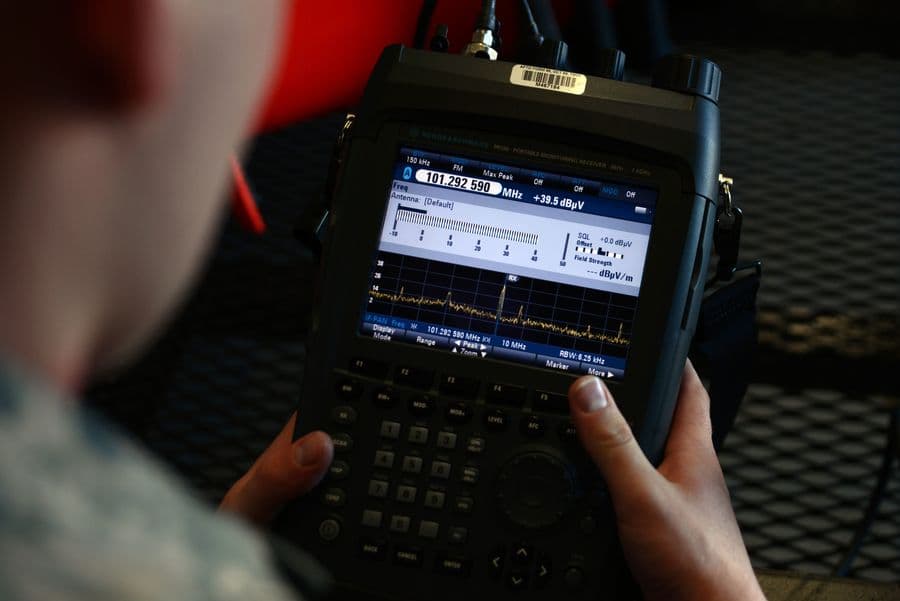
The Trump Administration deserves credit for its National Space Transportation Policy, which calls for more than 1,000 U.S. launches and reentries a year by 2030, cementing American leadership in space for a generation. The Federal Communications Commission (FCC) is right to ask what it will take to get there, including the radio spectrum that rockets and aircraft depend on for communications, tracking and telemetry.
However, buried inside this same review is a petition that has nothing to do with expanding opportunity, and everything to do with a land grab. A commercial space trade group, the Commercial Space Federation (CSF), is petitioning to dismantle the longstanding coordination system used to manage spectrum for flight testing of America’s fighters, bombers, missiles, passenger jets, and advanced air mobility systems. The FCC should reject this petition outright.
Multi-Constellation Networks Need Multi-Constellation Ground Stations
Rightly, the Pentagon has decided that the future of military satellite communications should not depend on one network or supplier. But putting...
2d agoRead it on RealClearDefenseTrump Nominates New Space Command CO, Vice CNO
If confirmed, Space Force Lt Gen David Miller would become the commander of SPACECOM, which oversees military operations in space, and Navy Vice...
1w agoRead it on Stars and StripesTwo Firms to Build 'Space-to-Space' Satellites for Space Force
Making the Greenland Agreement Work
The new U.S.-Greenland-Kingdom of Denmark agreement offers an opportunity to strengthen Arctic deterrence through distributed capabilities,...
2w agoRead it on RealClearDefenseMaking the Greenland Agreement Work
The new U.S.-Greenland-Kingdom of Denmark agreement offers an opportunity to strengthen Arctic deterrence through distributed capabilities,...
2w agoRead it on RealClearDefense
Space Academy is Critical Step in the Future of Warfare
When the astronauts aboard Artemis II became the first mission to fly by the Moon in 50 years, they became instant heroes. President Trump rightly honored them over the weekend for their achievement. While they were the focus of the ceremony, Trump made headlines by announcing a new service academy. If the U.S. is to win this next space race, it must take this project seriously.
Recently, President Trump spoke at a ceremony honoring the astronauts who crewed Artemis II, the first voyage to circle the Moon in 50 years. Aside from the awards, Trump announced his intention to create a new service academy for the United States Space Force. Where and when this academy will operate remains to be seen, but this is the latest acknowledgement of space’s growing importance, both militarily and otherwise.
SpaceX Given Unique Access to Classified DoD Space Tracking Data
a "contractual agreement" has been signed between SpaceX and the Space Force's Joint Commercial Operations Cell (JCO)
3w agoRead it on Breaking Defense
Innovation Alone Won’t Prepare the U.S. for the Future Battlefield
By Joshua Segal • RealClearDefense
The sUAS Tactical Trifecta
By Bryan T. Woody • RealClearDefense
The Revolutionary War: When Strategic Options Share the Same Weakness
By Henry Yep • RealClearDefense
The Houthis Are Testing the Limits of Collective Defense
By Saima Afzal • RealClearDefense
Radio Frequencies in the Intelligence Ecosystem
By Craig Brower • RealClearDefense

Who Shoots Down the Drone Over the Shipyard?
By John Ferrari & Dillon Prochnicki • RealClearDefense
Northrop Grumman Breaks Out the Big Guns at AUSA
By Daniel Terrill, Defense News
Army Pursuing Diverse Array of New Anti-Air Interceptors
By Trevithick, The WarZoneWho Shoots Down the Drone Over the Shipyard?
By John Ferrari & Dillon Prochnicki, RCD
F-35C Lands for the First Time on a Ford-Class Aircraft Carrier
By The Aviationist