
The Longest March Is the Paperwork
Last updated 06:55 AM EDT • Read time: 7m
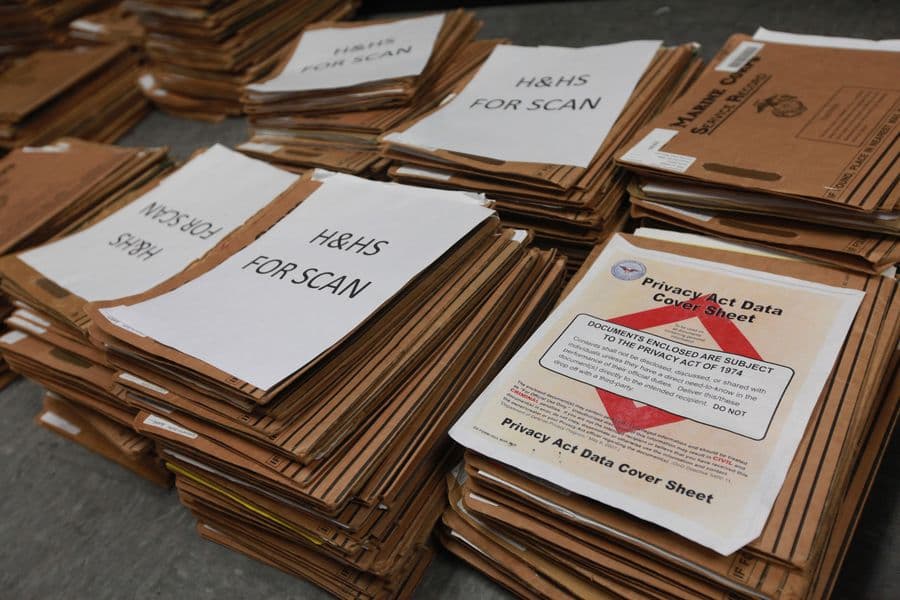
The Marine Corps can teach an 18-year-old to field-strip a rifle blindfolded. The federal government needs three to six months to send that same Marine's file across town. The White House puts the average transfer time for military personnel and medical records to reach the Department of Veterans Affairs at 90 to 180 days. Domino's would have gone bankrupt. The Pony Express would be embarrassed.
On September 8, President Trump signed Executive Order 14426, directing the Department of War to send every separating service member's personnel file, health records, and service treatment records to VA immediately upon discharge. That requirement takes effect within 30 days. This is the most consequential veterans reform in years precisely because it's the least glamorous. Nobody cuts a ribbon over a data pipe, but the pipe is where veterans have been losing months of their lives.
I don't come at this as a spectator. My family has served and is currently serving. And I spent three years at UCLA Medical Center in the early 1990s, where I learned that a patient without a chart is a patient in a waiting room. Nothing moves until the paperwork does.
Here's what the order requires. Within 30 days, records flow to VA at discharge. Within 120 days, the departments must amend their IT contracts to make their systems talk to each other. Within 180 days, they must stand up permanent record sharing that runs from enlistment until the veteran no longer needs VA, deploy AI-enabled tools for a single benefits front door, and overhaul the Transition Assistance Program so departing troops get connected to real jobs rather than a PowerPoint deck and a handshake. None of this needs a new appropriation. It's a management mandate, not a spending program, and that's exactly why it stands a chance of actually happening.
Consider the ordinary case. A corporal with two wrecked knees separates in November. Under the old routine, the corporal files a claim and everyone waits for the Pentagon to find the records. Under the new rule, the file is already sitting at VA the day the corporal turns in their ID card. VA Secretary Doug Collins says the change can shave another 20 to 30 days off the wait, though that figure comes from the department implementing its own order and should be read as a target, not a guarantee. Even discounted, twenty days doesn't sound like much until it's your rent.
If this sounds familiar, it should. In 2009, President Obama announced a "Virtual Lifetime Electronic Record" so departing troops would "no longer have to walk paperwork" to a VA health center. Seventeen years later, a president still has to order the paperwork out of the building. Washington never lacked good intentions. It lacked accountability and a deadline someone would be held to.
Why does a records lag matter so much? Because the first months after separation are when veterans are most exposed. According to the Bureau of Labor Statistics, half of the 5.6 million Gulf War-era II veterans reported a service-connected disability as of August 2025, and each of those cases starts with a file VA may not have yet. VA's own suicide prevention report counted 6,398 veteran suicides in 2023, about 17.5 a day, and found that 61% of those veterans hadn't received VA health care in the last year of their lives. I won't pretend a records transfer cures a crisis that deep. But a system that makes a young veteran wait a season to be seen is telling them, in bureaucratic body language, that nobody's coming.
The jobs side needs the same urgency. Roughly 200,000 service members leave the military every year, and the Government Accountability Office found that nearly a quarter of those flagged as needing the most help never attended the mandatory two-day transition class. That's the equivalent of skipping the pre-flight briefing and hoping the landing works out. Pairing the records transfer with a single portal for benefits and job training is the right fix, because a veteran with a claim filed and a job lined up is a veteran with a future instead of a folder.
My day job has been more than 30 years in financial services. No buyer in my world closes a deal and then waits six months for the data room. The diligence file moves with the asset, or the deal doesn't close. The federal government has treated a veteran's service history like a box in a warehouse. It should be treated as what it is, the evidence file for benefits the veteran has already earned.
Now the conservative in me gets suspicious, because Washington has a gift for turning simple ideas into expensive disasters. VA's electronic health record overhaul was pitched in 2018 at roughly $10 billion. The all-in estimate through 2031 is now about $48 billion, with only 11 sites live. I'd call that an understatement.
That's why this order's design matters. The 30-day requirement is a transfer mandate using systems that already exist, not a moonshot platform. The 120-day contract review is where taxpayers get a grip on the vendors, and it's also where security has to be written in alongside speed, given how often federal agencies have been the ones breached. Milton Friedman observed that nobody spends somebody else's money as carefully as their own. A good contract clause is how taxpayers make vendors act like it's their own money.
The AI piece needs guardrails, written down now. The software should prefill forms and organize evidence for a human adjudicator. It should never deny a claim on its own, and the 74-year-old Vietnam veteran who would rather eat their DD-214 than talk to a chatbot still deserves a live person on the other end of a phone line.
Senate Democrats on the Veterans' Affairs Committee report that VA shed more than 40,000 employees in fiscal 2025. Faster records mean little if nobody's left to read them. But VA's output numbers, though they predate this order's own deadlines, actually point the other way: processing time has fallen from 141.5 days to 76.1 days, and the backlog dropped below 70,000 in July, the first time since 2020. In the private sector we call that productivity. The better answer to the staffing critique is exactly what this order does: stop paying skilled adjudicators to chase paper, and let them adjudicate.
The second objection is that an executive order is just a memo on nicer letterhead, since it creates no enforceable rights and depends on appropriations. Congress should write the records-at-discharge mandate into the next defense authorization bill and require the inspectors general to report publicly on compliance at 30, 120, and 180 days.
Marcus Aurelius wrote that what stands in the way becomes the way. For too long, what stood in the way of our veterans was a filing cabinet, and this order finally puts it on a clock. On October 8, every separating service member's file should reach VA the day they leave. By January 6, the contracts should require the systems to talk. By March 7, a veteran should be able to open one portal and see health care, benefits, and job training in one place. If the agencies miss those marks, Congress should ask why a pizza can find your house in 30 minutes while a service record can't find VA in 90 days. Our veterans kept their end of the bargain. It's time the paperwork kept ours.
Jay Rogers is a financial professional with more than 30 years of experience in private equity, private credit, hedge funds, and wealth management. He has a BS from Northeastern University and has completed postgraduate studies at UCLA, UPENN, and Harvard. He writes about issues in finance, constitutional law, national security, human nature, and public policy.

In Pursuit of Nuclear Abolition
By Peter Huessy • RealClearDefense
Innovation Alone Won’t Prepare the U.S. for the Future Battlefield
By Joshua Segal • RealClearDefense
The sUAS Tactical Trifecta
By Bryan T. Woody • RealClearDefense
The Revolutionary War: When Strategic Options Share the Same Weakness
By Henry Yep • RealClearDefense
The Houthis Are Testing the Limits of Collective Defense
By Saima Afzal • RealClearDefense

Who Shoots Down the Drone Over the Shipyard?
By John Ferrari & Dillon Prochnicki • RealClearDefense
Northrop Grumman Breaks Out the Big Guns at AUSA
By Daniel Terrill, Defense News
Army Pursuing Diverse Array of New Anti-Air Interceptors
By Trevithick, The WarZoneWho Shoots Down the Drone Over the Shipyard?
By John Ferrari & Dillon Prochnicki, RCD
F-35C Lands for the First Time on a Ford-Class Aircraft Carrier
By The Aviationist