
The Pandemic Is Over but the Consequences Continue
Last updated 01:00 AM EST • Read time: 8m
COVID-19 and Vaccine Mandates
The COVID-19 pandemic created havoc around the world. Death. Illness. Overcrowded hospitals. School closures. Stay at home orders. Shuttered churches and businesses. Mask mandates. And more.
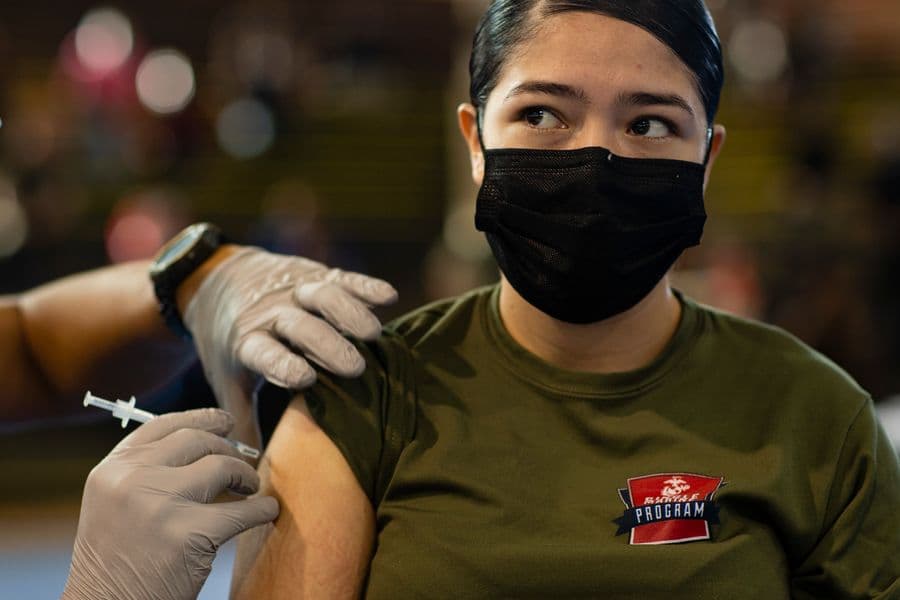
Big pharma produced a vaccine and secured Emergency Use Authorization (EUA) for it by December 2020. Public health officials implemented a large-scale effort to vaccinate the entire population. There was even talk of a vaccine “passport” to prove one’s vaccination status before being permitted to participate in routine public activities such as using mass transit, eating in restaurants, and attending entertainment venues.
Informed Consent v. Coerced Compliance
A notice in the Fact Sheet accompanying the EUA vaccine informed the recipient that receiving the vaccine was voluntary. Responding to a White House inquiry on the legality of vaccine mandates using an EUA vaccine, OLC opined that §564(e) of the Food Drug and Cosmetic Act (FDCA) did not require “informed consent.” OLC said the administrator of the vaccine must inform the recipient of the risks, benefits, alternative products, and the consequences of refusing the vaccine.
OLC noted that 10 USC 1107a prohibits involuntary vaccinations of the miliary with an EUA vaccine unless the President makes a written finding that national security requires suspension of the right to refuse. OLC recommended DoD obtain a presidential finding if they were going to impose a vaccine mandate on the military using an EUA product.
The Congressional Research Service (CRS) saw it differently. CRS told Congress that §564(e) of the Food Drug and Cosmetic Act required securing the informed consent of the recipient before administering a vaccine to anyone under an EUA.
DoD’s Vaccine Mandate: Full Licensure or EUA?
For reasons unknown, Secretary of Defense Lloyd Austin did not request a presidential finding and President Biden did not issue one. On August 24, 2021, one day after the FDA granted full licensure and approval of the Pfizer-BioNTech vaccine, Secretary Austin issued his mandate. He directed that all members of the armed forces be vaccinated with “COVID-19 vaccines that receive full licensure from the Food and Drug Administration (FDA), in accordance with FDA-approved labeling and guidance.” Mandating vaccinations with a fully approved vaccine, DoD avoided the requirement to seek a 10 USC 1107a Presidential finding.
The FDA-approved package insert for Comirnaty, the fully licensed Pfizer vaccine, included the following footnote: “The licensed vaccine has the same formulation as the EUA-authorized vaccine and the products can be used interchangeably to provide doses for primary vaccination or a booster dose without presenting any safety or effectiveness concerns. The products are legally distinct with certain differences that do not impact safety or effectiveness.” (Italics added).
Sufficient doses of the Comirnaty vaccine were not available so DoD seized upon the footnote in the package insert that the EUA and Comirnaty vaccines were interchangeable implemented the Secretary’s mandate using the available stock of EUA vaccines.
Service members who refused to be vaccinated with the EUA vaccine faced serious consequences. Over 8,000 members of the active forces and close to ten times that number of Reservists and members of the National Guard were discharged for refusing the EUA vaccine.
Legal Consequences and Legally Distinct Vaccines
Disobedience of a lawful order is a serious offense. The military cannot function if directives from senior leaders are considered suggestions rather than orders. But under military law the order must be lawful. A case recently filed in the United States Court of Federal Claims seeking back pay and other relief for reservists and National Guard personnel who were discharged for refusing the EUA vaccine turns on the lawfulness of the mandate.
Another group of retired service members, veterans, and even some still on active duty have published an open letter promising accountability through any and all legal means. The letter accuses some senior uniformed leaders of breaking the law in implementing the vaccine mandate.
The litigation over the lawfulness of the vaccine mandate raises a critical question: Whether the chemical similarity between the EUA vaccine and Comirnaty meant the EUA vaccine was a “COVID-19 vaccine [that] receive[d] full licensure from the Food and Drug Administration (FDA), in accordance with FDA-approved labeling and guidance.” If so, the mandate was lawful. If not, the mandate was unlawful without a Presidential finding.
The Secretary’s mandate was clear: service members must submit to a vaccine that has received “full licensure from the Food and Drug Administration (FDA), in accordance with FDA-approved labeling and guidance.” It is also clear that the approval of Comirnaty required that an FDA-approved label be affixed to the vaccine vial and that the vaccine itself be manufactured in a specific facility.
It is equally clear that the EUA vaccines did not bear the FDA-approved label, nor were they all produced in the specified facility. Even if the two vaccines were chemically interchangeable, the EUA vaccine was still being administered under the EUA and not under the FDA approval for Comirnaty. As noted in the Comirnaty package insert, the two vaccines were “legally distinct.”
Legal distinctions matter, especially when legal consequences ensue. Secretary Austin was in complete control of the scope of his mandate. He clearly specified that the vaccine used had to have “full licensure” from the FDA and distributed in accordance with FDA “labeling and guidance.” He could have followed OLC’s recommendation and sought a national security finding from the President and used the EUA vaccine. He could have acquired the Comirnaty vaccine and used it. He did neither.
Seeking Justice and Accountability
The case in the Court of Federal Claims should award the back pay and other relief sought by the plaintiff class. The effort to hold senior leaders accountable reflected in the open letter should result in some serious self-reflection and admission of a mistake by those senior officers. But it won’t. We seemed to have developed a pattern of overlooking serious judgment errors by senior leaders.
In the National Defense Authorization Act (NDAA) for Fiscal Year 2023, Congress directed the Secretary of Defense to rescind his August 24, 2021, directive imposing the vaccine mandate. Secretary Austin dutifully complied and rescinded the mandate on Jan. 10, 2023.
The House-passed version of the 2024 NDAA, H.R. 2670, contained several provision providing relief to service members who refused the EUA vaccine and were discharged for violating a lawful order. The Biden Administration vigorously opposed those provisions and doubled down on its claim that the vaccine mandate was a lawful order despite the lack of a Presidential finding under 10 USC 1107a.
The Senate version of the 2024 NDAA did not include most of the House-passed COVID provisions. The House-Senate conference committee dropped most of the House-passed provisions but included the provision directing the Secretary of Defense to “consider” reinstating members who had been discharged solely for vaccine refusal. The Commander in Chief signed the bill into law in December 2023 and offered no substantive relief from the consequences of refusing the EUA vaccine.
Coercing Compliance Erodes Trust and Confidence
The congressional action directing consideration of upgrading discharges supports the analysis that the mandate was inappropriate, but it does not go far enough in repaying the loss suffered by those who refused the EUA vaccine. Congress could have ordered reinstatement, back pay, and other appropriate remedies. Though the Administration would have opposed that relief, it is doubtful the President would have vetoed the bill.
The failure of Congress to grant relief and the Administration’s vindictive attitude toward those who objected to receiving the EUA vaccine that did not comply with the mandate or the details of the FDA approval leaves the courts and the pledge by those veterans, retirees, and active-duty service members as the only avenues available to secure justice and accountability for those adversely impacted. But litigation, regardless of the outcome, will not restore trust in leadership.
Trust is critical for the effectiveness of the armed forces. Sadly, the COVID vaccine mandate is just one example in a long line of recent trust-destroying events. The withdrawal from Afghanistan, the emphasis on categorizing people by racial groups instead of merit, and an emphasis on personal pronouns have added to the destruction of trust and confidence in leadership. With all the services suffering from recruiting shortfalls, restoring trust and confidence in the senior leadership must be the priority before the next shooting war starts. It won’t be easy, but acknowledging the problems with the vaccine mandate and granting relief to those adversely affected by that flawed policy would be a good start.
William A. Woodruff is a retired Army lawyer who, as Chief of the Army Litigation Division, was responsible for defending Army policies, programs, and operations in federal courts around the country. He retired from active duty in 1992 and taught law for 25 years at Campbell University School of Law in North Carolina.

Iranian Cyber Operations
By Michael Groen • RealClearDefense
Reflecting on an Epic Horse Campaign in the Mountains of Afghanistan
By Brian Glyn Williams • RealClearDefense
The Godfather of American Foreign Policy Realism Speaks to Today’s World
By Francis P. Sempa • RealClearDefense
In Pursuit of Nuclear Abolition
By Peter Huessy • RealClearDefense
Innovation Alone Won’t Prepare the U.S. for the Future Battlefield
By Joshua Segal • RealClearDefense

26th MEU – U.S. Needs Crisis Response MAGTF
By Marine Corps Compass Points
The Influence of History on a Sea Power
By CDR Salamander
Navy Civilianizes Six Former Flag Billets, Reduces Six to Captains
By Mongilio, USNI N.
Raytheon's $8B Contract for Strategic Comms Terminal Modernization
By M+A El
America’s Maritime Moment Will Not Wait
By CDR Salamander