
Grand Strategy
RealClear Context
Click below to continue reading this story, discover more Grand Strategy stories from over 25 years of RealClear archives, or follow this topic to stay in the know.
A Disappointing Global Posture Review
The Department of Defense (DOD) has just announced that it completed its Global Posture Review. It has not released the document itself, which is...
12/04/21Read it on The HillTrump's Disrupt First, Negotiate Second: Greenland in Focus
Donald Trump learned his trade doing real estate deals in New York long before he ever ran for office, and the lesson he carried into the Oval Office...
2h agoRead it on RealClearDefenseIt’s Not President Trump but Thomas Friedman Who Should Be Ashamed
New York Times columnist Thomas Friedman warns President Trump that if he continues with the diesel deal with Russia he “will enter the history books...
2h agoRead it on RealClearDefense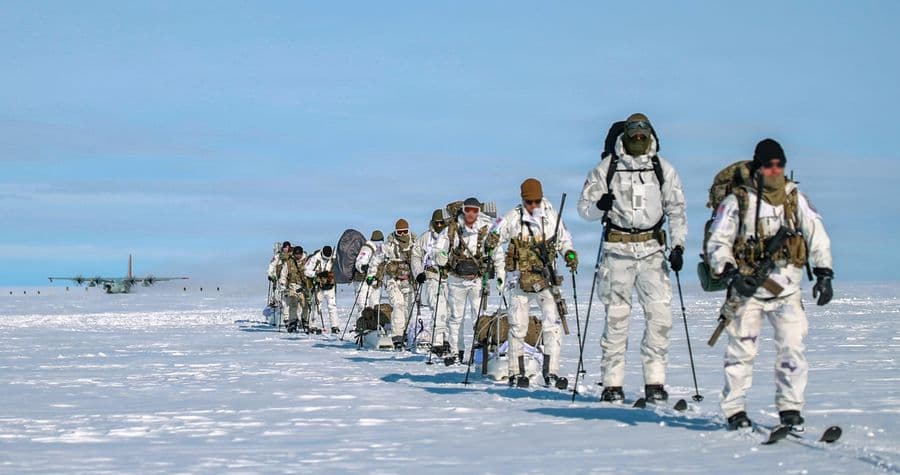
Trump's Disrupt First, Negotiate Second: Greenland in Focus
Donald Trump learned his trade doing real estate deals in New York long before he ever ran for office, and the lesson he carried into the Oval Office was simple: whoever needs the deal less controls the table. In his 1987 book on dealmaking, he described leverage as having something the other side wants, or better, something it cannot do without. Almost forty years later, that instinct still drives his foreign policy and his trade fights. He does not negotiate the way career diplomats do, by working slowly toward consensus. He disrupts the baseline first and lets the discomfort do the negotiating for him.
The Greenland security pact he signed on September 22 is the clearest recent example.
It’s Not President Trump but Thomas Friedman Who Should Be Ashamed
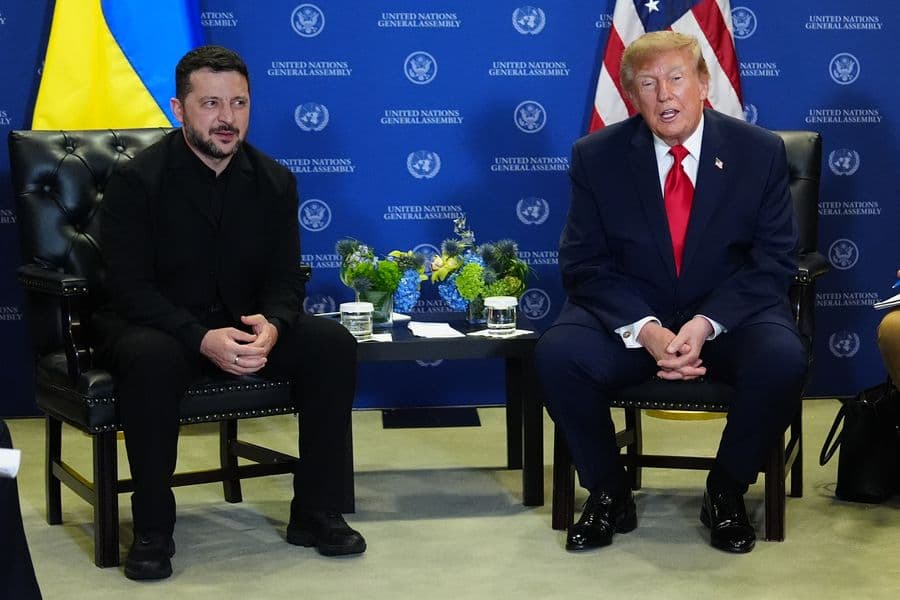
New York Times columnist Thomas Friedman warns President Trump that if he continues with the diesel deal with Russia he “will enter the history books in the chapter on leaders who sold out their country’s democratic values to appease a dictator.” Friedman then compares Trump to, who else, Neville Chamberlain, who also, according to Friedman, was a “traitor to his country’s core values.” But, Friedman writes, Trump is worse because Chamberlain was trying to avert a world war whereas Trump is doing the diesel deal supposedly to avoid Republicans losing the midterm elections. The headline for the column says that Trump’s deal “shames us all,” but it’s Thomas Friedman who should be ashamed.
Friedman apparently cares more about Ukrainian “democracy” (in a country under martial law, with elections suspended, where Zelensky rules by decree, referenda are dismissed, opposition parties are banned, and media is nationalized) than with providing some economic relief to American consumers. In his view, making an energy deal with Russia in an effort to lower diesel prices in the United States and thereby lower the costs of goods that are transported by trucks and other diesel vehicles is to be against American “values.” Placing the interests of American consumers ahead of the interests of Ukraine, in Friedman’s world, is to be a “traitor” to America’s core values.
The Godfather of American Foreign Policy Realism Speaks to Today’s World
It’s a good bet that most Americans have never heard of Nicholas Spykman. He was born on October 13, 1893, in Amsterdam, the Netherlands. He attended...
2d agoRead it on RealClearDefenseThe Godfather of American Foreign Policy Realism
It’s a good bet that most Americans have never heard of Nicholas Spykman. He was born on October 13, 1893, in Amsterdam, the Netherlands. He attended...
4d agoRead it on RealClearDefense
The Godfather of American Foreign Policy Realism Speaks to Today’s World
It’s a good bet that most Americans have never heard of Nicholas Spykman. He was born on October 13, 1893, in Amsterdam, the Netherlands. He attended Delft University and during the First World War served in Dutch diplomatic posts in Cairo and the Dutch East Indies. In 1920, he came to the United States, and three years later earned his Ph.D. at the University of California, writing about the theories of the sociologist Georg Simmel. His first book, The Social Theory of Georg Simmel, was published by the University of Chicago Press in 1925. That same year, he joined the faculty of Yale University, where in 1928 he became a professor of international relations. In the 1930s, he headed Yale’s Institute of International Studies, and in the lead-up to the Second World War wrote two articles for the American Political Science Review on the relationship of geography to American national security. Those articles formed the basis of his most important book, America’s Strategy in World Politics: The United States and the Balance of Power (1942).
Hans Morgenthau is generally considered to be the “father” of foreign policy realism in the United States based on his 1949 book Politics Among Nations: The Struggle for Power and Peace, though the American diplomat and historian George F. Kennan claimed that Reinhold Niebuhr, the author of Moral Man and Immoral Society, deserved that honor. Nicholas Spykman can be called the godfather of American foreign policy realism. America’s Strategy in World Politics and his second book on geopolitics, The Geography of the Peace (published posthumously in 1944—Spykman died in 1943), are still worth reading today for their insights on the nature of international politics.
Great Power, Great Responsibility
How the Liberal International Order Shapes U.S. Foreign Policy
6d agoRead it on DODReadsGreat Power, Great Responsibility
How the Liberal International Order Shapes U.S. Foreign Policy
1w agoRead it on DODReadsThe Pacific's Maginot Line
How China Outflanked Western Strategy
1w agoRead it on RealClearDefense
Trump's Disrupt First, Negotiate Second: Greenland in Focus
By Meda Parameswara Reddy • RealClearDefense
In Seeking Peace With Beijing, Taipei Is an Asset, Not a Burden
By Alexandru Filip • RealClearDefense
Strike First: Israel's Inevitable Doctrine for the Iranian Axis
By Lance Gordon • RealClearDefense
It’s Not President Trump but Thomas Friedman Who Should Be Ashamed
By Francis P. Sempa • RealClearDefense
Putin, Plague, and America’s Biodefense Gap
By Ryan Kane • RealClearDefense
U.S. and Japan Begin Naval Exercises Near Taiwan
By Mari Yamaguchi • Associated PressU.S. and Japan Begin Naval Exercises Near Taiwan
By Mari Yamaguchi, AP
U.S. Navy, Gecko Robotics Surge AI Maintenance Contract
By Ceder, Simkins, Navy T.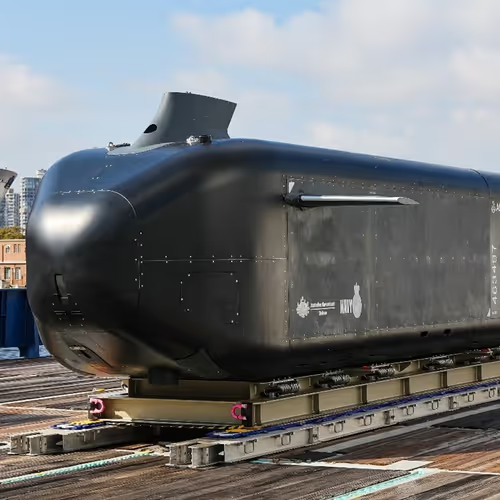
Ghost Shark XL-AUV Payload Bay Seen For First Time
By Thomas Newdick, The WarZone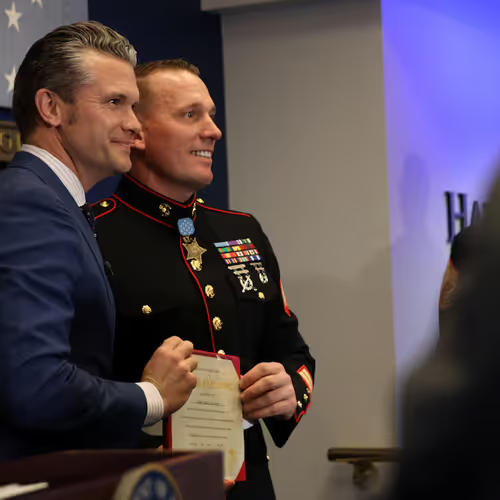
Dakota Meyer Tapped As Barracks Task Force Senior Advisor
By C. Stassis, MC Times