
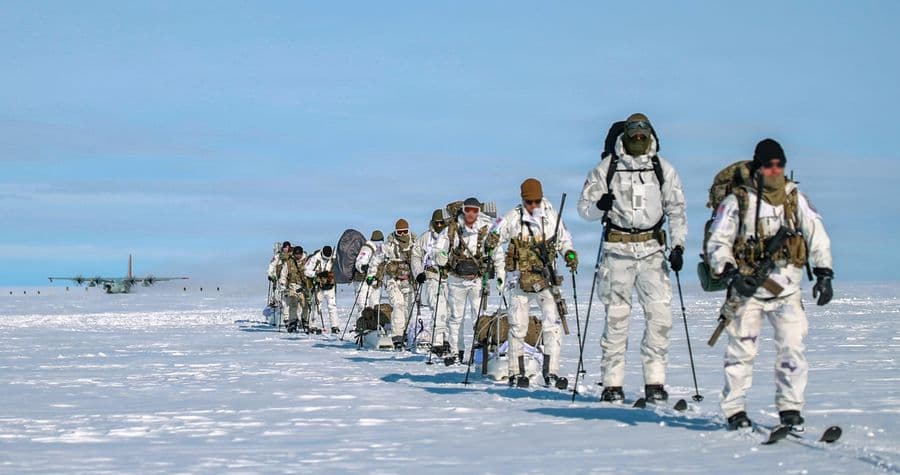
Green Berets assigned to the 10th Special Forces Group (Airborne) offload from an LC-130H “Skibird” operated by the 109th Airlift Wing of the New York National Guard on Aug. 18, 2026, at Camp Raven, Greenland, as part of Operation Apex Indigo. U.S. Special Operations Command North operates in Greenland alongside Danish counterparts to evaluate basic survival, search and rescue, cold-weather mobility, and communications infrastructure operations in the harshest environment on Earth, ensuring U.S. SOF capability to survive and thrive under any circumstances. U.S. Air National Guard Photo by Master Sgt. Jamie Spaulding (This photo was altered for security purposes)
Trump's Disrupt First, Negotiate Second: Greenland in Focus
Last updated 06:32 AM EDT • Read time: 6m
Donald Trump learned his trade doing real estate deals in New York long before he ever ran for office, and the lesson he carried into the Oval Office was simple: whoever needs the deal less controls the table. In his 1987 book on dealmaking, he described leverage as having something the other side wants, or better, something it cannot do without. Almost forty years later, that instinct still drives his foreign policy and his trade fights. He does not negotiate the way career diplomats do, by working slowly toward consensus. He disrupts the baseline first and lets the discomfort do the negotiating for him.
The Greenland security pact he signed on September 22 is the clearest recent example.
Greenland: The Lever in Real Time
At the United Nations General Assembly, Trump signed a trilateral security agreement with Danish Prime Minister Mette Frederiksen and Greenland's Prime Minister Jens-Frederik Nielsen. It followed more than a year of open threats, including tariffs on eight European allies that Trump withdrew at Davos in January after NATO Secretary General Mark Rutte offered the "framework" of a deal. European capitals were alarmed, and Danish protesters marched under banners reading "Hands Off Greenland."
But the alarm was the lever. It forced Copenhagen and Nuuk to the table on terms far more favorable to Washington than a decade of polite requests ever would have produced. The deal stops short of annexation, but it gives the United States new defense areas at Narsarsuaq and at Mestersvig, home to Denmark's Sirius Dog Sled Patrol. It has no end date, permits a Golden Dome missile defense installation, and bars states outside NATO from keeping military installations on the island. For a territory of roughly fifty-six thousand people, that is an extraordinary concentration of great power attention.
Two Governments, Two Stories
Here the honest account has to depart from the celebratory one. In his General Assembly speech, Trump said the deal gives the United States "permanent control over security and all other needs" on the island. Denmark has said the pact places Arctic security under NATO's watch, not under Washington and Copenhagen alone, and both Danish and Greenlandic officials insist no sovereignty changed hands. The agreement must still win approval from the Danish and Greenlandic parliaments before it takes effect. Two governments signed one document and walked away describing two different deals, a result vague enough that nobody has to admit losing.
The NATO Squeeze
The same disrupt-first approach reshaped NATO. For years, American presidents gently asked allies to meet a two percent of GDP defense guideline, with little success. Trump called the alliance obsolete and questioned whether American protection should stay unconditional. At the 2025 Hague summit, members agreed to a far bigger target, five percent of GDP by 2035. NATO's July estimates show nearly every ally now clearing the old two percent bar, though Albania, Slovenia, and Czechia fell short of it in 2025. Only five countries, Lithuania, Estonia, Latvia, Poland, and Greece, are above the new 3.5 percent core threshold this year, and European allies and Canada together stand at about 2.53 percent. The lever moved the number. It has not yet delivered the number Trump wants.
Trade as Pressure
Trade shows the same pattern of partial success at real cost. Threatening to tear up NAFTA pulled Canada and Mexico into talks that produced the USMCA. This July, Washington declined to renew the agreement in its current form, turning it into a rolling negotiation with annual reviews. The tariff lever also met a limit. In February, the Supreme Court ruled that the International Emergency Economic Powers Act did not authorize Trump's broadest tariffs. The administration rebuilt the program under Section 301, including a 12.5 percent duty on Chinese goods. Yale's Budget Lab puts the average statutory tariff rate at about 11 percent, down from a 2025 peak near 18 percent but still costing households roughly $1,100 a year. Leverage is not free.
Iran: Where Pressure Meets Its Limits
Nowhere has the limit of this approach shown up more starkly than Iran. The maximum pressure campaign, exiting the 2015 nuclear deal, reimposing sanctions, and killing Quds Force commander Qassem Soleimani in 2020, was leverage at its most aggressive. In June 2025, American B-2 bombers struck the enrichment sites at Fordow and Natanz. On February 28 of this year, the United States and Israel went much further, launching a war whose opening strikes killed Supreme Leader Ali Khamenei. Iran answered by choking the Strait of Hormuz.
A Pakistan-brokered ceasefire in April and a memorandum of understanding in June both broke down, and in July the United States reimposed a naval blockade of Iran's southern ports. Oil through Hormuz still runs about 40 percent below normal. Iran insists it will not abandon enrichment, while Vice President JD Vance has signaled Washington could accept a "meaningful" reduction rather than zero. Trump has promised no new strikes before the November 3 midterms. That is not evidence leverage fails. It is evidence that leverage against a regime with little left to lose moves slowly, at real cost in lives and money, rather than in one clean signing ceremony.
The Cost of Living by Leverage
Add it up. An Arctic pact both sides read differently. A NATO spending target still years from being met. A tariff program the Supreme Court cut back and the administration rebuilt, with consumers paying more. An Iran policy that traded a nuclear deal for a war now in its eighth month, with enrichment still unresolved. Trump's dealmaking philosophy has produced real, measurable results that decades of conventional diplomacy could not move. It has also produced friction, resentment among allies, higher costs for American consumers, and outcomes both sides can spin their own way. Whether that trade is worth it depends on what you value most, speed or consensus. But the pattern is hard to miss. From an island of fifty-six thousand people to a nuclear standoff four decades old, Trump keeps returning to the same move: find the lever, pull it hard, and let everyone else adjust to the new baseline he has created.
Meda Parameswara Reddy, Ph.D. is Director of the Reddy Center for Critical and Integrated Thinking. A former R&D executive holding 30 U.S. patents, he focuses on the analysis of human behavior, public health, and global affairs, drawing on an interdisciplinary background. He published in multiple RealClear platforms, Proc. Natl. Acad. Sci., AFRO American, South Asia Monitor (on editorial board), and others. mpreddy54@yahoo.com, mpreddyinsights.com.

Trump's Disrupt First, Negotiate Second: Greenland in Focus
By Meda Parameswara Reddy • RealClearDefense
In Seeking Peace With Beijing, Taipei Is an Asset, Not a Burden
By Alexandru Filip • RealClearDefense
Strike First: Israel's Inevitable Doctrine for the Iranian Axis
By Lance Gordon • RealClearDefense
It’s Not President Trump but Thomas Friedman Who Should Be Ashamed
By Francis P. Sempa • RealClearDefense
Putin, Plague, and America’s Biodefense Gap
By Ryan Kane • RealClearDefense
U.S. and Japan Begin Naval Exercises Near Taiwan
By Mari Yamaguchi • Associated PressU.S. and Japan Begin Naval Exercises Near Taiwan
By Mari Yamaguchi, AP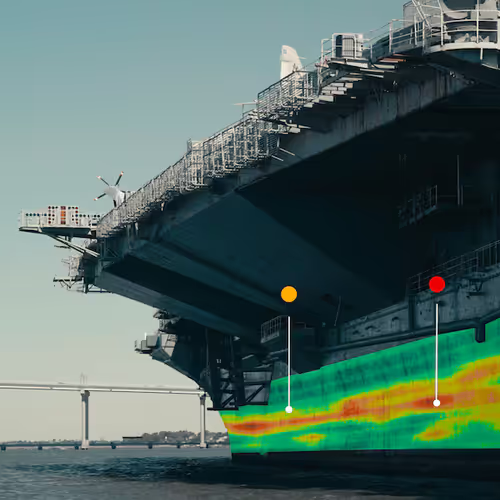
U.S. Navy, Gecko Robotics Surge AI Maintenance Contract
By Ceder, Simkins, Navy T.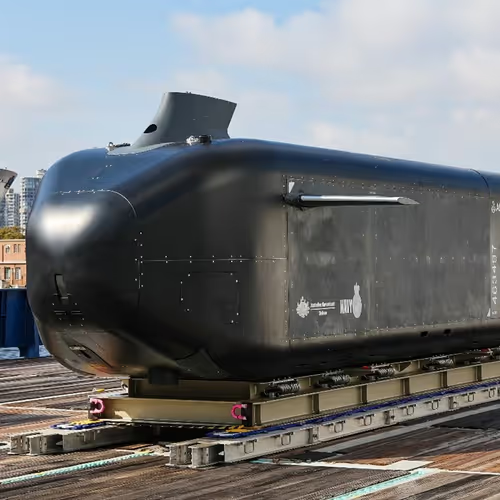
Ghost Shark XL-AUV Payload Bay Seen For First Time
By Thomas Newdick, The WarZone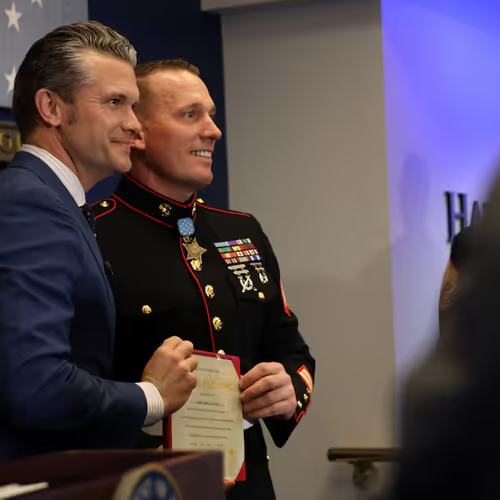
Dakota Meyer Tapped As Barracks Task Force Senior Advisor
By C. Stassis, MC Times