
Space Warfare
RealClear Context
Click below to continue reading this story, discover more Space Warfare stories from over 25 years of RealClear archives, or follow this topic to stay in the know.
The Rise of Space in U.S. Warfare
Without space, such an operation would not have been possible
03/09/26Read it on War RoomThe Cosmos-ICEYE Incident: A Glimpse of the Past and the Future
A ground war rages in the heart of Europe for the first time in decades. As the conflict broadens, a Russian satellite positions itself near a...
3h agoRead it on Foreign Policy Research Institute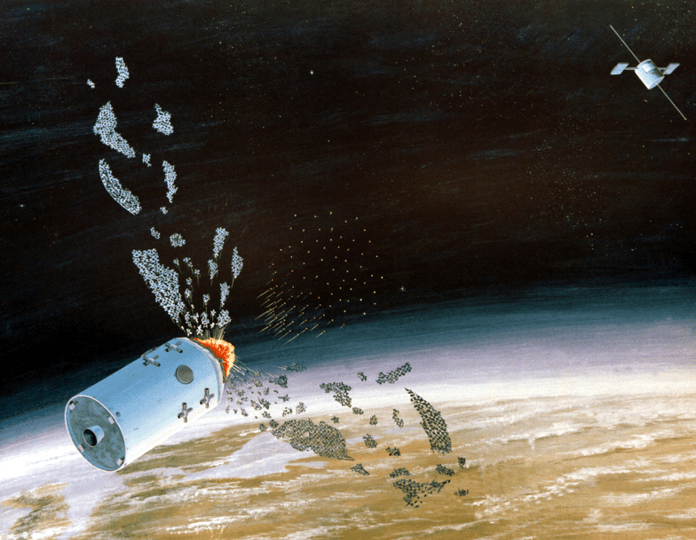
The Cosmos-ICEYE Incident: A Glimpse of the Past and the Future
A ground war rages in the heart of Europe for the first time in decades. As the conflict broadens, a Russian satellite positions itself near a US-owned reconnaissance satellite. The Russian satellite speeds towards the earth-observation satellite, prompting widespread concerns over potential anti-satellite weapons use. This, at first glance, is a zoomed-out description of the recent Cosmos 2612–ICEYE-X36 incident. The type of co-orbital confrontation we saw earlier this month may feel like a new development, yet such an attack is also a plot point in the 1986 Tom Clancy novel Red Storm Rising.
The scenario Clancy posited nearly came true, but the differences between the scenarios suggest what has and hasn’t changed about competition in space since the end of the Cold War. While reporting varies on just how proximate Cosmos 2612’s rendezvous operation came to ICEYE-X36, from 500 meters to as close as 26 meters, the incident underscores the enduring nature of the co-orbital antisatellite threat, as well as how commercialization is reshaping the threat environment in space, for better and for worse. We can expect to see more of this kind of behavior as US and allied militaries incorporate more commercial assets into their plans for conflict.
The Space Force Showed Us Its Weapons Used in Iran and Venezuela
Space Force electromagnetic warfare systems are playing a key role in U.S. military operations around the world. WSJ's Shelby Holliday visited a...
3w agoRead it on The Wall Street JournalChina's Next Frontier
How Beijing Is Challenging Washington in Outer Space
3w agoRead it on Foreign AffairsDon't Let a Commercial Space Grab Put American Aviation at Risk
The Federal Communications Commission (FCC) is right to ask what it will take to get there, including the radio spectrum that rockets and aircraft...
3w agoRead it on RealClearDefense
Multi-Constellation Networks Need Multi-Constellation Ground Stations
Rightly, the Pentagon has decided that the future of military satellite communications should not depend on one network or supplier. But putting more satellites into orbit is only half the job. The military also needs a simple way to connect to them from the ground. The U.S. Space Force is developing a Space Data Network to connect different commercial satellite systems; at the same time, the Space Development Agency (SDA) is building its Proliferated Warfighter Space Architecture (PWSA). Its Transport Layer alone will eventually include between 300 and 500 satellites in low-Earth orbit (LEO).
There’s sound reasoning behind these initiatives. It’s harder to disable a distributed system built by a number of suppliers. It’s also easier to enlarge such a system, which isn’t dependent on any one company or technology. But more satellites do not by themselves make a military network more resilient. Resilience means that, when one network fails, troops can still reach another. That depends as much on the equipment on the ground as on the satellites in orbit.

Commercial Satellites in the Crosshairs
On July 9, 2026, a joint investigation by The Insider, Der Spiegel and Le Monde revealed contents of the documents allegedly from a secret Russia-China military forum in Guangzhou. Among these documents, a slideshow purportedly laid out a three-tier plan to neutralize Elon Musk’s Starlink constellation. It begins with diplomatic and regulatory pressure followed by jamming and orbital-slot denial and physical destruction of satellites as the final rung. Fast forward two months, on September 14, Air Force Secretary Troy Meink announced, the first official disclosure of its kind, that the United States has, "on-orbit space control weapons capable of defending the Joint Force against hostile adversary action." The causal link between the two developments is difficult to establish. However, they have certainly pushed the theoretical debate of space weaponization into the practical realm. It demands a closer scrutiny of their implications while also impinging the necessity to find a diplomatic common ground, sooner rather than later, vis-à-vis weaponization element of outer space.
Commercial Satellites in the Crosshairs
The Alleged Starlink "Kill Plan" and the Amplified Space Arms Race
10/06/26Read it on RealClearDefenseUS Military Ends Long-Running Program To Spot Nuclear Missile Launches
A newer program has been operational since 2011, and the next generation could launch within 12 months.
10/03/26Read it on Ars Technica
The FCC's Spectrum Dilemma: When Space Launch Collides With Flight Test
Accelerating space launch is a top national security priority. So is flight testing for the U.S. Air Force’s new B-21 stealth bomber, the F-47 fighter, and the Navy’s unmanned MQ-25 Stingray drone, and yes, air taxis. Yet a petition pending at the Federal Communications Commission is trying to rush forward a new path to more spectrum allocation for space launch. Taking a Wild, Wild West approach to opening up spectrum could seriously slow the pace of military and commercial flight test all across America.
Space launch advocates have completely overlooked one big problem with this proposal: flight test telemetry. If the FCC were to grant the CSF petition, it could lead to the “wholesale disruption of spectrum access” found the Aerospace and Defense Industry Spectrum Access Coalition.

Counterterrorism and the Growing Convergence in Homeland Security and Homeland Defense
By Austin Doctor • RealClearDefense
The Future of Space Power Depends on Integration
By Damian DiPippa • RealClearDefense
America Should Unleash Cyber Privateers
By Jacob Schelp • RealClearDefense
America Invented the Battery, but China Controls the Factory
By William Crane • RealClearDefense
A Defense Win for Americans and Israelis in Arkansas
By Bradley Bowman • RealClearDefense

Key Space Force Satellites Can’t Talk to Each Other
By T. Hitchens, Breaking Defense
Blue Angels Pilot Scott Laux Removed for Failing To Uphold Standards
By Johnson, PNJ
The Future of the Ground Reconnaissance Enterprise
By Joe Albano, The Connecting File
The Future of the ARG/MEU
By William Yale, Proceedings
Big Surface Combatants are so Hot Right Now
By CDR Salamander