
Russia and Algeria Team Up Against Morocco
Last updated 06:52 AM EST • Read time: 6m
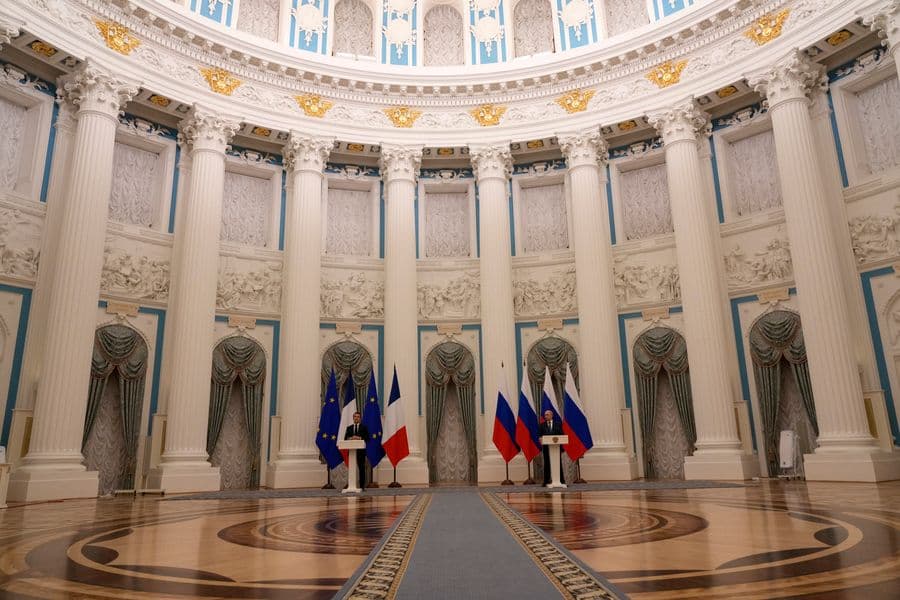
Russia's offensive against international order does not confine itself to Europe. It is increasingly clear that it is also attacking the West, including the U.S. and particularly French interests in Africa as well as those states who are or have been pro-Western. Indeed, the recent Putin-Macron summit discussed Russian encroachments on France’s position in Mali as well as the current Ukraine crisis. As Mali shows, Moscow exploits both new and old African conflicts in its global campaign, typically utilizing all the means at its disposal. One such long-running conflict is the Western Sahara territorial dispute between Algeria and Morocco that originated in the insurgency led by the Polisario Front against Spanish colonial forces from 1973 to 1975 and the subsequent Western Sahara War against Morocco between 1975 and 1991. Today the conflict mainly manifests itself in unarmed civil campaigns of the Polisario Front and their self-proclaimed SADR state to gain fully recognized independence for Western Sahara and take that territory away from Morocco.
Since 2015 when an “unofficial” Polisario delegation visited Russia, Moscow has
signified its intention to play a more visible role here. More recently, Moscow has moved strongly to strengthen its position in Francophone Africa, sending Vagner private military company forces to the Central African Republic and Mali and acquiring a naval base in Sudan. Russian regular forces may also be in Mali. However, Putin, embodying what Joseph Conrad called “the almost sublime disdain of Russian officialdom for the truth,” simply denied any Russian presence in Mali. Now Russia is also assuming a stronger posture regarding the Western Sahara, in apparent cooperation with Algeria, Morocco’s long-time rival here. Algeria has already evidently agreed to finance the Vagner forces in Mali. A second Polisario delegation thus visited Russia in 2017, leading Moscow to reiterate its interest in all UN parties taking part in a solution to this conflict, thereby ensuring its participation. No doubt this had something to do with a 2017 Morocco-Nigeria gas pipeline agreement that would bring non-Russian gas to Europe. Indeed, at that time, Russia had strong ties to both Algeria and Morocco.
However, since then, much has changed. By 2018 Moscow had gravitated to supporting Algeria’s view that Morocco must negotiate with the Polisario Front. Likewise, it moved closer to Algeria’s position regarding the UN peacekeeping operation there. The apparent motives are Russia’s growing and increasingly aggressive anti-Western policies that have now intersected with mounting Franco-Algerian tensions. It is quite clear that Russia is deliberately striking at French interests in Africa due to French opposition to Russian policies in Syria and Europe. There is no little amount of Schadenfreude (Joy at another's sorrow) in Moscow at France's discomfiture, and the Russian pressure here no doubt adds to Moscow’s overall ability to place pressure on France regarding European issues, which are obviously much more important to Russia. Thus African rivalries among the great powers and their proxies are tied to European security, not only in this way but also through Moscow's quest for economic leverage and bases in Africa from which it can then threaten European targets and interests.
Russia can thus utilize Algeria's resentments against France, whom it considers to be blocking its desire to play a prominent role in the Sahel to obtain a bigger role there and in North Africa. The two states have long-standing relations of so called strategic partnership that entails substantial arms sales to Algeria and energy deals between them. This represents the typical pattern of Russo-African relations to create a network of ties that then allows Russia to have leverage over conflicts involving those states. This leverage then enables Moscow to impose itself between both competitors, Algeria and Morocco here, or Mali and France, and utilize its military-economic-political position in question to move the countries in question to a more pro-Russia position on regional international security issues. Algeria also has turned again to Moscow because the 2020 delivery of Turkish and Israeli UAVs to Morocco spooked Algeria into turning to Beijing for its UAVs and Moscow for support. Thus, in regard to the Western Sahara issue, Russia's position has long inclined to that of Algeria, but Morocco too has to reckon with Russia's position given its influence in Africa. Equally, if not, more importantly, Russia most likely seeks to obtain naval or aerial access to its bases from Algeria to checkmate NATO in the Mediterranean Sea. The German Foreign Ministry has already reported Russian construction of six African bases, including the new naval base in Sudan. And in 2014, Defense Minister Sergei Shoigu openly stated Moscow’s interest in a base in Algeria. The security consequences of such a base are profound and readily comprehensible. So, while Russia is seeking proxies and partners in Africa to enhance its standing and leverage there, it can also claim, like Bismarck, that its map of Africa ultimately is one of Europe. The new affiliation with Algeria clearly partakes of this aspect of Russian policy. So even as Moscow threatens war in Europe, its African gambit entails a broad-gauge offensive against the status quo globally in order to assert itself both regionally and globally while also aligning itself with regional challengers like Algeria. Thus, we face simultaneous global and regional Russian challenges and must answer them accordingly.
Stephen J. Blank, Ph.D., is Senior Fellow at FPRI’s Eurasia Program. He has published over 1500 articles and monographs on Soviet/Russian, U.S., Asian, and European military and foreign policies, testified frequently before Congress on Russia, China, and Central Asia, consulted for the Central Intelligence Agency, major think tanks and foundations, chaired major international conferences in the U.S. and in Florence; Prague; and London, and has been a commentator on foreign affairs in the media in the U.S. and abroad. He has also advised major corporations on investing in Russia and is a consultant for the Gerson Lehrmann Group. He has published or edited 15 books, most recently Russo-Chinese Energy Relations: Politics in Command (London: Global Markets Briefing, 2006). He has also published Natural Allies? Regional Security in Asia and Prospects for Indo-American Strategic Cooperation (Carlisle, PA: Strategic Studies Institute, U.S. Army War College, 2005). He is currently completing a book entitled Light From the East: Russia’s Quest for Great Power Status in Asia to be published in 2014 by Ashgate. Dr. Blank is also the author of The Sorcerer as Apprentice: Stalin’s Commissariat of Nationalities (Greenwood, 1994); and the co-editor of The Soviet Military and the Future (Greenwood, 1992).

The U.S. Nuclear Deterrent Umbrella
By Peter Huessy • RealClearDefense
The Islamic Republic Can Lose the War and Still Win
By Nima Gholam Ali Pour • RealClearDefense
Talent Ecosystems: Building a Scalable National Security STEM Workforce
By Payuna Uday • RealClearDefense
The Underground Cloud
By Ben Poulin • RealClearDefense
Trump's Disrupt First, Negotiate Second: Greenland in Focus
By Meda Parameswara Reddy • RealClearDefense
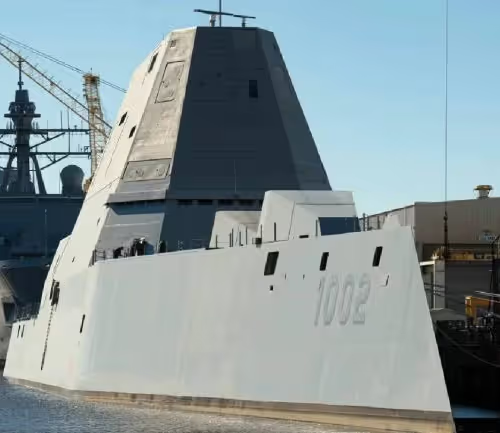
U.S. Navy to Begin Testing for USS Lyndon B Johnson (DDG 1002)
By Naval-Technology
Marine Corps Moves To Expand Maven Smart System Account Access
By DefScoop
Navy F/A-18 Spotted With New AIM-174B And AIM-260 Long-Range Missiles
By TWZ
Pentagon’s 6th Generation Stealth Fighter Will Control Drone Swarms
By Warrior M.
Air Force Needs 1,509 Combat-Ready Jets by 2035
By Michael Marrow, Breaking Defense