
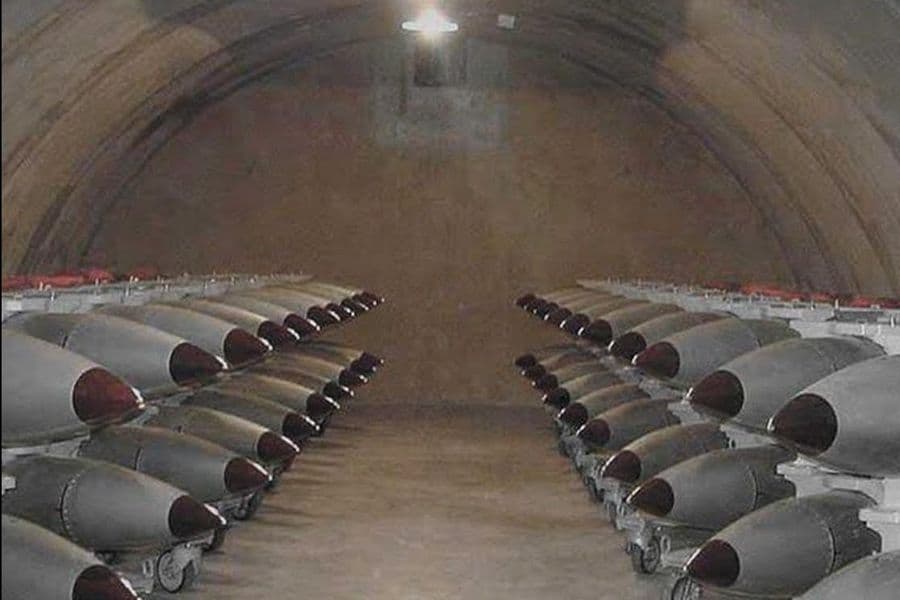
The U.S. Nuclear Deterrent Umbrella
Last updated 05:02 AM EDT • Read time: 4m
The Commander of the U.S. Strategic Command, ADM Rich Correll, recently described the strategic environment as more complex than at any point in his lifetime. He explained that future military capabilities must account for five major threat vectors: cyber, counter-space, the contested electromagnetic spectrum, novel missile systems and the supply chain. As the Admiral well knows, being the military commander of our nuclear deterrent, these vectors come at us within the context of an overarching nuclear weapons environment that gathers less attention than it should and is more dangerous than is appreciated.
The current legacy U.S. nuclear deterrent is being modernized as it is 40-70 years old. However, important assessments have warned that while critically necessary the program of record is not adequate to fully protect our future security. The current strategic balance could become even more dangerous than it is today unless, for example, the conclusions of the 2023 Strategic Posture Commission are taken seriously. The SPC confirmed that nuclear weapons play a key and central role in the current geostrategic environment in which we find ourselves. But the Commission also concluded the 2010 and 2022 nuclear posture reviews assumed a relative benign future environment, that the U.S. and its allies could significantly lessen the role of nuclear deterrence in our security, highlight cooperative work with Russia and China, and work to prevent the further spread of nuclear weapons, particularly to terror groups.
Well as Yankee great Yogi Berra once quipped, making predictions is difficult, especially about the future. Professor Mathew Kroenig notes most of those 2010 and 2022 assumptions have tuned out to be universally wrong. And a key lesson? Whatever we assume, the design of our future nuclear deterrent force should be flexible so as to handle significant shifts in the environment. Making this job exceedingly difficult is not just that we now face two near peer nuclear armed adversaries, even enemies, but these nations are not normal under any reasonable assessment, making deterrent policy an even greater challenge.
Years ago, one of America’s arms negotiator, Ambassador Max Kampelman, explained that while sitting across the table from the Soviets, he often asked himself what kind of government is it that places its political foes in psychiatric hospitals where they conveniently fall out of first story hospital windows to their death?
Today, the U.S. is facing not one but four highly abnormal nations, what might be termed the “crazy brothers mayhem.” All four either (1) have the largest nuclear force in the world (Russia), (2) are building up to near peer levels (China), (3) are seeking more nuclear weapons than any regional nuclear power (North Korea) or continue to surreptitiously seek a nuclear force with which to carry out terror attacks (Iran).
To these four, nuclear weapons are indispensable instruments of security policy, not as a deterrent to war but in service of war objectives. Russia conducts hybrid war against all of NATO while China has declared “unrestricted warfare” against the West, with Iran and North Korea as their agents. Russia wants to eliminate NATO and get the U.S. out of Europe. Apparently, Mr. Putin has adopted Catherine the Great’s strategy of securing Russia’s borders by forever expanding them, and in this case, take over Ukraine, the largest nation in Europe. On the other end of the world, China seeks to take over Taiwan and the first Pacific island chain, as part of an objective to be the hegemon of the Indo-Pacific with its projected $65 trillion GDP and 5 billion people.
In summary, the nuclear deterrent umbrella under which America now stands, offered to the free world as a protection, is also coupled with protecting an internal America that seeks to preserve its own economic and political liberty. Externally, America is under attack. The vector threats understood by Admiral Correll are real and they threaten America overseas. We cannot wall ourselves off from the free world any more than the free world can wall itself off from the United States. Security and liberty here at home are indubitably connected to the security and liberty overseas. Getting things right overseas is a primary task of American leaders.
And key to that remains a nuclear deterrent second to none and robust going into the future.
Peter Huessy is President of Geostrategic Analysis.

The U.S. Nuclear Deterrent Umbrella
By Peter Huessy • RealClearDefense
The Islamic Republic Can Lose the War and Still Win
By Nima Gholam Ali Pour • RealClearDefense
Talent Ecosystems: Building a Scalable National Security STEM Workforce
By Payuna Uday • RealClearDefense
The Underground Cloud
By Ben Poulin • RealClearDefense
Trump's Disrupt First, Negotiate Second: Greenland in Focus
By Meda Parameswara Reddy • RealClearDefense
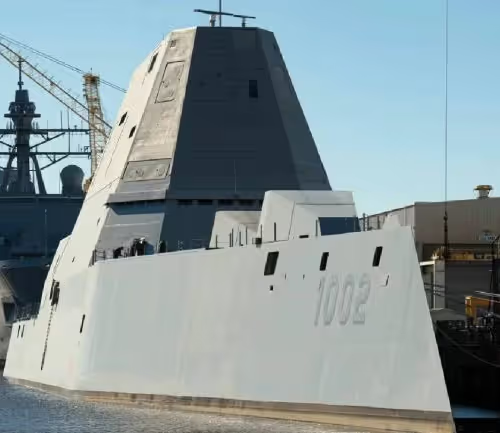
U.S. Navy to Begin Testing for USS Lyndon B Johnson (DDG 1002)
By Naval-Technology
Marine Corps Moves To Expand Maven Smart System Account Access
By DefScoop
Navy F/A-18 Spotted With New AIM-174B And AIM-260 Long-Range Missiles
By TWZ
Pentagon’s 6th Generation Stealth Fighter Will Control Drone Swarms
By Warrior M.
Air Force Needs 1,509 Combat-Ready Jets by 2035
By Michael Marrow, Breaking Defense