
Air Force Bases Need Space-Based Missile Defenses As Soon as Possible
Last updated 04:48 PM EDT • Read time: 5m
The Air Force recently announced its "new bomber vision" in which "dynamic force employment" replaces continuous bomber presence at Guam. The new vision is for bombers to pop up unexpectedly around the world, thus demonstrating a perpetual ability to project power. [1]
The new vision can depict national resolve in the absence of a hot war. However, during an actual conflict, deploying bombers (or fighters) to bases that are not robustly defended against a range of attacks could be a quick way to lose the use of that base and, depending on the severity of the attack and in-place sheltering, many aircraft and trained personnel.
Air Force Chief General Charles Brown wants the Air Force to develop more mobile airbase defenses in light of longer-ranged Chinese missile threats. Given the panoply of existing and potential threats, General Brown is fortunate to be closely connected to the new Space Force, which can complement current land- and sea-based defenses to provide substantially better protection of potential Air Force bases.
Looking first at threats and defense capabilities
China and Russia have long-range kinetic attack capabilities with missiles launched from land or sea. North Korea and Iran have regional kinetic attack capabilities with missiles launched from land, future longer-range missiles appear possible, and both are developing sea-launched missiles. [2a, 2b, 2c]
The current land-based and properly placed sea-based missile defenses could be effective against unsophisticated North Korean and Iranian missile attacks. However, if China or Russia were to mount sophisticated attacks with ballistic missiles, cruise missiles, or hypersonic missiles—particularly in combination—such defenses would likely be severely challenged or defeated.
It is openly acknowledged that the U.S. cannot currently defend against hypersonic missiles, which have much lower trajectories than ordinary ballistic missiles. [3]
China, Russia, North Korea, and Iran with nuclear developments, could also launch missiles or deploy satellites containing high-altitude electromagnetic (HEMP) warheads. “China’s classification of HEMP attack in military doctrine as ‘electronic warfare’ or ‘information warfare’ indicates that HEMP is not even considered a form of nuclear attack, but would be equivalent to non-nuclear EMP weapons and cyber warfare.” Insufficiently hardened essential electronics in Air Force, Army, and Navy systems at or defending airbases could be disabled by a HEMP field (10-100 kilovolts/meter). [4], [5]
What, specifically, does Space Force offer?
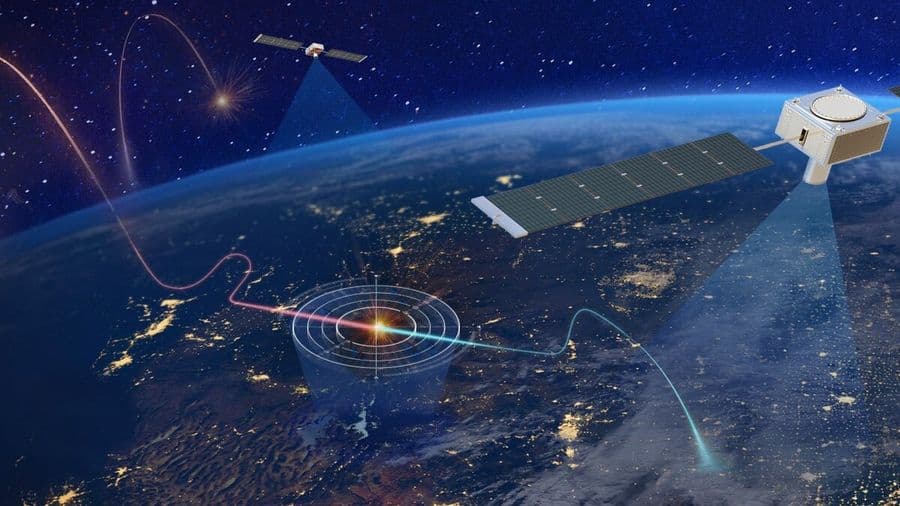
Space Force operates throughout the ultimate global "high ground," which enables looking down and attacking hostile missiles during launch when they are most vulnerable, as well as in flight all along their paths to targets. These look-down capabilities, which are slowly advancing, include developing new LEO (low earth orbit) satellites. [6]
But more than sensors are important for countering advanced missiles! Space-based missile-defense systems, which were proven cost-effective decades ago, could be quickly deployed to provide global coverage of Air Force bases and potential missile-launch avenues toward those bases. Spaceplanes, which also have other mission capabilities (such as countering attacks on U.S. satellites), could significantly assist the missile-defense mission during its development and deployment and their ability to closely observe and, if necessary, eliminate satellites determined to be HEMP-capable. [7]
Space-based defenses could be deployed on top of an optimal combination of land- and sea-based defenses, as determined for different airbase locations. The space-based layer of, for example, 1,000 interceptors and a squadron of space planes, would enormously complement the Earth-based defenses, seriously complicate an attacker’s planning, and greatly improve America’s ability to deter or defeat missile and satellite attacks on global U.S. interests.
This kind of space-based layer could have relatively short initial deployment timelines (space planes, 2-3 years; interceptors, 5 years) and relatively modest costs—in the range of 3-4% of the approximate $1 trillion likely needed to simultaneously modernize America’s nuclear arsenal to sustain MAD (Mutual Assured Destruction) and catch up, at scale, in the arms race for hypersonic weapons.
Throughout history attacking forces, routinely had to re-evaluate their tactics and strategies for penetrating enemy defenses, which could deter or defeat prior planned attacks. Why should adversaries planning to attack U.S. airbases have the luxury of not confronting the strongest array of defenses?
Regarding America's nuclear deterrent, adding space-based defenses would not diminish the need for a capable triad of bombers plus land- and sea-based missiles; rather, it would balance and complement that purely offensive posture a substantial defensive component to increase deterrence.
To those who oppose space-based defenses because they could be perceived as “weaponizing” space, there is no malevolence to using space to defend America against other nations’ weapons that threaten us by flying through or existing in space. Indeed, robust space-based defenses could revolutionize the threat environment presently dominated by offensive missile systems and strategies, deterring and making less likely the use of space for offensive weapons.
Norm Haller has led and assisted analyses, planning, and preparing reports for DoD and Congress on nuclear and non-nuclear forces for deterrence and defense against missile attacks; now a consultant, he served in the Air Force, Office of the Secretary of Defense, and Nuclear Regulatory Commission as the Chairman’s Executive Assistant.
Dr. Peter Vincent Pry is executive director of the Task Force on National and Homeland Security. He served on the Congressional EMP Commission as chief of staff, the Congressional Strategic Posture Commission, the House Armed Services Committee, and the CIA. He is author of "Blackout Wars," and also of "The Power and the Light," available on Amazon.com.
Notes:
2c Ralph Savelsberg, “New Iranian Missile Could Strike Central Europe” Breaking Defense (June 29, 2020).
- David Lague, “China Leads U.S. On Potent Super-Fast Missiles” Reuters (April 25, 2019).
- Pry, Peter Vincent. China: EMP Threat. June 10, 2020. pdf
- https://www.newsmax.com/peterpry/irgc-sputnik-emp-space/2020/05/05/id/966149/
- https://www.realcleardefense.com/articles/2020/05/13/hypersonic_defense_requires_getting_space_sensor_system_right.html
- https://www.realcleardefense.com/articles/2020/05/14/america_needs_space_planes_now_and_space-based_missile_defenses_as_soon_as_possible_115286.html

The First Test of Peace Lies in Ukraine's Borderlands
By Dennis T. Cosgrove • RealClearDefense
The VFW’s Gambling Addiction Victimizes Veterans
By Jack Yoest • RealClearDefense
Superintelligence Exposes a Gap in the Law of Delegated Authority
By Sue Ghosh Stricklett • RealClearDefense
When the Network Goes Dark, Who Controls the Battlefield?
By Jonathan K. Corrado • RealClearDefense
We Cannot Build Tomorrow's Weapons With Yesterday's Alloys
By Joseph F. Krause • RealClearDefense
When the Network Goes Dark, Who Controls the Battlefield?
By Jonathan K. Corrado • RealClearDefense
Air Force Should Buy 250 Blended-Wing Tankers, as 2027 Demo Looms
By A&SF Mag.
Long Deployments to Be Navy Standard For Next Couple Years
By Mongilio, USNI NewsWhen the Network Goes Dark, Who Controls the Battlefield?
By Jonathan Corrado, RCD
Marines Deploy Neros Archer Drone in Live Fire Exercise for First Time
By USNI News