

The Low-Tech Secret to Cyber Resilience
Last updated 05:30 PM EDT • Read time: 5m
Cities around the globe are increasingly striving to become smarter. As they take on 21st century challenges — including the strain of growing populations, social tensions and environmental issues — with shrinking budgets and failing infrastructure, urban areas are turning to advanced information and communication technology (ICT) to help ease their burdens. Smart cities are the future.
Innovations such as cloud computing, the "internet of things," and artificial intelligence in automated vehicles or in smart sensors promise to enhance the quality of life for residents and commuters all over the world. These technologies stand to make services more efficient, promote economic development and improve sustainability. But the more cities use advanced ICT in their communities, the more vulnerable their infrastructure will become. To ensure cyber resilience in the cities of tomorrow, each metropolis will have to assess its competencies, capabilities, and capacities and invite local residents to participate in the effort.
Building Smarter Cities Through Technology
The numerous examples of smart city initiatives underway cover a wide range of domains, including transportation, energy, public safety, environmental monitoring and waste management. London and Singapore, for example, use smart technology to manage traffic flows and avoid chronic congestion. The advent of self-driving cars will further increase road safety and average driving speeds. Smart lighting in Barcelona, Spain, meanwhile, adjusts brightness levels according to weather conditions and time of day. The technology not only ties into the city's sustainable energy plan, but it also improves public safety: City officials can turn street lights up in an instant to help emergency personnel respond to a traffic accident at night.
Of course, smart city initiatives are complex endeavors and depend on many stakeholders over an extended period of time to see them through. Investment is incremental in some applications: Cities may add smart technology only to existing infrastructure to ensure they can implement it quickly. Swiss authorities, for instance, intend to boost rail network capacity by up to 30 percent by hooking existing rail lines up to advanced data analytics and ICT. As a result, trains will travel more quickly, more frequently and more safely — all while conserving energy. Other projects require a greater investment of time and money. A private consortium, also in Switzerland, plans to build a fully automated nationwide underground logistics system in the country by 2030; the first 64-kilometer (40-mile) segment alone will cost upward of $100 million.
Cyber Resilience: Protecting Smart Cities
While they provide tremendous opportunities, these complex systems of millions of distributed but connected devices and services pose a serious risk to the cities that depend on them. Whether human error, natural hazards or cyberattack were to blame, a localized disruption even in a single smart device could trigger a cascading, systemwide failure. Protecting against such a disaster is paramount for cities adopting ICT. That's where cyber resilience comes in. Cyber resilience is not about preventing a failure at all cost; it's about making sure a city can still function despite a failure.
To design strong cyber resilience, a city must take stock of its ability to adapt and to recover in the face of adversity. Key aspects for assessment include a community's competency to cooperate across sectors, its capability for joint responses, and its capacity for long-term investments in systems, processes and people to achieve the redundancy necessary to cope when calamity strikes.
The Importance of Broad Engagement
Securing the continuous engagement of a broad array of stakeholders — including city administrators, residents and commuters, businesses, and ICT service providers and product vendors — is crucial for building cyber resilience. Each party has a role to play in the process. Since users of an urban ICT system will be diverse and largely untrained, failing to consider the needs and concerns of a majority of stakeholders could increase the likelihood of significant disruptions. A holistic and comprehensive approach will aid in identifying unrecognized risks, weaknesses and dependencies as the use of ICT becomes more prevalent. (The lack of clear physical and virtual boundaries, coupled with increased interconnectedness, will make it difficult to protect against external stresses, however, especially because no single authority exists yet to coordinate services and devices across a smart city.)
The vast range of perspectives that community members offer can supplement the professional expertise and experience of a smart city's engineers and designers. The city of Rotterdam, Netherlands, has taken advantage of that resource in its quest to improve its cyber resilience and that of its port — one of Europe's most vital ports. Drawing from a wide range of stakeholders, city officials have crafted plans for shoring up the port's digitization and automation systems. The effects of the project, after all, will reach critical infrastructure well beyond the city, and even beyond Dutch borders.
A people-driven design approach is the only way to develop a truly resilient smart city. Because people are the beneficiaries of smart cities, they will take on an increasingly active role in the cities' creation — and provide the experience and foresight to make them more robust.
This article appeared originally at Stratfor Worldview.

The U.S. Nuclear Deterrent Umbrella
By Peter Huessy • RealClearDefense
The Islamic Republic Can Lose the War and Still Win
By Nima Gholam Ali Pour • RealClearDefense
Talent Ecosystems: Building a Scalable National Security STEM Workforce
By Payuna Uday • RealClearDefense
The Underground Cloud
By Ben Poulin • RealClearDefense
Trump's Disrupt First, Negotiate Second: Greenland in Focus
By Meda Parameswara Reddy • RealClearDefense
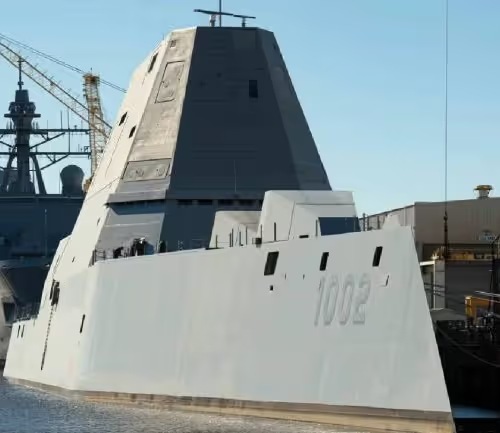
U.S. Navy to Begin Testing for USS Lyndon B Johnson (DDG 1002)
By Naval-Technology
Marine Corps Moves To Expand Maven Smart System Account Access
By DefScoop
Navy F/A-18 Spotted With New AIM-174B And AIM-260 Long-Range Missiles
By TWZ
Pentagon’s 6th Generation Stealth Fighter Will Control Drone Swarms
By Warrior M.
Air Force Needs 1,509 Combat-Ready Jets by 2035
By Michael Marrow, Breaking Defense