
The Key to Peace in Afghanistan? Eliminate Taliban Sanctuaries
Last updated 04:48 PM EDT • Read time: 6m
Unless Pakistan’s support to the Afghan insurgency is
shut down, there is no chance of a lasting Afghan peace.
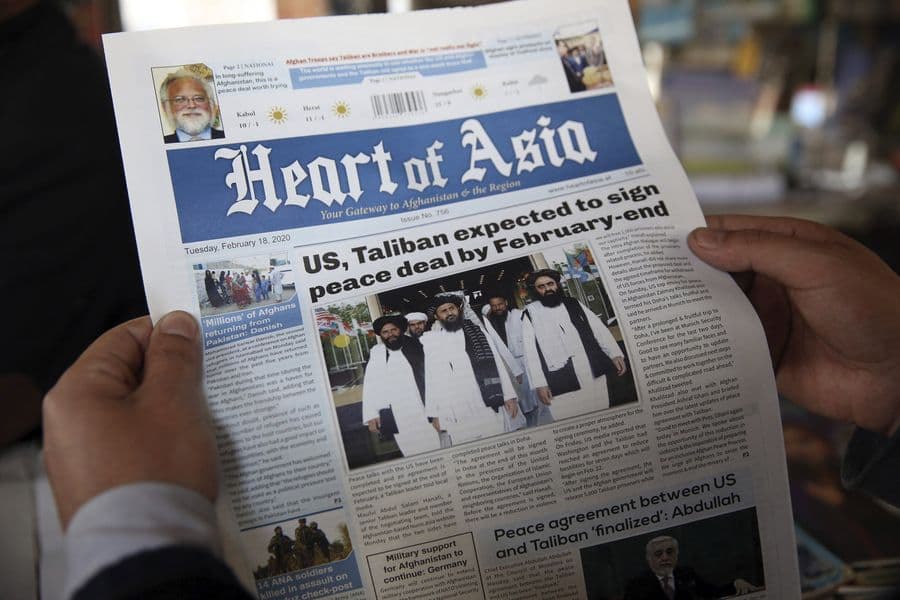
The U.S. has hailed its peace deal with the Taliban, signed on 29 February, as an important foreign policy success, and it is one that U.S. President Donald Trump seems likely to exploit in the upcoming election campaign. It may, however, prove to be a mixed blessing. The intra-Afghan negotiations that were supposed to commence on 10 March seem as distant as ever – partly because of the dispute (resolved for now) between President Ashraf Ghani and Chief Executive Abdullah Abdullah over the 2019 presidential election results, but more seriously as a consequence of disagreements over the release of Taliban prisoners.
Aside from whether U.S. negotiators had any actual authority to promise the release of Taliban prisoners, the Afghan government questioned the practicality of freeing 5000 Taliban prisoners in a span of two weeks, as agreed in the Taliban-U.S. deal. From the Afghan government perspective, any possible prisoner exchange should have been leveraged against a significant reduction in violence, if not a ceasefire, prior to intra-Afghan negotiations.
Instead, under pressure from the U.S., Ghani signed a decree to release Taliban prisoners in phases, sequenced with the intra-Afghan talks. The Taliban, however, rejected the decree and criticised the government’s commitment to peace, demanding the release of all prisoners before the commencement of intra-Afghan negotiations.
In recent weeks, both the Afghan and the U.S. governments have protested that the rate of violence by the Taliban is at odds with their commitments – at least in words, if not on paper – and with the spirit of the peace process.
If these significant hurdles can be overcome and intra-Afghan negotiations do take place, a power-sharing agreement of sorts may be struck with the Taliban. Still, the question is whether such a “peace” can be sustained.
Previous Afghan political settlements – the 1989 Rawalpindi shura, the 1992 Peshawar Accord, and the Islamabad Accord in 1993 – have shown that the Afghan Mujahideen tanzims (military-political organisations) could reach an “agreement” but still fail to commit to the agreement, because it did not address the real source of the conflict, such as external military and financial support or external sanctuaries. Following the intra-Afghan talks in Rawalpindi, for example, Pakistan continued to favour and support the radical Hizb-e-Islami, whose leader, Gulbuddin Hekmatyar, was committed to accepting nothing less than a position of dominance.
If the genuine U.S. objective is peace in Afghanistan, the issue of Taliban sanctuaries in Pakistan can no longer be swept under the carpet. It is time to go beyond acknowledging Pakistan’s role in sustaining the Taliban insurgency and to work out how one might hold Pakistan to a constructive role in a post peace-deal era.
Plenty of academic and policy studies show that external support, such as providing sanctuary, has a decisive impact on the outcome of insurgencies. Externally backed insurgencies tend to last longer, and violence is prone to continue even after peace agreements are signed.
Unless Pakistan tangibly commits to shutting down Taliban sanctuaries, the group will retain the option to return to war.
As outlined by a prominent scholar of Pakistan, Qandeel Siddique, Pakistan’s interest in Afghanistan is driven by two broad objectives: to achieve strategic depth in Afghanistan and to avoid strategic encirclement by India.
To achieve the first, Pakistan has utilised the Taliban and the larger Pashtun population in an attempt ultimately to ensure a relatively friendly and reliably pro-Pakistan government in Kabul.
In pursuit of the second, fearful of India’s increasing diplomatic and commercial presence in Afghanistan and also in Central Asia, Pakistan is pursuing an ongoing battle to undercut India in the region. In the mindset of the Pakistani security establishment, India has been supporting Baloch and Wazir insurgencies inside Pakistan, and it enjoys huge support among northern and some southern strongmen in Afghanistan.
To move from conflict to peace, a clear and well-defined relation between Pakistan and the Taliban has to be formalised in the Afghan peace agreement. So far, Pakistan’s role in the Afghan peace process has been seemingly constructive but limited mainly to informal consultations, the release of Taliban deputy leader Mullah Baradar from custody (based on a U.S. request) and facilitating Taliban travels abroad.
Unless the problems of the sanctuaries and of Pakistan’s support for the Taliban are addressed, a political settlement will not be sustainable. The 1988 Geneva Accords and the commitment of both the Soviet Union and Pakistan to stop support for their respective clients did not produce success because both guarantors – the Soviet Union and the U.S. – continued to provide aid and weapons to their clients. Afghan government officials understandably express the concern that without guarantees from Pakistan and closing of sanctuaries, the Taliban will always have the leverage of returning to fighting after the U.S. withdrawal.
The Afghan government and a number of experts insist they do not see major changes on the ground to indicate a fundamental shift in Pakistan’s policy towards Afghanistan, and maintain that Pakistan is once again playing Washington to achieve its objectives. A recent U.S. Defense Intelligence Agency report, issued on 19 May, found that “Pakistan continues to harbor the Taliban and associated militant groups in Pakistan, such as the Haqqani Network, which maintains the ability to conduct attacks against Afghan interests.”
Already Pakistani generals have talked openly about a regime change in Kabul, believing that the Afghan government will not survive once the coalition forces pull out and funding for the Afghan security forces shrinks.
All parties who have a direct or indirect stake in a conflict must be signatories to a peace settlement agreement. To minimise the risk of the Taliban resuming violence, the closing of sanctuaries and respect for international obligations must be addressed as part of any wider Afghan peace settlement. It is also necessary that regional and international actors with a stake in Afghanistan are signatories to the agreement. Pakistan’s security concerns in Afghanistan can be addressed by seeking to include India as a signatory to a separate regional settlement, along with Iran, China and Russia.
There are, of course, problems in enforcing international agreements. But the legal limits and deficits of a peace agreement depend on how obligations are codified in the text and on the political will to legalise those obligations. If crucial elements are left out, agreements will be in trouble long before enforcement problems even arise.
Dr. Timor Sharan is the former Deputy Minister at Independent Directorate of Local Governance of the Afghan government and the former Senior Policy Analyst for International Crisis Group.
Farkhondeh Akbari is a PhD candidate at the Asia-Pacific College of Diplomacy, The Australian National University. Her research focus is on actors in diplomacy – peace settlement negotiations with the Taliban in Afghanistan and Khmer Rouge in Cambodia.
This article appeared orignally at Lowy Institute's the interpreter.

Trump's Disrupt First, Negotiate Second: Greenland in Focus
By Meda Parameswara Reddy • RealClearDefense
In Seeking Peace With Beijing, Taipei Is an Asset, Not a Burden
By Alexandru Filip • RealClearDefense
Strike First: Israel's Inevitable Doctrine for the Iranian Axis
By Lance Gordon • RealClearDefense
It’s Not President Trump but Thomas Friedman Who Should Be Ashamed
By Francis P. Sempa • RealClearDefense
Putin, Plague, and America’s Biodefense Gap
By Ryan Kane • RealClearDefense
U.S. and Japan Begin Naval Exercises Near Taiwan
By Mari Yamaguchi • Associated PressU.S. and Japan Begin Naval Exercises Near Taiwan
By Mari Yamaguchi, AP
U.S. Navy, Gecko Robotics Surge AI Maintenance Contract
By Ceder, Simkins, Navy T.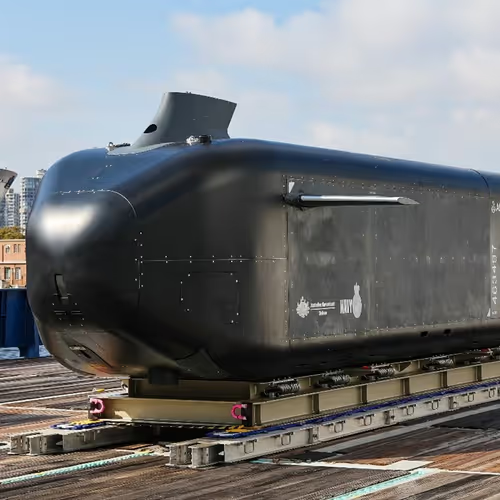
Ghost Shark XL-AUV Payload Bay Seen For First Time
By Thomas Newdick, The WarZone
Dakota Meyer Tapped As Barracks Task Force Senior Advisor
By C. Stassis, MC Times