
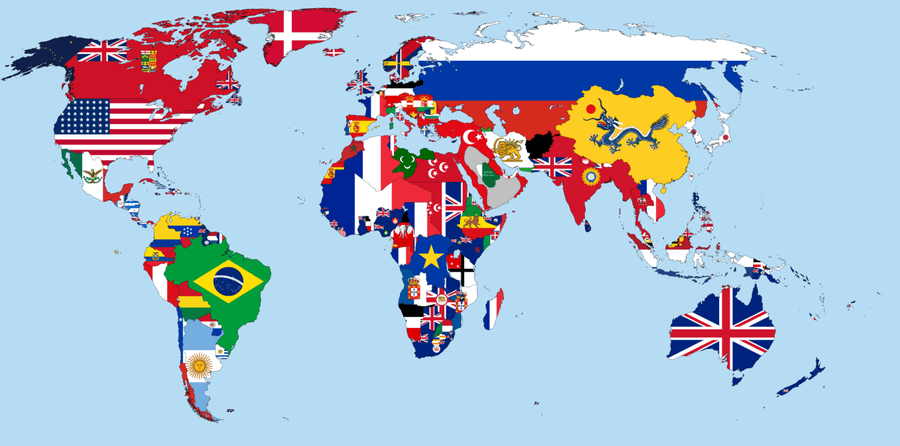
International Business Needs Grand Strategy
Last updated 07:05 AM EST • Read time: 3m
Read Full Report
Abstract
Today’s corporate leaders face an unprecedented challenge: the rules-based international order in which they operate is breaking down. The 70-year trend of globalization, where trade barriers were systematically dismantled and where businesses were allowed to compete internationally with ever-decreasing government interference, is no longer dominant. Where products are built, and by whom, suddenly matters. COVID has exacerbated this reversal, but this change has been brewing for decades.
The People’s Republic of China (PRC) built its economic success on neo-mercantilist policies which create dramatic, asymmetric advantages for its local companies. Chief among these advantages is the unfettered use of state power to support the growth of Chinese companies, including access to cheap capital, trade barriers, forced expropriation of overseas competitors’ intellectual property, corporate espionage by state agencies, and protectionist policies and regulations. This basket of policies has enabled the PRC to create a series of successful national champion companies in strategic industries at unprecedented speed. The key innovation in this model is the aggressive use of state power directed against foreign corporations.
Thinking on corporate strategy has not caught up to this trend. Such thinking typically starts with the assumption that governments will act as honest brokers and market-makers to set the rules but rarely interfere in the outcome. This view is dangerously outdated and has resulted in a series of interactions with autocratic regimes by western companies that have generated negative shareholder value. In response to these challenges, the leaders of international business should develop grand strategy in order to deal explicitly with adversarial political actions.
Typically, “grand strategy” is a term of art that designates how states engage in a quest for power among adversaries; it highlights the process by which states assess and then mobilize their assets in anticipation of military conflict. Grand strategy for corporations is differentiated from both the grand strategy developed by states for defense and war and from corporate strategy, which is primarily concerned with economic competition within the context of free markets.
For international business, grand strategy should be understood as the ability to extract choices promoting value from political circumstances. Extracting choices requires a profound awareness of current and future political circumstances that may impinge on the operations and long-term profitability of business. Though grand strategy necessitates an appreciation of the assets available to navigate an uncertain political environment, of greater import is an awareness of that environment, particularly the values and strategies of those adversarial regimes through the territorial jurisdictions of which flow the chains of supply and demand. Thus, grand strategy is not only about how to react to changing political circumstances but, more importantly, about what those changing circumstances portend.
This paper recommends the creation of an office of grand strategy, reporting to the CEO, for international businesses. This office will have ownership of articulating and implementing a grand strategy in order to mitigate political risk.
Michael Hochberg is a physicist and former professor who has founded four successful startup companies in semiconductors and telecommunications. One, Luxtera, was acquired by Cisco in 2019 and another, Elenion, was acquired by Nokia in 2020. He won the highest awards for young scientists in Singapore (NRF Fellowship) and the United States (PECASE).
Leonard Hochberg is the Coordinator of the Mackinder Forum-U.S. and a Senior Fellow, Foreign Policy Research Institute (FPRI). Now a retired professor, he taught at various academic institutions, including Stanford University, held an appointment as a Fellow at the Hoover Institution, and co-founded Strategic Forecasting, Inc. (i.e., STRATFOR).
In Pursuit of Nuclear Abolition
By Peter Huessy • RealClearDefense
Innovation Alone Won’t Prepare the U.S. for the Future Battlefield
By Joshua Segal • RealClearDefense
The sUAS Tactical Trifecta
By Bryan T. Woody • RealClearDefense
The Revolutionary War: When Strategic Options Share the Same Weakness
By Henry Yep • RealClearDefense
The Houthis Are Testing the Limits of Collective Defense
By Saima Afzal • RealClearDefense

Navy Civilianizes Six Former Flag Billets, Reduces Six to Captains
By Mongilio, USNI N.
Raytheon's $8B Contract for Strategic Comms Terminal Modernization
By M+A El
America’s Maritime Moment Will Not Wait
By CDR Salamander
Armor Up?
By Marine Corps Compass Points
Who Shoots Down the Drone Over the Shipyard?
By John Ferrari & Dillon Prochnicki • RealClearDefense