
Modern Generals and Selfish Service
Last updated 06:35 AM EST • Read time: 8m
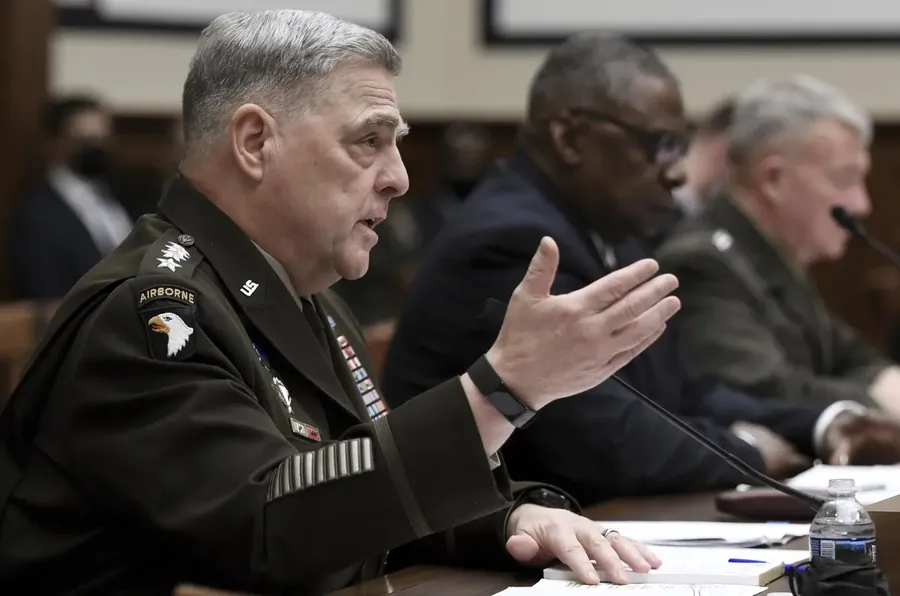
Modern generals like to say they serve their country. Increasingly, they serve their own legacy.
They don’t always start that way. Most of them come up the hard way: sand in their teeth, rotor wash in their eyes, the metallic taste of fear on patrols they are too young to fully understand. They remember the platoon leader who bled out in the medevac helicopter, the interpreter who disappeared after a raid, the mother at a checkpoint who screamed over a dead child. At that stage of a career, legacy is a luxury. Survival and competence are the only currencies that matter.
But something happens as they rise.
The war moves further away, even if they’re still flying into theaters and walking flight lines. The meetings get larger, the rooms get nicer, the words more abstract: “effects,” “lethality,” “gray zone,” “near-peer competitor,” “strategic messaging.” At the rank where your collar carries stars, every decision comes with a quiet, unspoken question:
“How will history remember this?”
That question is the beginning of corruption—not the crude corruption of envelopes and contracts, but the subtler, more lethal corruption of motive.
The modern general operates in three overlapping theaters: the battlefield, the bureaucracy, and the broadcast. The sharpest steel gets dulled in the last two.
On the battlefield, reality is unforgiving. Artillery doesn’t care about your talking points. A bad plan kills people fast; everyone sees it.
In the bureaucracy, reality is optional. A bad plan can be explained away with enough slides, acronyms, and carefully crafted memos. Failure can be rebranded as “learning,” retreat as “repositioning,” mission drift as “evolving objectives.” In this world, legacy isn’t carved in stone; it’s negotiated in backrooms and think‑tank panels years after the fact.
In the broadcast arena, reality becomes performance. Generals now are not just commanders; they are brands.
They stand at polished lecterns and deliver “assessments” that have been scrubbed of blood and doubt. They testify under oath and under lights, and while they speak of “hard truths,” every sentence has been rehearsed, weighed against headlines and future book deals. They cultivate a public persona: the warrior‑scholar, the reformer, the straight‑shooter who “tells it like it is” while always stopping one inch short of saying the thing that would actually shatter their career.
Legacy, for them, is not what their soldiers whisper about them in the barracks. It is the sum of op-eds, biographies, podcasts, and carefully curated anecdotes, the instructor slides at war colleges and leadership seminars. It is how they appear in the footnotes of future historians who will likely never have smelled cordite or burned flesh, but who will have access to their memoirs and their “papers.”
The modern general knows this. And so decisions bend—at first barely perceptibly—toward the preservation and enhancement of that legacy.
You see it in how wars are ended: slowly, ambiguously, with language designed to provide plausible deniability to future reputations. No clear admission of defeat, no honest reckoning with the horror we sponsored or failed to prevent, just “transitions” and “new phases.” A general who presides over defeat rarely calls it that. Defeat is the enemy of legacy.
You see it in how wars are prolonged. The promise that “just one more season, one more surge, one more capability” will turn the tide. The reluctance to say, on the record, that the strategy is broken, that the partners are unreliable, that the political aim is incoherent. To say these things plainly would be to admit complicity. Better to murmur concern in private, leak hints to favored journalists, and wait until retirement to tell the truth—safely, at a distance, with a publisher involved.
You see it in the choreography of accountability. When mistakes happen—the airstrike on the wrong building, the children killed in the wrong car, the partner militia that turns its guns on civilians—investigations are launched, findings are “regrettable,” “tragic,” but always somehow unintentional, unforeseeable, a fault of “systemic failures” rather than named leaders and commands. The general may express “full responsibility,” but the phrase has been hollowed out; it translates to: “I am responsible in the abstract, but no specific consequence will touch me.”
The subordinates who executed the orders may pay. The general’s legacy will not.
This hunger for a pristine legacy would be merely unseemly if it affected only careers. But it shapes policy, strategy, and lives.
A general who fears for his legacy will avoid saying the one thing that might save lives but damage his image: “We lost.” Or: “This mission no longer serves our stated interests.” And increasingly relevant: “We are not prepared for the war we are spending the most time talking about.”
Instead, he will hedge. He will back half-measures. He will support strategies that allow him to claim, later, that the failure was political, that he “gave his best military advice” and that others failed to heed it. The war becomes a stage for his future defense.
Notice how often retired generals say, in interviews and books, that they warned about this or that, that their memos were ignored, that the civilian leadership did not listen. Some of this is true; politicians do distort and weaponize military advice. But some of it is carefully crafted alibi for the historical record. Very few will say plainly: “I stayed in command of a war I knew was lost because I wasn’t willing to sacrifice my position to tell the truth publicly.”
The modern general’s subservience to legacy is reinforced by the ecosystem surrounding them: think tanks hungry for senior fellows, cable networks hungry for on‑air analysts, universities, and defense firms eager for board members with recognizable names. Each of these institutions relies on the aura of credibility, gravitas, and moral seriousness that clings to the uniform, even once it is hung in a closet.
A general who becomes a vocal internal dissenter—who resigns over policy, who calls a war unwinnable while it is still underway, who refuses to smooth the rough edges of reality—risks being labeled “political,” “disruptive,” “unprofessional.” The gatekeepers who control post‑service reputations, contracts, and platforms are not neutral; they are invested in a version of history that justifies the frameworks and conflicts that keep them relevant.
So, the incentives are clear: be brave on the battlefield, cautious in the bureaucracy, and careful in the broadcast. Risk your life early; risk only your subordinates and abstract “credibility” later. Protect the brand.
What gets lost in this choreography is the simple, brutal fact that soldiers and civilians are still dying on the periphery of these reputational calculations.
The young infantryman whose convoy route was extended to cover one more village in a doomed “shape, clear, hold, build” cycle does not care how his general will be remembered in some future war college symposium. The mother whose house is pulverized by a precision weapon in a precise strike that was precisely wrong does not care if a four‑star will later frame that night as a tragic “fog of war” example in a chapter about leadership.
They care that no one told the truth when it still mattered.
We need to strip away the romance around modern generalship. The era of the untouchable “warrior sage” should end. Generals are not marble statues; they are public servants with immense power and, increasingly, immense media presence. They should be judged less by their polished narratives and more by the brutal metrics they helped shape: the clarity of their objectives, the honesty of their assessments, the consistency between their private doubts and their public statements.
A general who tells political leaders, in private, that a war is unwinnable while telling the public it is tough but winnable is not protecting morale; he is protecting legacy. A general who writes a memoir confessing doubts he never aired when change was still possible is not being courageous; he is cashing in.
The correction is not to demand saints in uniform. It is to flip the incentive structure.
Reward the officer who resigns early rather than preside over a sham strategy. Elevate the voices that speak plainly about risk, cost, and probability of success, even when it embarrasses allies and administrations. Treat honesty about failure as a higher mark of leadership than the ability to survive four administrations without controversy.
And the rest of us—journalists, citizens, analysts—must stop participating in the soft wash of legacy-building. Stop treating every retired general’s book as gospel, every op‑ed as revelation. Ask the sharper questions: What did you know then? What did you say then? To whom? And what did you stay quiet about to preserve your career?
Modern generals like to say they fight for their country and their troops. Many do, in ways that will never show up on a television screen. But at the top, the gravitational pull of legacy distorts even good intentions.
A general who is more afraid of being remembered badly than of losing a bad war has already chosen his true commander. And it is not the flag flying over the base.
Army Officer. The opinions in this article are the author's own and not that of the U.S. Army or Department of War.

Don’t Be Swayed by Tactical Nukes
By Benjamin Giltner • RealClearDefense
How Seoul’s Break With Kyiv Serves Trump’s Russia Turn
By Sang Won Pyo • RealClearDefense
When the Grid Goes Down, the Mission Must Go On. Solar and Storage Can Help.
By John Szoka • RealClearDefense
Data and Communications Technology are the Hidden Keys to Success for Golden Dome
By Eric Velte • RealClearDefense
The Dual Threat: Why Beijing’s Collapse Is Just As Dangerous as Its Rise
By Efraín Vázquez-Vera • RealClearDefense

USS Stout Loses Power During Port Visit Due to ‘Engineering Casualty’
By USNI News
Air Force Lessons Learned From Operation Epic Fury
By Tabitha Reeves, National Defense
Marines Need Nine More Amphibious Warships To Carry Out Its Missions
By TWZ
AFRL, ACC Fly XQ-67A Drone To Test Autonomous Teaming
By Airforce Technology
F-35B Releases Meteor BVRAAM for the First Time
By Parth Satam, The Aviationist