

Data and Communications Technology are the Hidden Keys to Success for Golden Dome
Last updated 12:20 AM EST • Read time: 4m
Join the Conversation
0A program envisioned at the scale of the Golden Dome for America (GDFA) missile defense initiative presents complex and technical hurdles, but the increasing and very real threat of conflict from a rogue or state-sponsored actor requires the nation and its highly capable defense industrial base to find a way to achieve the program’s lofty goals. With the basic requirements for success now laid out, the Pentagon and this community now must focus on developing, integrating, and fielding the command-and-control (C2) components of the program that will underpin the program’s success across the space, air, and sea domains.
The concept of a comprehensive missile defense system has been met with varying degrees of success in the past, but we as a nation now have much of the proven technology necessary to achieve this. Golden Dome will leverage new technical breakthroughs, such as the ability to get assets into space cheaply and the availability of robust processing and compute power. Further, the government has provided more specific focus to its industry partners around Golden Dome requirements.
That doesn't mean the objectives of the initiative will be easily achieved. The immediate challenge involves leveraging the proven technology we have, augmenting it with new capabilities such as high-speed space-based networking, and deploying it quickly. Deploying GDFA in space will be an enormous undertaking when combined with interdependence on terrestrial sensors, sea-based sensors, and even subsea ones.
Second, the difficulty associated with developing the core technologies for the entire multispectral mission by 2028 as planned needs to be embraced.
The best approach begins with establishing the foundation for the underlying infrastructure for communications and data processing. The C2 architecture will be the most pressing issue to address, even more than the cost of getting satellite payloads in space or the ability to maneuver individual satellites in a constellation. Ultimately, the initiative will see the most capable weapons in the world sending messages across domains to accurately convey where missile tracks exist and determining authority to engage with them. That means moving some requirements from a purely centralized C2 system back to the edge – a complex combination of edge processing and careful autonomy. Even so, the architecture must retain a robust centralized C2 capability.
Another facet will be establishing an informed data communications and message-passing architecture to reliably move engagement quality information to and from sensors and shooters. Given the broad range of components within the Golden Dome architecture, this will require modular core interfaces to enable the necessary communications. It also has to allow for specialization to accommodate the range of sensors and devices within the architecture – especially at the edge where data passes in and out – requiring a lot of translation and standardization to integrate this Tower of Babel of different sensors talking their own languages. This problem of translating and standardizing must be tackled through a cooperative and carefully organized effort with the industry vendors who developed these distinct software programs, while using age-old guidance and standards from past efforts like Modular Open Systems Architecture (MOSA).
Simulation tools can also be used to build out system capabilities across a broad spectrum of sensors and vectors. These tools blend artificial intelligence, synthetic data and machine learning. We’ve already seen this type of simulation approach work for NASA with capabilities built for the U.S. Navy and NASA’s Artemis program, where simulation tools have significantly reduced launch planning computational time.
GDFA is achievable but definitely not simple. Success will come from focusing on the technical challenges with an engaged and highly motivated industrial base -- an underlying issue that thwarted past attempts at large scale government deployments.
Eric Velte is the Chief Technology Officer at ASRC Federal, where he leads the development and deployment of the company’s IT-focused Centers of Excellence. He has more than 25 years of experience in information fusion and real-time systems architecture, and has spent much of his career as a software developer and product architect supporting U.S. defense missions from the sea floor to space.

Don’t Be Swayed by Tactical Nukes
By Benjamin Giltner • RealClearDefense
How Seoul’s Break With Kyiv Serves Trump’s Russia Turn
By Sang Won Pyo • RealClearDefense
When the Grid Goes Down, the Mission Must Go On. Solar and Storage Can Help.
By John Szoka • RealClearDefense
Data and Communications Technology are the Hidden Keys to Success for Golden Dome
By Eric Velte • RealClearDefense
The Dual Threat: Why Beijing’s Collapse Is Just As Dangerous as Its Rise
By Efraín Vázquez-Vera • RealClearDefense

USS Stout Loses Power During Port Visit Due to ‘Engineering Casualty’
By USNI News
Air Force Lessons Learned From Operation Epic Fury
By Tabitha Reeves, National Defense
Marines Need Nine More Amphibious Warships To Carry Out Its Missions
By TWZ
AFRL, ACC Fly XQ-67A Drone To Test Autonomous Teaming
By Airforce Technology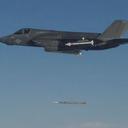
F-35B Releases Meteor BVRAAM for the First Time
By Parth Satam, The Aviationist