
Former Pentagon Official's Push to Prevent Election Hacking
Published Aug. 31, 2017 • Read time: 4m
Up until last year’s presidential election, cybersecurity was an issue relegated to policy wonks and techies. It has since not only become part of the national conversation but also a political flash point.
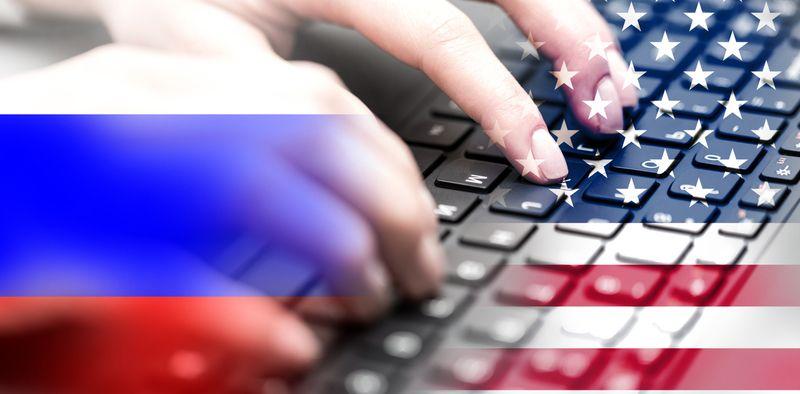
There is a growing pile of evidence that Russia engineered an information campaign to influence the 2016 election. And it will happen again if nothing is done to prepare and fight back, says Eric Rosenbach, director of the Defending Digital Democracy project at the Harvard Kennedy School.
Rosenbach is well known in defense and cybersecurity circles. He was chief of staff to Secretary of Defense Ash Carter from 2015 to 2017, and before that he was assistant secretary of defense overseeing the Defense Department’s cyber strategy, policy and operations.
The project was launched just six weeks ago. It is co-led by the former campaign managers for Hillary Clinton and Mitt Romney and includes representatives from Facebook and Google.
“We are starting to get a little momentum, getting things done,” says Rosenbach. “We have a great bipartisan team. It’s hard nowadays to find senior political Democrats and Republicans who want to work together.”
The United States needs to protect democratic processes and systems from cyber and information attacks, he says. “It’s an urgent problem.”
The next step is to develop a “playbook” or go-to guide for campaign officials so they know what look for “in order to up their cybersecurity game and mitigate risk,” he says. An analysis center will be created to share best practices and threat information. “We want to work with tech firms to offer capability suites to campaigns at no cost.”
Rosenbach recruited Robby Mook, Hillary Clinton’s 2016 campaign manager, and Matt Rhoades, Mitt Romney’s 2012 campaign manager, to join the project as co-leaders. Also on the team is Heather Adkins, Google’s director of information security; Facebook’s Chief Security Officer Alex Stamos; Dmitri Alperovitch, co-founder of CrowdStrike; former U.S. Ambassador Stuart Holliday; Nicco Mele, a media expert at the Harvard Kennedy School; Debora Plunkett, former head of the National Security Agency’s information assurance directorate; and Suzanne Spaulding, a former undersecretary at the Department of Homeland Security.
“We are preparing for the 2018 elections,” Rosenbach says. “The bad guys are already starting to make plans to go after folks in 2018. We need to try to lower the risk.”
"Foreign actors could target any political party at any time,” Rhoades said in a statement. “This project will bring together not just different parties and ideologies, but subject matter experts from cyber security, national security, technology and election administration.”
Mook was in charge of the Clinton campaign when its chairman, John Podesta, fell for a phishing scam and thousands of emails were hacked and leaked. “The way the threat has evolved is, they're stealing information and putting it out into the press,” Mook said on CBS News. “If we allow foreign countries to steal information and push it out there, we're not going to have that debate and we're going to let those foreign countries decide what we're talking about."
Rosenbach says the most troublesome threat is the “potent and dangerous mix of hacks and release of information that most often has been doctored or altered.” He echoes what military officials have warned about data manipulation being one of the most feared aspects of hacking.
“Some bad actors will go after the IT infrastructure that tabulates polls.” That impacts either the way votes are counted or casts doubt on it, he says. “It’s important to remember that even a whiff of uncertainty can be a major victory” for the perpetrators.
So far no proof has been found that hackers have tampered with polling stations. “Looking forward, that’s something we should watch for,” he says. The project has enlisted Marc Elias of Perkins Coie and Ben Ginsberg of Jones Day, two of the top respective Democratic and Republican election lawyers in the country.
Facebook is providing $500,000 of seed funding for the project. One of the concerns is that attackers use social media to manipulate democracy, the company’s chief security officer Stamos said in a CNN interview. “I would like to see the security community broaden their thinking beyond traditional hacking to all the other ways technology can be abused.”
Lessons will be drawn from last year’s campaign, but “this effort is forward-looking,” Rosenbach insisted. “We do not want to re-litigate 2016. It’s not about that at all. And we want to stay bipartisan.”
Sandra Erwin is a national security and defense reporter for RealClearDefense. She can be reached at [email protected]. Follow Sandra on Twitter @Sandra_I_Erwin.

The Army’s AI Cyber Defenders Need a Proven Stand-Down Order
By Gleb Tsipursky • RealClearDefense
After the Silence
By Chase Skylar DeMayo • RealClearDefense
Defense Chip Procurement Needs a Recovery Test
By Percy Yixuanchen Yu • RealClearDefense
FORTRESS America Must Measure Missions, Not Megawatts
By Burak Oktenli • RealClearDefense
After the Midterms, the Right Strategy Against Iran
By Lance Gordon • RealClearDefense
After the Silence
By Chase Skylar DeMayo • RealClearDefense
Underwater Arms Race Puts U.S. Naval Supremacy at Risk
By Tom O'Connor, Newsweek
New Facilities To Pump Out Upgraded F/A-18E/F Super Hornets
By Trevithick, WarZone
U.S. Navy Expands Tomahawk Warhead Production
By Naval News Staff, Naval News
SSN(X) Attack Boat Will be a Swift, Lethal Mothership for Undersea Drones
By USNI N.