
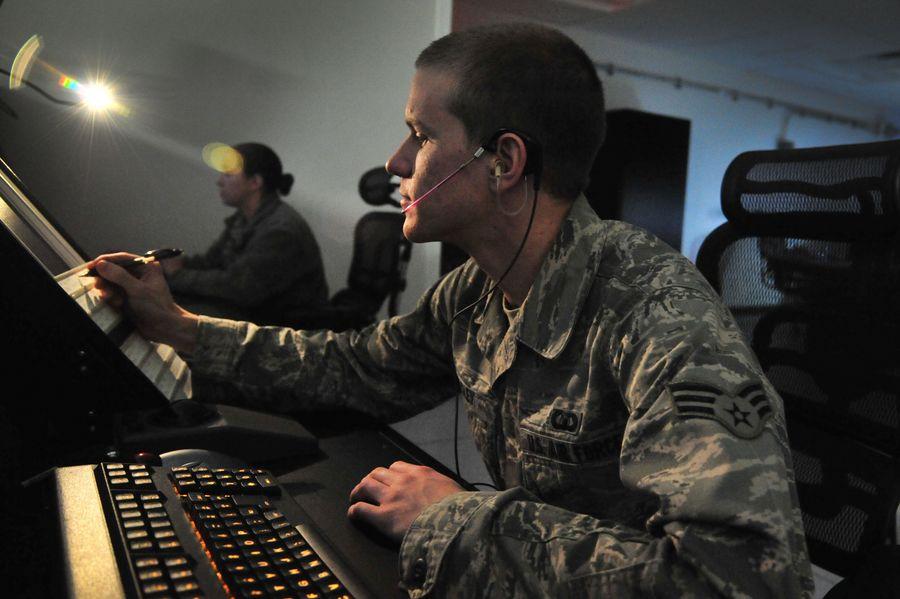
U.S. Air Force Senior Airman Dennis Beasley, 27th Special Operations Support Squadron Air Traffic Controller, runs through simulations in the Radar Approach Control at Cannon Air Force Base, N.M., Nov. 28, 2012. The air commando spoke about how a near-death experience served as a wake-up call and turning point in realizing how to cope with life’s challenges and the significance of having a strong support system.
After the Silence
Peer support after a military medical crisis
Published Nov. 13, 2026 • Read time: 4m
Join the Conversation
0On April 1, 2008, I experienced cardiac arrest while serving at Langley Air Force Base. I remember what I describe as a near-death experience. For about twelve years, I shared it with a small circle of family and friends but avoided speaking publicly. I feared stigma more than I feared dying again. This essay describes that silence, my adjustment to medical retirement, and why I support Camaraderie Foundation's work with service members, veterans, and their families.
In the Air Force, I knew how to talk about an assignment, a deadline, or an injury. What I remembered from my cardiac arrest was harder to explain. I worried about who might overhear me and whether the conversation would change how my colleagues saw me.
I was twenty on April 1, 2008, serving as a U.S. Air Force Public Affairs journalist at Langley Air Force Base. During the experience, I remember light and a sense of peace and love. I also remember someone I understood to be Jesus. I can describe those memories and what they mean to me; I cannot offer them as clinical proof of what happens after death.
The question of whether to talk about it stayed with me through medical retirement and the years that followed. It eventually shaped my interest in veteran peer support and Camaraderie Foundation, where I now serve on the board.
For about twelve years, a small circle of family and friends knew about my experience. I was reluctant to share it publicly. No one had ordered me to keep quiet. I feared being called crazy or accused of making up a story. While I was still in the military, I also worried that talking about it might lead to my discharge. I could joke about dying, but describing the light I remembered felt riskier.
There is published research on traumatic brain injury, moral injury, and post-traumatic stress in military populations. Those references do not measure stigma around near-death experiences. I can speak to my own hesitation: I could name the medical crisis, but I struggled to explain what I remembered during it. Keeping that to myself felt isolating as I adjusted to medical retirement.
In October 2020, I took part in Wounded Warrior Project's Project Odyssey. After I returned home, a therapist asked during a follow-up counseling session whether I had ever had a near-death experience. I finally said yes. I remember the relief of hearing the question asked without judgment.
I later spoke at the 2024 IANDS International Conference in Phoenix and have talked with other military members and veterans about experiences that are difficult to explain. Those conversations have taught me to begin by listening.
What I remember during my cardiac arrest, and the spiritual meaning I give those memories, are personal testimony. I am not a physician or licensed mental health professional, and I do not diagnose or treat. Peer support can help someone reach qualified care; it cannot replace that care.
Camaraderie Foundation supports military service members, veterans, and their families through counseling, emotional, and spiritual support. Its counseling services offer a way to reach qualified help. I joined the board because I remember the strain of carrying a private fear while trying to appear fine. I want veterans and their families to have somewhere to turn when they are ready to talk.
Serving on the board has given me a way to continue serving after medical retirement. As a Public Affairs journalist, I told other people's stories. Today I also speak about an experience I once kept private, and I serve with a foundation that helps veterans find support.
A veteran may need a trained clinician, a chaplain, another veteran, or several kinds of support. Community organizations can help make those connections. They cannot replace appropriate treatment or the responsibilities of military leadership.
For commanders, chaplains, clinicians, and policymakers, my request grows out of that experience. When a service member or veteran describes something unusual or difficult to explain, give that person room to speak before deciding what it means. Be clear about confidentiality and the care available. Support organizations that can show how their services help people reach qualified assistance.
Chase the Light describes how I try to live now: paying attention to everyday moments of presence and laughter, and making room for love and purpose. It is a personal philosophy, not a form of treatment. I do not expect everyone to interpret my experience the same way. I do wish someone had asked me about it years before that therapist did in 2020.
Chase Skylar DeMayo is a medically retired U.S. Air Force Public Affairs journalist, a speaker at the 2024 IANDS International Conference, and a board member of Camaraderie Foundation in Central Florida. He writes and speaks about military stigma, peer support, and finding purpose after a medical crisis. www.ChaseDeMayo.com
The Army’s AI Cyber Defenders Need a Proven Stand-Down Order
By Gleb Tsipursky • RealClearDefense
After the Silence
By Chase Skylar DeMayo • RealClearDefense
Defense Chip Procurement Needs a Recovery Test
By Percy Yixuanchen Yu • RealClearDefense
FORTRESS America Must Measure Missions, Not Megawatts
By Burak Oktenli • RealClearDefense
After the Midterms, the Right Strategy Against Iran
By Lance Gordon • RealClearDefense
After the Silence
By Chase Skylar DeMayo • RealClearDefense
New USAF Force Design Bets on Technology
By Stephen Losey, Air & Space Forces
DoD Pushes $450M in Loans To Bolster U.S. Space Companies
By Hitchens, BrDefense
The U.S. Navy Needs a New Battlecruiser. Will It Get One?
By Sadler & Ouellette, NatInt
U.S. Army Rehearses Rapid HIMARS Rocket Launcher Deployment
By Global Defense N.