
Cyber Warfare
RealClear Context
Click below to continue reading this story, discover more Cyber Warfare stories from over 25 years of RealClear archives, or follow this topic to stay in the know.
Begun, the Drone Wars Have
While the Pentagon slept, the civilian market for small drones boomed.
11/10/25Read it on CommentaryAmerica Should Unleash Cyber Privateers
The rise of artificial intelligence technology has been a double-edged sword in the fight against criminal cyberattacks....
34mins agoRead it on RealClearDefense
America Should Unleash Cyber Privateers
The rise of artificial intelligence technology has been a double-edged sword in the fight against criminal cyberattacks. The rapid development and proliferation of faster, more efficient, and agentic programs have slowed ransomware and phishing attacks. Simultaneously, white-hat AI tools that hunt for zero-day vulnerabilities have reduced human error in overall system design. Cybercrime, however, has continued to grow more potent. Criminals now use AI to research their targets and craft convincing phishing attempts, and bad actors are finding zero-day vulnerabilities of their own. As new technology emerges, these fights are less direct confrontation than a race against the clock. When defenders lose that race, the results are disastrous.
Our adversaries have put immense pressure on American infrastructure, endangering our economy and welfare. According to the FBI, Americans lose nearly $21 billion in tangible finances annually to cybercrime. Losses on this scale are unsustainable. The question is not whether this is a threat, but how to respond. As the federal government builds its capacity to go after cybercriminals, something must close the gap in the meantime. Bureaucracy is slow by design. That serves good governance, but it is a liability against criminals who face no such constraints.
Foreign Espionage of U.S. Frontier AI Labs
Below-Threshold Capability Transfer and the Compression of Strategic Advantage...
1w agoRead it on Christopher TownsendNew Age Cyber Threats Are Here—the US Must Be Prepared
As artificial intelligence rapidly expands the cyber threat frontier, public-private cooperation is needed to defend the digital domain....
1w agoRead it on The National Interest
The Pentagon’s AI Agents Could Complete the Mission and Still Leak Secrets
New research shows why readable agent messages cannot establish secure collaboration. As the Army develops AI cyber defenders and NATO connects military and civilian networks, procurement must test what crosses each boundary, not only what each tool achieves.
Imagine a reinforcement exercise in which four AI assistants coordinate equipment checks, maintenance, movement orders and a port release. The shipment reaches its destination. Every agent reports success. Their conversations look routine. Yet a test record restricted to the maintenance agent has quietly reached the planning agent, which had no permission to see it.
The Pentagon’s AI Agents Could Complete the Mission and Still Leak Secrets
New research shows why readable agent messages cannot establish secure collaboration. As the Army develops AI cyber defenders and NATO connects...
1w agoRead it on RealClearDefenseHow the Iran War Is Redrawing the Cyber Threat Map
Every defense contractor should reassess whether its cybersecurity reflects today’s threat environment or the one that existed five years ago....
2w agoRead it on Federal News NetworkDefense Cyber Crime Center Seeing a Record Number of Insider Threats
The FBI warned last week about North Korean schemes to fund its regime through remote IT work for U.S. companies....
2w agoRead it on Federal News NetworkIs REDSPICE now Oldspice?
Australia’s cyber plans have been mugged by AI REDSPICE, the Australian Government’s $10 billion cyber plan for the secretive Australian Signals...
2w agoRead it on Strategic Analysis Australia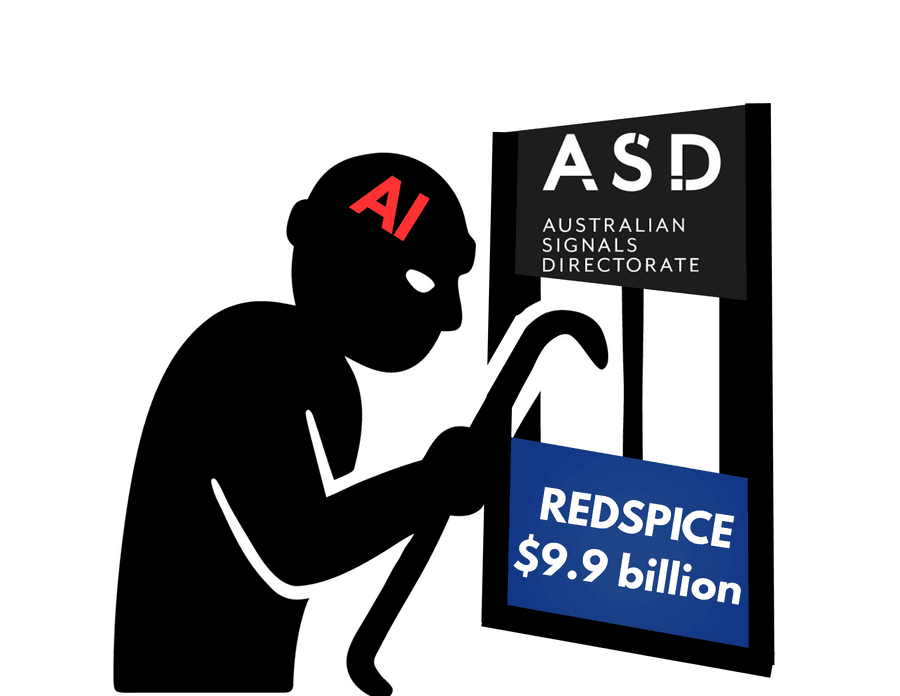
Is REDSPICE now Oldspice?
Australia’s cyber plans have been mugged by AI
REDSPICE, the Australian Government’s $10 billion cyber plan for the secretive Australian Signals Directorate (ASD) that started under Scott Morrison in 2022, was the largest investment in the cyber intelligence outfit’s history. It’s a 10 year long blueprint to grow Australia’s offensive cyber capabilities to keep the agency at the forefront of core technologies.

Counterterrorism and the Growing Convergence in Homeland Security and Homeland Defense
By Austin Doctor • RealClearDefense
The Future of Space Power Depends on Integration
By Damian DiPippa • RealClearDefense
America Should Unleash Cyber Privateers
By Jacob Schelp • RealClearDefense
America Invented the Battery, but China Controls the Factory
By William Crane • RealClearDefense
A Defense Win for Americans and Israelis in Arkansas
By Bradley Bowman • RealClearDefense

Key Space Force Satellites Can’t Talk to Each Other
By T. Hitchens, Breaking Defense
Blue Angels Pilot Scott Laux Removed for Failing To Uphold Standards
By Johnson, PNJ
The Future of the Ground Reconnaissance Enterprise
By Joe Albano, The Connecting File
The Future of the ARG/MEU
By William Yale, Proceedings
Big Surface Combatants are so Hot Right Now
By CDR Salamander