
Cyber Warfare
RealClear Context
Click below to continue reading this story, discover more Cyber Warfare stories from over 25 years of RealClear archives, or follow this topic to stay in the know.
When Does Peacetime Access Become Wartime Capability?
Volt Typhoon provides a clear example of cyber prepositioning for possible wartime use....
11h agoRead it on RealClearDefense
When Does Peacetime Access Become Wartime Capability?
In spring 2018, the Chinese military moved an air force unit and its equipment along China’s coast aboard a civilian roll on/roll off ferry. Before departure, military planners alongside the shipping company prepared the vessel for the mission and coordinated command and support arrangements.
Ports, cyber access, and recruited military insiders raise the same question: When does peacetime access become usable capability in war? For example, China’s efforts to develop civilian capabilities in peacetime for wartime support and conduct cyber prepositioning for a future contingency are well documented. But documenting these efforts does not establish the readiness level of a given access for operational use. How, then, can we assess it?
The Pentagon's Next Readiness Test Should Begin When the Cloud Goes Dark
Modern defense manufacturing increasingly relies on commercial software for everything from production planning and quality control to procurement,...
4d agoRead it on RealClearDefense
The Pentagon's Next Readiness Test Should Begin When the Cloud Goes Dark
The Pentagon spends enormous amounts of time determining whether a weapon works, a contractor can deliver and a network can withstand a cyberattack. But there's another question it should be asking: Can the companies supplying America's national defense still operate when a technology provider they depend on suddenly stops working?
Last week's global Microsoft outage exposed how quickly those dependencies can become liabilities. Businesses and government offices lost access to critical services, while Microsoft's preliminary findings revealed a software defect that had gone undetected for months. When increased network traffic collided with reduced server capacity, systems designed to redirect users away from trouble instead helped spread the failure. Within two hours, more than 80 percent of affected gateway servers were unresponsive.
The New ‘Cold’ War
A wave of cyberattacks on European supermarkets last week exposed a vulnerability that extends well beyond refrigeration. For Australia, the national...
1w agoRead it on The Strategist (ASPI)Trump Nominates Palantir Security Chief To Lead CISA
If confirmed, the cybersecurity executive would take over an agency rebuilding after workforce cuts and nearly 22 months without a permanent director....
1w agoRead it on Defense One
The New ‘Cold’ War
A wave of cyberattacks on European supermarkets last week exposed a vulnerability that extends well beyond refrigeration. For Australia, the national security challenge is protecting the interconnected critical infrastructure systems that sustain our economy, essential services and defence capability. As strategic competition intensifies, these systems are increasingly exposed to disruption by state-sponsored hacking groups that seek to exploit the connections between critical infrastructure sectors.
A supermarket refrigerator might seem an unlikely target, yet the attacks demonstrate how manipulating an ordinary piece of commercial equipment can disrupt food supplies, destroy stock and undermine public confidence. They also expose a broader vulnerability: an adversary does not need to destroy critical infrastructure to disrupt the systems on which a country depends.
AI Saves the Day—and Could Bring Doom Tomorrow
OpenAI identified a bug in the web and reported it. Will the next one be found by bad guys with a Chinese open model?...
2w agoRead it on The Wall Street JournalAmerica Should Unleash Cyber Privateers
The rise of artificial intelligence technology has been a double-edged sword in the fight against criminal cyberattacks....
2w agoRead it on RealClearDefense
A Sweet American Original
By Greg Maresca • RealClearDefense
South Korea's OPCON Debate Is a Test of Alliance Readiness
By Daewon Cho • RealClearDefense
When Does Peacetime Access Become Wartime Capability?
By Alp Cenk Arslan • RealClearDefense
The Missing Seats at the Table
By Dennis T. Cosgrove • RealClearDefense
We Exported Our Arsenal Manufacturing, Now We Must Rebuild It.
By Justin Fulcher • RealClearDefense

Sign of the Times: CCAs Dominate a Major Fighter Conference
By Bill Sweetman • The Strategist (ASPI)
Marines Want Naval Strike Missiles With Double The Range
By The WarZone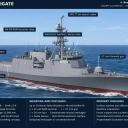
U.S. Navy Targets 79 New Cutter-Based FF(X) Frigates
By A. Servaes, Global Defense
The Hegseth Grenade: A Sea Change at Newport
By Robert C. Rubel, CIMSECSign of the Times: CCAs Dominate a Major Fighter Conference
By B. Sweetman, ASPI