
We Exported Our Arsenal Manufacturing, Now We Must Rebuild It.
Published Nov. 24, 2026 • Read time: 5m

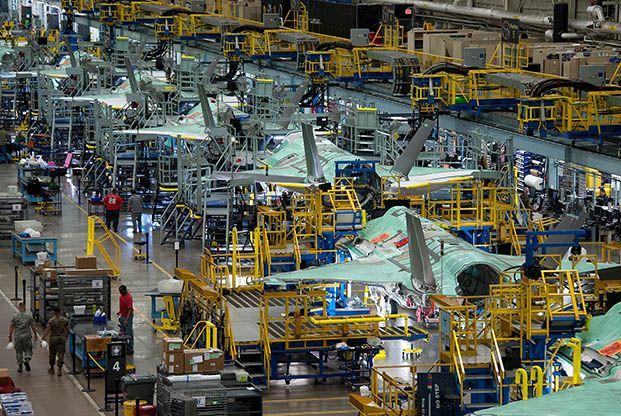
In 1960, the United States was the leading global manufacturer producing over 50% of manufactured goods. By 2020, that share had fallen below 17%. Factories, once the lifeblood of the American economy, became economically uncompetitive and were instead scattered across countries offering cheaper labor and less stringent regulations.
The offshoring wave began in earnest in the 1970s and accelerated through the trade liberalization era of the 1990s and 2000s. American corporations faced a simple choice, offshore manufacturing or lose out on easy margin increases. Washington largely blessed the migration. The consensus held that globalized supply chains would deliver efficiency above all else. Taking place before the political and military rise of China. there was little, if any, appreciation for the strategic risk involved.
Between 2001 and 2018, the United States lost roughly 3.7 million manufacturing jobs to import competition. Entire communities were gutted. Damage was, however, treated as an acceptable adjustment cost of broader national economic growth.
Problematically, advanced production also migrated overseas, including pharmaceuticals, semiconductors, rare-earth processing, steelmaking, alongside institutional know-how. While it might be possible to bring back production for certain strategic industries, it is the engineering talent, supplier ecosystems, and process knowledge that raises the most pressing concern.
China’s Stranglehold
While China exerts control over roughly 70% of global lithium refining and over 90% of rare-earth element processing, the titanium sponge required for airframe structures has historically depended on Russia and Kazakhstan. Japan and Taiwan dominate production of advanced semiconductor substrates, while South Korea produces a significant share of the OLED displays used in military avionics.
When a Factory Buys Air Defense, What Has It Bought?
Batteries Can Power a Win for America in Super Intelligence
The World Cup Is Over. The Drone Threat Isn’t.
ICE Is Not a Four-Letter Word
In 2023, China restricted exports of gallium and germanium, two materials critical to radar systems and defense electronics. While China is the obvious concern, any number of foreign adversaries could similarly restrict the supply of critical materials to pressure the United States into an unfavorable position.
The munitions production gaps are similarly exposed as the United States has only two qualified producers of solid rocket motors for tactical missiles. Stinger and Javelin production lines, which the public assumed could ramp overnight after Ukraine, took over a year to meaningfully accelerate. This is because our defense manufacturers had no surge production capacity and, in several cases, sourced precursor materials from foreign firms. The 155mm artillery shell shortage revealed the same structural problem within this legacy structure. Energetic materials, the explosive fills and propellant compounds inside munitions, depend on a chemical supply chain that runs through just a handful of foreign facilities.
While our prime defense contractors are proudly American, pulling the system apart reveals a wildly different setup two or three tiers below them. The vast majority of critical components at this subcontractor level, including circuit boards, capacitors, specialty alloys, thermal coatings, microelectromechanical sensors, often reveal foreign and even foreign adversary origin. Additionally, many of these are developed in countries with uncertain geopolitical alignments. The Department of War’s own industrial base assessments have flagged single-source and sole-source dependencies numbering in the hundreds. This applies across major weapons programs, each serving as a potential point of failure in a future conflict.
Consider what happens if a major supplier nation becomes inaccessible overnight. The United States loses not just one component but leverage across dozens of interlinked supply chains. In any prolonged conflict, the side that replaces weapons faster wins. During COVID, the commercial version of this played out in public. Ventilator components were backordered from overseas, PPE equipment was slow as only China seemed able to produce enough. Semiconductor shortages shut down American auto production for months. Those were peacetime warnings. Now, imagine the military and kinetic version of this.
Washington has begun responding. The CHIPS and Science Act committed over $52 billion to domestic semiconductor manufacturing, including funding for the trusted manufacturing capacity the Pentagon has lacked for years. Executive orders have tightened investment screening through CFIUS. The Department of War has accelerated efforts to reshore munitions production. Secretary Hegseth's Arsenal of Freedom reforms are pushing for longer contracting terms and a Wartime Production Unit specifically designed to close the gap between procurement timelines and operational need.
Those are necessary steps; however, current policy is neither sufficient nor comprehensive enough. Semiconductors and batteries get attention because the market opportunity is obvious and the political coalition is broad enough to action change. But the harder, less visible chokepoints remain dangerously thin. We can include rare-earth magnets, pharmaceutical precursors, munitions components, specialty alloys, and all hard-to-make components for defense and AI applications among this list. De-risking those sectors is simply not enough. There must be a structured restoring alongside geo-fencing against adversary exposure.
Geo-fencing means full decoupling where the defense industrial base is concerned. We must strengthen our mandatory exclusion of foreign-sole-source inputs from weapons programs, especially with regards to specialty components where the exposure is greatest. We must qualify second and third sources, domestically or with treaty allies, for every sole-supplier dependency flagged in industrial base assessments. We must compress the supplier qualification timelines that currently stretch years as any backup plan that takes years to execute is not useful in a major conflict. Finally, we must continue to fund surge capacity through human and machine capabilities in the United States.
Critics may argue that reshoring invites inflation and fractures the global economy, the risk of the status quo however dwarfs in comparison. Maintaining deep supply-chain dependency on foreign nations, some of which are strategic competitors that have publicly committed to military modernization against the United States, is neither real nor manageable. It is a choice we keep making by inertia and it needs to stop.
America sent its factories overseas in pursuit of efficiency. Unfortunately, it also exposed its defense industrial base while hollowing out its own manufacturing capacity. The factories are starting to come home but Washington, along with America’s venture capitalists, need to make sure they come home fast enough, and that critical industries are never again treated as exportable.
Justin Fulcher served as a senior adviser to Secretary of War Pete Hegseth. He is pursuing a Doctor of International Affairs at Johns Hopkins University School of Advanced International Studies.

A Sweet American Original
By Greg Maresca • RealClearDefense
South Korea's OPCON Debate Is a Test of Alliance Readiness
By Daewon Cho • RealClearDefense
When Does Peacetime Access Become Wartime Capability?
By Alp Cenk Arslan • RealClearDefense
The Missing Seats at the Table
By Dennis T. Cosgrove • RealClearDefense
We Exported Our Arsenal Manufacturing, Now We Must Rebuild It.
By Justin Fulcher • RealClearDefense

Sign of the Times: CCAs Dominate a Major Fighter Conference
By Bill Sweetman • The Strategist (ASPI)
Marines Want Naval Strike Missiles With Double The Range
By The WarZone
U.S. Navy Targets 79 New Cutter-Based FF(X) Frigates
By A. Servaes, Global Defense
The Hegseth Grenade: A Sea Change at Newport
By Robert C. RubelSign of the Times: CCAs Dominate a Major Fighter Conference
By B. Sweetman, ASPI