
Partnering for Defense: Arctic Domain Awareness
Last updated 06:11 AM EST • Read time: 14m
The Department of Defense needs help. The United States faces challenges in detecting and deterring all threats to the homeland. Addressing vulnerabilities, particularly in Arctic domain awareness, requires leveraging other government resources – not just defense capabilities – for enhanced data collection and information sharing toward improved national defense.
Interagency capabilities are force multipliers in homeland defense. For the preponderance of the 20th century, DoD maintained operational partnerships with non-defense agencies toward defense aims. While many persist, some have eroded in the 21st century – and need to be reinvigorated for better preparedness in peacetime and effectiveness in wartime. However, defense partnerships should not require the prospect of conflict to motivate action. Rather, partnerships are vital mechanisms for building cooperative designs during peacetime to leverage during wartime.
The National Oceanic and Atmospheric Administration (NOAA) is an intelligence collector at its core. From delivering lifesaving weather forecasts to ensuring uninterrupted commerce-critical port operations, NOAA's scientists, instruments, and assets are instrumental in information collection and dissemination. But unlike what many in DoD think, NOAA is not just ‘the weather people.’ NOAA brings scientists and operational experts in the air, land, space, and sea - making their environmental intelligence critical for enhancing DoD domain awareness, information dominance, and decision superiority.
NOAA and DoD maintain research and data sharing partnerships in areas of common interests. However, operational collaborations once routine in the 20th century have all but stopped until recently. We have undertaken an effort to reestablish operational coordination between NOAA and DoD, with some success. Still, recent NOAA-DoD integration efforts toward national security end up facing confusion, uncertainty, and institutional reticence due to ad hoc coordination processes lacking fidelity. We must reestablish and implement formal collaboration mechanisms to facilitate DoD-NOAA operational coordination toward defense aims – as they once existed.
NOAA History and Defense Ties
NOAA – and its predecessors – have robust history of operational ties with DoD – and its predecessors. The roots of today’s uniformed NOAA Corps trace to 1807 when Thomas Jefferson established the Survey of the Coast – later called the Coast Survey. The Coast Survey focused on scientific endeavors and helped promote international trade and safe navigation around U.S. waters.
During the Civil War, service agreements between the Coast Survey and the Army and Navy assigned scientists and officers, respectively, from each organization to exchange details – though the services withdrew most of their officers from these details as the war evolved. To avoid being mistaken for spies and executed by opposition forces, Coast Survey civilians serving with the Army were granted assimilated military rank. Scientists supporting the Navy remained civilians, however. Coast Survey scientists supported efforts in all theaters of the war, serving as hydrographers, topographers, and scouts.
In 1878, the Coast Survey became the United States Coast and Geodetic Survey (USC&GS). In the period following the war, U.S. naval officers commanded USC&GS vessels. Army officers also served with the USC&GS during this period, ensuring formal relationships between science and military agencies established per federal law. These partnerships lasted twenty years.
Following the conclusion of the Spanish-American War in 1898, the last naval officers serving with the USC&GS withdrew from their positions aboard scientific vessels. Subsequently, a 1900 appropriations law mandated that "all necessary employees" be responsible for staffing and equipping scientific vessels, thus enabling civilians to serve in roles previously held by commissioned naval officers, giving the USC&GS autonomy to operate its fleet independent of U.S. military personnel. From that point on, the USC&GS transitioned into a purely civilian agency until April 1917 when the U.S. entered WWI.
The USC&GS provided survey data to support U.S. war efforts during WWI. To mitigate the risk of execution as spies similar to the Civil War, USC&GS ship operators regained their commissioned status and became uniformed officers of the USC&GS Corps, ensuring protections under international laws of war.
More than half of the USC&GS Corps officers served with the Army, Navy, and Marine Corps throughout World War I, working as artillery orienteering officers, minelaying officers, troop transport navigators, and intelligence officers. This trend continued during World War II when over 1000 USC&GS civilians and most of the commissioned officer corps joined the Army Air Corps (now Air Force) and Navy, serving as hydrographers, engineers, and cartographers among others. USC&GS personnel contributed by generating millions of maps and charts for allied forces while also losing eleven officers during this period.
During the war, the USC&GS made significant contributions informing allied force operations. Notably, the USC&GS produced weather forecasts predicting optimal conditions for amphibious assault at low tide, aiding the planning of the allied invasion of Normandy. Additionally, USC&GS assets provided valuable environmental data informing maritime combat operations throughout the war, including six of nine USC&GS vessels that participated in wartime operations. The USC&GS Hydrographer conducted shoreline surveys of Attu Island in the Aleutian Islands before the 17th Infantry's amphibious assault to retake the territory from Japanese forces. These surveys were vital in ensuring that landing vessels could safely navigate around shoals and reach shore without any complications.
The USC&GS continued in form and function until 1965 when the Environmental Science Services Administration (ESSA) absorbed most of its missions. The USC&GS commissioned corps became the ESSA Commissioned Corps until 1970 when President Nixon's Reorganization Plan No. 4. consolidated the USC&GS, ESSA, and National Marine Fisheries Service (NMFS) to form the National Oceanic & Atmospheric Administration. This also transitioned the ESSA Corps into today’s NOAA Corps.
NOAA Corps and DoD
Today, NOAA Corps officers are functionally identical to U.S. military personnel regarding rank and uniforms (Navy/Coast Guard), pay and benefits, and have a long history and tradition of serving with and supporting U.S. military efforts in war and peacetime. NOAA is not just a science agency, despite what even some of their leaders say. Uniformed NOAA Corps officers take the same oath as the Armed Forces to defend the constitution against all enemies. NOAA Corps officers and assets can even be transferred into and augment the Armed Forces in national emergencies and war. Yet, save for a handful of liaison billets, the cultural connective tissue once operationally linking NOAA Corps with DoD during the Cold War ruptured in the 21st century.
In response to escalating global tensions during the Cold War and beyond, NOAA Corps officers supported U.S. defense and security efforts worldwide, following in the footsteps of their predecessors from USC&GS and Coast Survey. During the Cold War, NOAA Corps officers reported Soviet maritime activity to DoD through Secure Telephone Unit (STU) phones aboard each NOAA vessel. Collaboration continued following the Cold War. Notably, NOAA’s joint effort with DoD and the FAA led to the launch of the Automated Surface Observing System (ASOS) in 1991. Following oil well destructions releasing millions of barrels of crude oil into the Persian Gulf during the Gulf War, NOAA retrofitted The Mt. Mitchell with hydrographic survey launches as well as oceanographic equipment. The mission lasted 100 days and included over 140 scientists from different countries collecting data vital to model future oil spills within Arabian Gulf waters. NOAA’s data aided the Navy's maritime maneuver planning for the affected area.
Modern Partnerships
Present NOAA-DoD partnerships occur mostly through research and data sharing. NOAA supports the Navy in developing its comprehensive monitoring plan ensuring compliance with the Marine Mammal Protection Act and Endangered Species Act, specifically for testing and training activities within the U.S.-exclusive economic zone. Since the 1990s, NOAA scientists have had access to the Navy’s Sound Surveillance Systems (SOSUS) data, subject to appropriate clearances. These long-term data sets are key to establishing baseline conditions and assessing both biological and anthropogenic factors affecting naval surface maritime operations.
Legislative mandates have established similar engagements. The Commercial Engagement Through Ocean Technology Act of 2018 requires NOAA to coordinate research and acquire unmanned maritime systems in collaboration with the Navy, other federal agencies, industry, and academia. This Act also mandated formal partnership between NOAA and the Navy specifically focused on unmanned maritime systems initiatives and the establishment of operational policies. As part of these efforts, NOAA intends to conduct tests at Navy test ranges to enable unmanned systems to safely navigate while adhering to international rules for maritime traffic.
Operationally, NOAA has been an essential federal partner involved in various incident responses, environmental disasters, and national emergencies. NOAA deployed personnel and supported recovery efforts to the 1989 Exxon Valdez oil spill. Additionally, during the Deepwater Horizon oil spill, the NOAA Ship Gordon Gunter was the first federal asset on scene and conducted comprehensive studies on the vertical and horizontal characteristics of the oil plume.
From oil spills to hurricanes, NOAA has been actively involved in civil support alongside DoD for several major U.S. emergencies and disasters, including responses to Hurricane Katrina in 2005 and Maria in 2018. NOAA also supports Navy dive recovery operations, utilizing side scan sonar that enables underwater wreckage mapping for aviation mishaps, as an example. NOAA’s data successfully aided naval recovery efforts for incidents like TWA Flight 800 disaster, the JFK Jr. plane crash, and the EgyptAir Flight 990 crash.
Beyond its ships, NOAA aircraft played a crucial role in post-9/11 response efforts. Their specialized planes utilized innovative light detection and ranging technology to generate detailed three-dimensional images of the affected areas in lower Manhattan. NOAA aircraft were the first federal assets cleared to fly over Manhattan following the terror attacks, and the site images provided essential support to DoD and various federal agencies involved in the recovery operations. NOAA hurricane hunters also collect critical storm data informing civilian weather forecasts and defense planning alike.
More recently and amid escalating tensions in the South China Sea, DoD sought NOAA support in bolstering U.S. presence and influence within the region. NOAA planned missions and allocated resources toward DoD’s requested sailing area. For undisclosed reasons, DoD rescinded its request prior to the operation. Similarly, DoD sought NOAA support to recover the Chinese spy balloon shot down by U.S. fighters off the Carolina coast in February 2023, requesting the capabilities of the NOAA Ship Nancy Foster. Once again, despite NOAA initiating plans and allocating resources upon receipt of ad hoc communication from DoD, efforts ceased when DoD retracted its request. These instances highlight a concerning pattern where informal communications between formal organizations lead to avoidable inefficiencies instead of productive efforts.
These situations underpin DoD’s reemerging awareness and interest in NOAA capabilities toward national defense – and demonstrate the need to establish formalized processes and best practices for NOAA to collaborate operationally with DoD effectively. We need to do this before a crisis; not rely on ad hoc actions during a crisis. Federal law and legally-mandated interdepartmental regulations require DoD-NOAA cooperation and coordination during peacetime in preparation for war – and operational integration will occur in the event conflict arises.
In conflict or national emergency, the President can transfer “vessels, equipment, stations, and commissioned officers” of NOAA Corps to the “service and jurisdiction of a military department.” The processes and procedures for executing such a transfer should be codified through formal channels as required by the aforementioned regulations. However, at the time of this writing, the interdepartmental coordination body that should preside over such discussions is non-existent. For now, NOAA and DoD rely on a small contingent of liaison officers to facilitate interdepartmental dialogue during both peacetime and wartime.
NOAA Corps liaison officers serve with the Oceanographer of the Navy, U.S. Indo-Pacific Command, and with the Naval Oceanographic Office at Stennis Space Center. There is also an operational Senior Executive Leadership Panel of senior officers facilitating NOAA collaboration with the U.S. Navy's Office of the Oceanographer of the Navy and Naval Meteorology and Oceanography Command. Additionally, NOAA Corps will soon have a liaison officer at U.S. Northern Command, largely to facilitate operational coordination of NOAA assets in the Arctic and in support of national emergencies and civil support in the USNORTHCOM area of responsibility. These are necessary points of convergence, but NOAA and DoD need to follow the law, apply their own regulations, and do more.
NOAA - DoD Interdepartmental Board
Research partnerships are important, but operational coordination is necessary per federal law. The law requires joint DoD-NOAA regulations defining cooperative mechanisms for operational coordination. These legally mandated regulations require a NOAA-DoD Interdepartmental Board integrating representatives from each organization – required to meet annually at minimum – to discuss integration and potential areas for collaboration. According to NOAA’s Office of Marine and Aviation Operations (OMAO), this board is not currently functioning, though it did exist in both form and function in the early 1990s. The NOAA-DoD Interdepartmental Board should be reestablished to serve as a vital platform for leveraging operational expertise, research, and developmental opportunities benefiting both agencies.
Interdepartmental Board Recommendations
The current regulation outlining the Board’s form and function needs revision to meet contemporary requirements. To ensure effective interdepartmental coordination, the composition of the Board should include a NOAA Corps field grade officer in the rank of commander or captain with operational experience aboard ship or plane and with NOAA's OMAO, serving in a leadership role at one of its Marine Operations Centers or Air Operations Centers. As well, NOAA should assign a permanent civilian employee to serve on the board, providing continuity and expertise for NOAA organizational matters. Additionally, DoD should be represented by a permanent civilian with experience working in USNORTHCOM operations – where most future interdepartmental coordination will occur. DoD and USNORTHCOM should also assign a field grade officer from USNORTHCOM’s Interagency Coordination Center with operational experience to the board. The ideal composition would ensure that in addition to the permanent civilians from both organizations, NOAA Corps has both a mariner and an aviator on board while DoD ensures at least one naval, army, and air force officer.
The Board shall function as described in NOAA Corps Directives Appendix 14.1, and with recommended enhancements. In addition to recurring communications and procedures pending creation, the Board should meet more than annually and not less than quarterly; once at each organization’s headquarters in Silver Spring, MD and Colorado Springs, CO respectively, and two additional quarterly offsite meetings at the location of national level exercises or events. Discussions will facilitate regular and required interdepartmental dialogue ensuring timely and effective communication between both entities for improved national defense; operational collaboration; and optimal utilization of departmental resources to contribute to each organization’s mission. More importantly, the Board will serve the function and purpose of a formalized coordination entity that will route and execute interdepartmental support requests through established processes and points of contact vice ad hoc efforts reliant on backchannel networks of who knows whom.
Conclusion
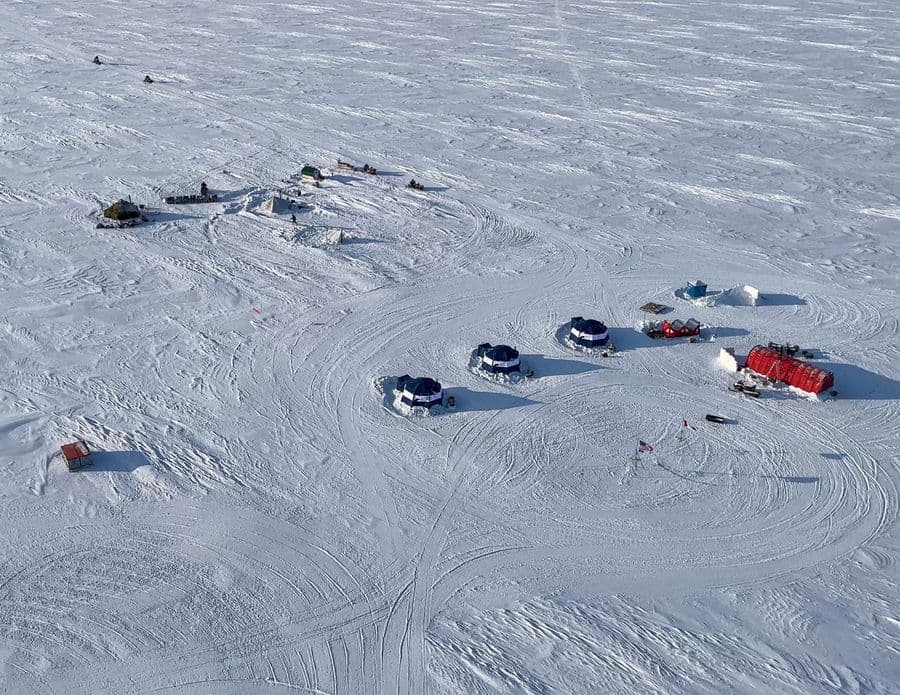
NOAA's role as an intelligence collector and force multiplier for national defense is often misunderstood – or mischaracterized by DoD. NOAA has extensive presence in the Arctic region, offering valuable capabilities for data collection and information sharing leading to enhanced domain awareness. The DoD can benefit from operationally partnering with NOAA as it once did to enhance national capabilities, improve homeland defense, and mitigate national security risks. The DoD has a responsibility to incorporate NOAA into strategic planning, operational activities, and policymaking as it seeks to gain a comprehensive understanding of its operating environment. By revitalizing the critical partnership with NOAA, we can leverage their assets and data collection for enhanced national defense efforts.
Dr. Ryan Burke is a professor in the U.S. Air Force Academy’s Department of Military & Strategic Studies; the Co-Director of Project 6633 at the Modern War Institute (MWI) at West Point, U.S. Military Academy; an Affiliate Professor with the University of Alaska – Fairbanks (UAF) Center for Arctic Security and Resilience; and the Research Director for U.S. Northern Command's (USNORTHCOM) Homeland Defense Institute (HDI). Ryan holds degrees from Harvard University's John F. Kennedy School of Government, the University of Delaware's Joseph R. Biden School of Public Policy and Administration, Saint Joseph's University, and Penn State University. He is also a veteran Marine Corps officer.
Lt Col Kristen ‘KJ’ Heiserman is a fellow at the U.S. Air Force Academy’s Institute for Future Conflict and an instructor in the Academy’s Department of Management. She is a senior Air Force Special Operations Command (AFSOC) pilot with over 2300 flying hours in the MQ-1B, PC-12 and U-28A. Lt Col Heiserman has served at the wing level as Chief of Theater Plans and, most recently, at the COCOM level serving as the Speechwriter for the Commander of NORAD & USNORTHCOM where she prepared speeches, Congressional testimony, briefings and correspondence for the Commander responsible for Homeland Defense.
The views expressed are those of the authors and do not reflect the official position of the United States Air Force Academy, Department of the Air Force, or Department of Defense, or of any organization the authors are affiliated with.

The First Test of Peace Lies in Ukraine's Borderlands
By Dennis T. Cosgrove • RealClearDefense
The VFW’s Gambling Addiction Victimizes Veterans
By Jack Yoest • RealClearDefense
Superintelligence Exposes a Gap in the Law of Delegated Authority
By Sue Ghosh Stricklett • RealClearDefense
When the Network Goes Dark, Who Controls the Battlefield?
By Jonathan K. Corrado • RealClearDefense
We Cannot Build Tomorrow's Weapons With Yesterday's Alloys
By Joseph F. Krause • RealClearDefense
When the Network Goes Dark, Who Controls the Battlefield?
By Jonathan K. Corrado • RealClearDefense
Air Force Should Buy 250 Blended-Wing Tankers, as 2027 Demo Looms
By A&SF Mag.
Long Deployments to Be Navy Standard For Next Couple Years
By Mongilio, USNI NewsWhen the Network Goes Dark, Who Controls the Battlefield?
By Jonathan Corrado, RCD
Marines Deploy Neros Archer Drone in Live Fire Exercise for First Time
By USNI News