
Israel Deserves More Credit for the Victory in Syria
Last updated 06:18 AM EST • Read time: 6m
Pundits and social scientists are now describing the confluence of regional conflicts across Eurasia as ‘World War III.’ Such reports [here, here, and here] are descriptions of ongoing events; in international affairs, prediction and explanation are both more difficult and more valuable than after-the-fact observation.
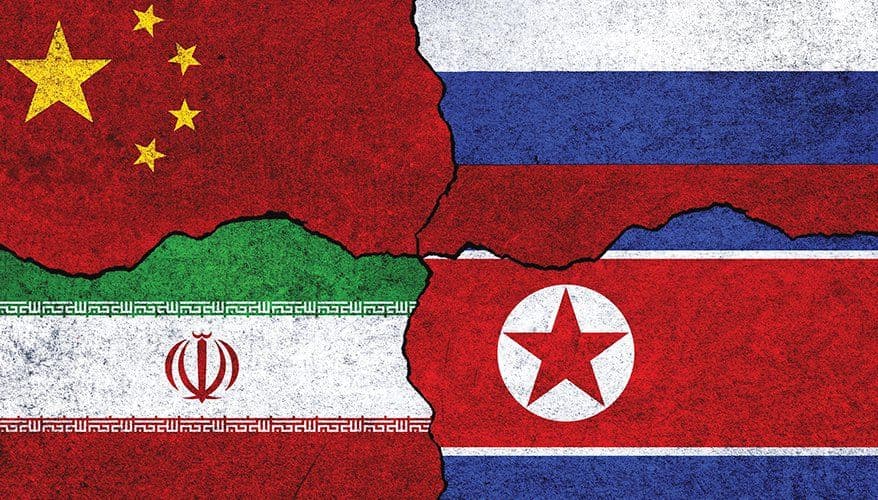
For example, the Wall Street Journal’s chief foreign-affairs correspondent, Yaroslav Trofimov, argued on December 13, 2024 that the multi-front war conducted by China, Russia, Iran, and North Korea (the CRINKs) against the United States and its Western allies amounts to “one common effort to destroy the international order.” The article’s title was: “Has World War III Already Begun?”
The author characterized the current global strife as a conflict between autocratic and democratic regimes, which is an insufficient explanation. This explanation does not provide clarity as to where these conflicts have arisen or why; to answer these questions, an understanding of classical geopolitical theory (here and here) is required.
Halford Mackinder’s geopolitical theory [here and here] is an essential intellectual tool for addressing these questions. His “Heartland” thesis may be distilled into the following geographic descriptions and political propositions: Mackinder identifies the Heartland as the area of Eurasia where the rivers flow into inland seas or north into the icebound Arctic Ocean. With the construction of the trans-Siberian railroad in 1904, the power occupying the Eurasian Heartland could develop economically and demographically by realizing its agrarian potential, exploiting its mineral resources, and expanding its “manpower.” International power relationships would then, Mackinder predicted, be rebalanced in favor of the state occupying the Heartland. The trans-Siberian railroad crossing from Moscow to the Pacific provided an internal line of communication, military logistics, and commerce, traversing an area that was relatively immune to the projection of maritime power by the world’s liberal-democratic states.
The Heartland has reemerged as a significant feature of international relations. Today, the Russian, Iranian, and Chinese allies control the Heartland, and they seek to dominate their respective maritime domains – the Black Sea, the Strait of Hormuz and the Persian Gulf, and the South and East China Seas. The Chinese Belt and Road initiatives seek to unify Eurasia economically and logistically, a point that Mackinder’s Heartland thesis clearly anticipated. Had the WSJ article addressed the geopolitics of these alliances, a more accurate explanation for the unity of these seemingly disparate fronts in Ukraine, in the Gaza and now the Levant, in the Straits of Hormuz and Bab el Mandab, and in Taiwan would have emerged.
Trofimov argued that “the front that matters most [is] Ukraine [where] momentum has shifted to Moscow’s side in the past year….” However, in emphasizing the Ukraine front, he downplayed the significance of three key geopolitical aspects of the global conflict:
First, consider the recent movement of approximately 15,000 North Korean troops to the Russian border of Ukraine: The author noted that a trans-Eurasian railway was used but fails to mention its critical geopolitical importance. In 1904, Mackinder highlighted how the trans-Siberian railroad facilitated the movement of Russian troops across Eurasia to fight against Japan. Today, we are witnessing a similar phenomenon, but now all the major Eurasian powers that dominate the Heartland are on the move, challenging the military preeminence of the maritime powers via the exploitation of mechanized overland transport of troops and war materiel. Air transport is devastatingly expensive for moving anything heavier than infantry and the maritime transport of adversaries is vulnerable to the US Navy. The Chinese Eurasian Belt and Road is a response to that challenge.
Second, the Iranian regime’s assaults by one of its several proxies, the Houthis, on international commerce at the Bab-el-Mandeb, on the southern end of the Red Sea, has disrupted shipping between Europe and the Indian Ocean via the Suez Canal using drones and surface-to-sea missiles. Mackinder understood that territorial powers seek control of international waterways, typically by conquering the littorals or by dominating maritime chokepoints. Territorial powers, in their conflict with maritime powers, consistently attempt to turn international seas into domestic lakes, thereby undermining the geographic specialization of production.
Third, Trofimov underrated the importance of Israel’s actions in the Levant: “[T]he Russians were too weakened by their losses in Ukraine to gather a force that could repel the Syrian rebel’s surprise offensive. Iran and its proxies were also unable to help Assad, having been battered by more than a year of fighting with U.S.-backed Israel.” The geopolitical consequences were of particular importance and deserved detailed treatment. The author argued that “the future of Russia’s naval and air bases in Syria, which are indispensable for Russian military operations in several African nations, is uncertain at best.” What this characterization ignores is how Russian naval and airpower cast a long shadow over Israel’s offshore natural gas fields and the maritime approaches to the Suez Canal.
Furthermore, the defeat of Iran in Syria and the collapse of the Assad regime were overwhelmingly due to Israel’s actions. Iran’s inability to land a decisive blow against Israel through the use of either drones, cruise missiles, or ballistic missiles was a surprising development: It showed that the Israeli and American anti-missile defense was remarkably effective, if expensive. Israel’s destruction of Iran’s air defenses revealed the hollow nature of Iran’s national military. Moreover, Israel’s successful devastation of Hezbollah’s leadership cadre, without the (widely expected) destruction of Tel Aviv and Haifa by a barrage of thousands of missiles, was a master-stroke of intelligence and precision [here and here]. Although Israel’s victories over Hezbollah have been of decisive importance, this topic is barely mentioned in the WSJ article.
The recent essay in the Wall Street Journal is right about one thing: The CRINKs are at war with the West. They must be stopped. What happened in the Middle East is a clear signal to the citizens of the United States, NATO and other allied maritime powers: Israel has shown that Western victory is possible, even against what appear to be long odds. The West needs to mobilize — culturally, industrially, and militarily — to deter, and if necessary thoroughly defeat, China, Russia, Iran and North Korea.
Michael Hochberg is a Visiting Scholar, Centre for Geopolitics, Cambridge University and Leonard Hochberg is the U.S., Coordinator of the Mackinder Forum.
The opinions expressed herein are ours alone and do not reflect those of the organizations with which we are affiliated.

The Godfather of American Foreign Policy Realism Speaks to Today’s World
By Francis P. Sempa • RealClearDefense
In Pursuit of Nuclear Abolition
By Peter Huessy • RealClearDefense
Innovation Alone Won’t Prepare the U.S. for the Future Battlefield
By Joshua Segal • RealClearDefense
The sUAS Tactical Trifecta
By Bryan T. Woody • RealClearDefense
The Revolutionary War: When Strategic Options Share the Same Weakness
By Henry Yep • RealClearDefense

Navy Civilianizes Six Former Flag Billets, Reduces Six to Captains
By Mongilio, USNI N.
Raytheon's $8B Contract for Strategic Comms Terminal Modernization
By M+A El
America’s Maritime Moment Will Not Wait
By CDR Salamander
Armor Up?
By Marine Corps Compass Points
Who Shoots Down the Drone Over the Shipyard?
By John Ferrari & Dillon Prochnicki • RealClearDefense