
Strategic Humility — The New Pentagon Doctrine
Last updated 04:47 AM EDT • Read time: 5m
How Pete Hegseth Is Reframing American Strength for an Era of Shared Power
“Those who long for peace, must prepare for war.”
— Platoon motto of Secretary Pete Hegseth
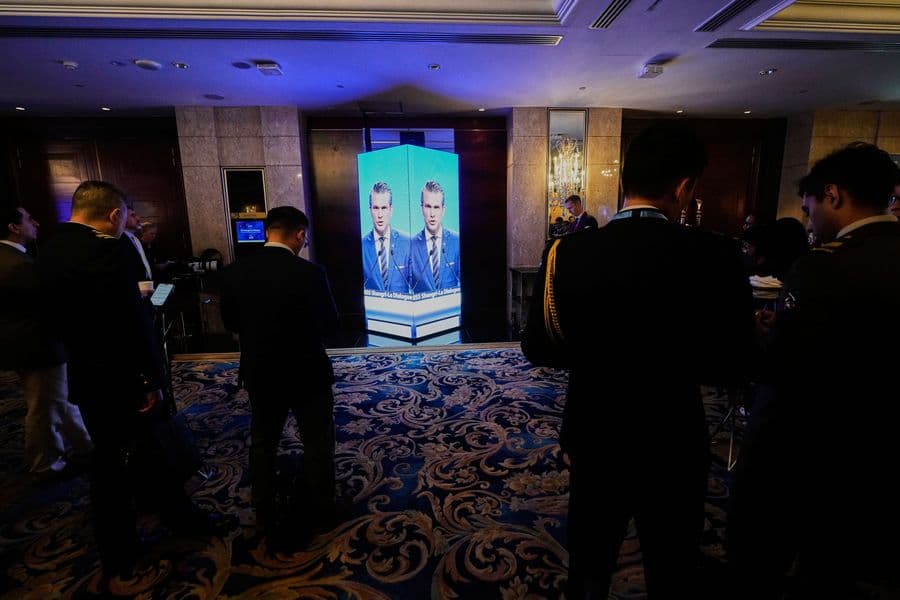
That was the creed of the first platoon Secretary of Defense Pete Hegseth ever led—and it became the quiet current running beneath his 2025 Shangri-La Dialogue address this past Saturday in Singapore. But what followed wasn’t just a warfighter’s mantra. It was a redefinition of deterrence itself—not as provocation, but as posture. Not as power for its own sake, but as peace through principle.
“Your presence here today sends a strong message about our shared purpose, our shared commitment to peace, our shared dedication to a free and open Indo-Pacific.”
Hegseth’s message was clear—the United States is not stepping back from global leadership. The U.S. is stepping forward with clarity, humility, and composure. His speech did not reject strength, it reframed it. Not as the language of domination, but as the scaffolding of peace through shared purpose.
Calm-Assertive Posture
“We do not seek conflict with Communist China. We will not instigate nor seek to subjugate or humiliate... President Trump and the American people have immense respect for the Chinese people and their civilization.”
This wasn’t appeasement. This was deterrence without dehumanization—resolve without provocation. In those lines, Hegseth modeled a calm-assertive posture that rewires what strength sounds like in American statecraft. This was not the rhetoric of zero-sum power. It was the voice of a defense enterprise finally attuned to its moment, which is resolute yet respectful. Prepared, not provocative.
It’s a voice that, increasingly, reflects what’s been missing from the lexicon of national defense—strategic humility.
Strength, Redefined
Too often in recent decades, deterrence has been mistaken for dominance. But Hegseth flipped that script. With cultural awareness and composure, he said plainly…
“We are not here to pressure other countries to embrace or adopt policies or ideologies... We respect you, your traditions, and your militaries. And we want to work with you where our shared interests align for peace and prosperity.”
This is humility as discipline—an institutional recognition that to lead in today’s world, the United States must lead with others, not above them. And in doing so, Hegseth articulated a subtle but powerful truth. Humility is a form of strength when applied at scale. It builds alliances. It de-escalates rhetoric. It makes deterrence believable.
Strategic Inflection Points
In business, Intel’s Andy Grove coined the phrase strategic inflection point—a moment when everything changes and a failure to adapt means failure to survive. It’s clear that Hegseth—and the Trump administration—see America at just such a point now.
This consequential speech captures that tension. Between readiness and restraint, between urgency and patience. And it gives it a name. When he said…
“We will be ready, but we will not be reckless.”
…it echoed Grove’s insight that institutions must move at the speed of relevance, but with the clarity of self-awareness. Strategic humility doesn’t slow us down. It sharpens our vision. It anchors our urgency in judgment.
Tension in Translation
Critics may argue that humility invites exploitation—or that adversaries like the Chinese Communist Party may mistake kindness for weakness. But Hegseth’s speech did not signal passivity. It signaled clarity. Strategic humility does not erase red lines—it makes them credible. Because when power is exercised without arrogance, it becomes more believable. More measured. More sustainable.
America First, But Not Alone
“America First certainly does not mean America alone.”
This line matters. It reframes nationalism not as isolation, but as an ethos of shared liberty. Hegseth affirms that sovereignty is not the enemy of solidarity—that a strong America becomes stronger when it stands with principled partners.
This is not the hollow burden-sharing language of past speeches. This is empowered mutuality—what the U.S. expects of allies and what it offers in return.
“And as our allies share the burden, we can increase our focus on the Indo-Pacific, our priority theater.”
This quote provides an outline and realignment of global trust architecture, one rooted not in obligation, but in agency.
Exercising Cultural Proficiency
Moving from “we are not here to impose” to “we respect your traditions,” the speech demonstrated the rare vocabulary of cultural humility—the kind needed to rebuild long-term alliances and avoid unforced escalation.
In an era when national security rhetoric often defaults to dominance, Hegseth modeled something else. He modeled a doctrine grounded in mutual respect, not ideological pressure. That’s not just diplomatic language—it’s strategic positioning. By elevating relationships over rivalry, and sovereignty over subjugation, he framed America’s posture not as a threat, but as a partner in peace.
Importantly, this isn’t just a message for diplomats—it’s a skillset for warfighters. Cultural proficiency is a form of discipline, requiring the same awareness, composure, and intentionality expected on the battlefield. It’s about reading the room as much as the terrain. And as Army doctrine (ADP 6-22) makes clear, empathy is not a weakness—it’s a leadership competency.
This is how trust is cultivated. This is how peace is preserved.
Doctrine Beneath Doctrine
Hegseth ended his address with a charge—and a vision.
“President Trump is a leader of peace, a man of peace, a force for peace... Reestablishing deterrence. Sharing our burdens. Multiplying our strengths. Reinforcing our great alliances. Respecting our cultures. Not starting wars but preventing them.”
This isn’t just aspirational language. It’s doctrine-in-formation. Strategic humility doesn’t retreat from responsibility—it refines it. It doesn’t weaken military posture—it grounds it in judgment. It doesn’t signal indecision—it signals discipline.
And in this speech—in this moment—the Pentagon may have finally found a new compass. Perhaps more importantly, new language for our shared security and mutual dignity.
Strategic humility isn’t a slogan. It’s a doctrine. One built not on dominance, but on dialogue. And it began at Shangri-La.
Chad Williamson is a military veteran and is currently pursuing his graduate degree in national security policy. He lives on Capitol Hill with his wife, Dr. Heather Williamson, and their two chocolate labs, Demmi and Ferg.

Is It Déjà vu All Over Again: The 2012 Report on Global Zero
By Peter Huessy • RealClearDefense
As Private Investment Pours Into Defense, the Clock Is Ticking
By Elaine McCusker • RealClearDefense
The First Test of Peace Lies in Ukraine's Borderlands
By Dennis T. Cosgrove • RealClearDefense
The VFW’s Gambling Addiction Victimizes Veterans
By Jack Yoest • RealClearDefense
Superintelligence Exposes a Gap in the Law of Delegated Authority
By Sue Ghosh Stricklett • RealClearDefense

When Your Navy is too Small, the Bill Comes Due Bigly
By CDR Salamander
Quo Vadis MCU?
By Marine Corps Compass Points
When the Network Goes Dark, Who Controls the Battlefield?
By Jonathan K. Corrado • RealClearDefense
Air Force Should Buy 250 Blended-Wing Tankers, as 2027 Demo Looms
By A&SF Mag.
Long Deployments to Be Navy Standard For Next Couple Years
By Mongilio, USNI News