
Grand Strategy
RealClear Context
Click below to continue reading this story, discover more Grand Strategy stories from over 25 years of RealClear archives, or follow this topic to stay in the know.
The Present Danger: The Emergence of World War III
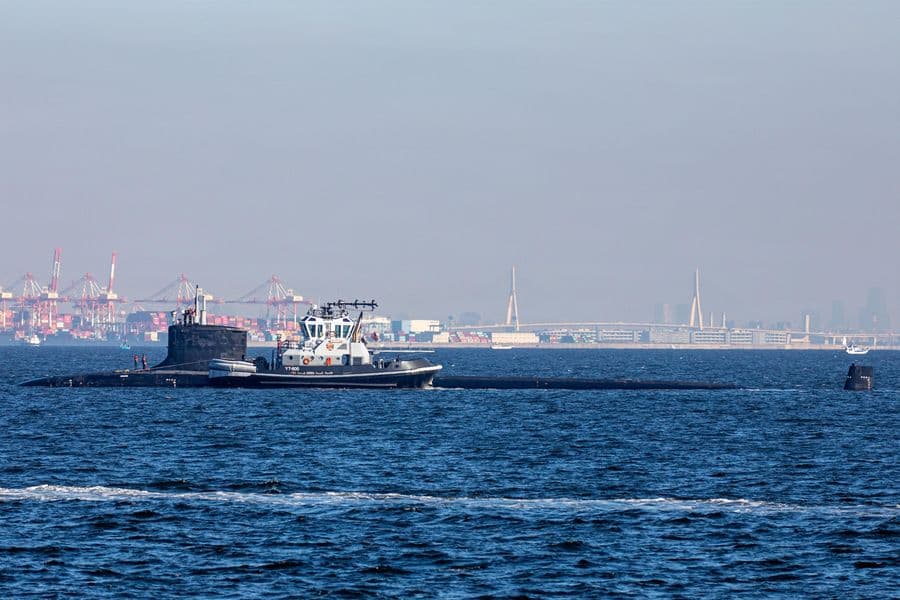
The Godfather of American Foreign Policy Realism Speaks to Today’s World
It’s a good bet that most Americans have never heard of Nicholas Spykman. He was born on October 13, 1893, in Amsterdam, the Netherlands. He attended Delft University and during the First World War served in Dutch diplomatic posts in Cairo and the Dutch East Indies. In 1920, he came to the United States, and three years later earned his Ph.D. at the University of California, writing about the theories of the sociologist Georg Simmel. His first book, The Social Theory of Georg Simmel, was published by the University of Chicago Press in 1925. That same year, he joined the faculty of Yale University, where in 1928 he became a professor of international relations. In the 1930s, he headed Yale’s Institute of International Studies, and in the lead-up to the Second World War wrote two articles for the American Political Science Review on the relationship of geography to American national security. Those articles formed the basis of his most important book, America’s Strategy in World Politics: The United States and the Balance of Power (1942).
Hans Morgenthau is generally considered to be the “father” of foreign policy realism in the United States based on his 1949 book Politics Among Nations: The Struggle for Power and Peace, though the American diplomat and historian George F. Kennan claimed that Reinhold Niebuhr, the author of Moral Man and Immoral Society, deserved that honor. Nicholas Spykman can be called the godfather of American foreign policy realism. America’s Strategy in World Politics and his second book on geopolitics, The Geography of the Peace (published posthumously in 1944—Spykman died in 1943), are still worth reading today for their insights on the nature of international politics.
Great Power, Great Responsibility
How the Liberal International Order Shapes U.S. Foreign Policy
1d agoRead it on DODReadsGreat Power, Great Responsibility
How the Liberal International Order Shapes U.S. Foreign Policy
3d agoRead it on DODReadsThe Pacific's Maginot Line
How China Outflanked Western Strategy
4d agoRead it on RealClearDefenseOutpacing: A Grand Strategy for Avoiding the Carthaginian Error
Strategic rivalry is a particular species of strategic competition in the same way nuclear arms are a specific species of weaponry: both involve...
4d agoRead it on Military Strategy MagazineRealism and Restraint Aren't the Same Thing
America First has never meant America Only
4d agoRead it on The American Spectator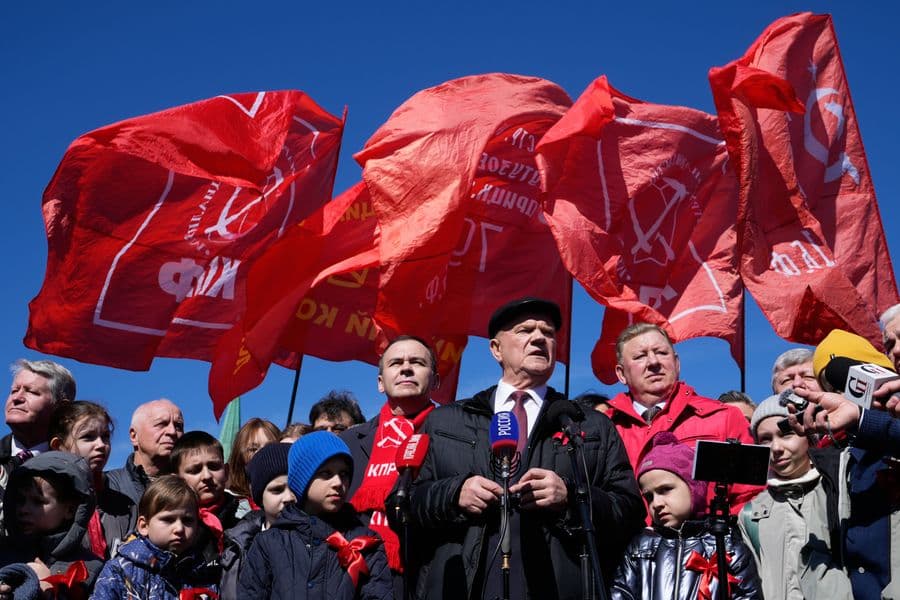
Key Principles of the Democratic World in Response to Authoritarian Challenges
The contemporary international security environment is undergoing a period in which democratic states face increasing pressure from authoritarian regimes. These regimes employ military, informational, economic, and technological instruments to expand their influence and undermine the resilience of democratic societies. In recent years, it has become evident that traditional response mechanisms—based on inertia and expectations of gradual crisis resolution—have ceased to function effectively. The democratic world has found itself in a situation that requires not only timely reaction but also a strategic reassessment of the principles on which collective security is built.
Military threats posed by authoritarian states have acquired a transregional character. The aggression against Ukraine has become the largest armed conflict in Europe since the Second World War and has demonstrated that dictatorships are willing to use force to alter international borders. At the same time, there is a growing level of strategic tension in the Indo‑Pacific region, where authoritarian states are showing a clear intention to revise the existing balance of power. These developments are interconnected: together they form a unified field of instability that compels democratic countries to act in a coordinated manner to preserve an international order based on the rule of law.
The Return of the Great Powers
A Problematic Look at the Hackneyed Idea of a Great Power Competition
2w agoRead it on Strategy PageHere's What Trump's Greenland Deal Means for the U.S.
Agreement will clear the way for an expanded U.S. military presence on the Arctic island
3w agoRead it on The Wall Street JournalWaging Peace in a 2026 World Rhyming With 1956
As crises converge in Ukraine, the Middle East, and Taiwan, Eisenhower's Cold War realism offers lessons for avoiding a wider war.
3w agoRead it on The American Spectator
Reflecting on an Epic Horse Campaign in the Mountains of Afghanistan
By Brian Glyn Williams • RealClearDefense
The Godfather of American Foreign Policy Realism Speaks to Today’s World
By Francis P. Sempa • RealClearDefense
In Pursuit of Nuclear Abolition
By Peter Huessy • RealClearDefense
Innovation Alone Won’t Prepare the U.S. for the Future Battlefield
By Joshua Segal • RealClearDefense
The sUAS Tactical Trifecta
By Bryan T. Woody • RealClearDefense

Navy Civilianizes Six Former Flag Billets, Reduces Six to Captains
By Mongilio, USNI N.
Raytheon's $8B Contract for Strategic Comms Terminal Modernization
By M+A El
America’s Maritime Moment Will Not Wait
By CDR Salamander
Armor Up?
By Marine Corps Compass Points
Who Shoots Down the Drone Over the Shipyard?
By John Ferrari & Dillon Prochnicki • RealClearDefense