
Certifying Iran's Compliance with the Joint Comprehensive Plan of Action
Last updated 05:47 PM EDT • Read time: 2m
Understanding the Roles of the IAEA, the Joint Commission, and the United States
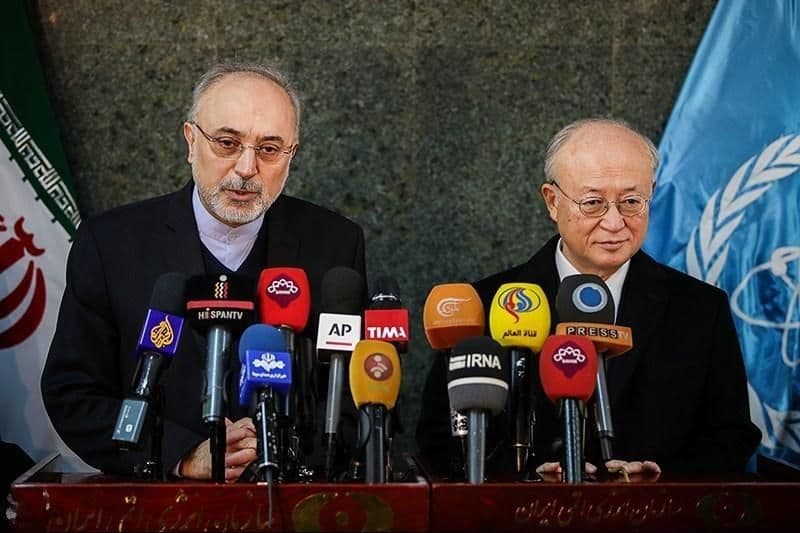
On August 31, major Western media outlets reported that the International Atomic Energy Agency (IAEA) had once again certified Iran’s compliance with the 2015 nuclear deal. This assertion, which purported to reflect the IAEA’s seventh and latest post-implementation report on Tehran’s nuclear activities, mirrors statements by the Iranian government and key world leaders in response to the agency’s previous reports. The IAEA has repeatedly affirmed “that Iran has implemented the deal faithfully, fully, and completely,” said Iranian Foreign Minister Mohammad Javad Zarif on July 16. Federica Mogherini, the high representative of the European Union for foreign affairs and security policy, said on July 20 that the UN watchdog “has certified six times – not once, six times – the full implementation of the deal’s provisions.”
These accounts are false. In fact, the IAEA has never certified Iran’s compliance with the Joint Comprehensive Plan of Action (JCPOA).
Rather, the IAEA’s mandate with respect to the JCPOA primarily entails monitoring and reporting on Tehran’s nuclear-related actions (or lack thereof ) pursuant to the JCPOA’s provisions. The determination of whether Iranian conduct constitutes compliance with the JCPOA remains the prerogative of the individual parties to the agreement: China, France, Germany, Russia, the United Kingdom, the United States, and Iran, with the high representative of the European Union for foreign affairs and security policy.
In this context, the JCPOA stipulates that if any party believes Iran has violated its obligations, it may refer the issue to the Joint Commission, the body established by the JCPOA to monitor its implementation, for adjudication. Should the Joint Commission fail to resolve the dispute within a specified timeframe, the complainant may refer the matter to the UN Security Council. The Joint Commission, coordinated by High Representative Mogherini, consists of representatives of each JCPOA participant state.
The distinction between the roles of the IAEA and of the Joint Commission harbors significant policy implications. Misleading claims of IAEA certification of Iranian compliance implicitly bestow an authoritative legal imprimatur on Tehran’s nuclear activities where none exists. In so doing, they obscure not only key omissions in the IAEA’s reporting of Iranian behavior, but also evidence that Iran has violated the deal’s letter and spirit – problems that should have elicited a response by members of the Joint Commission.

In Pursuit of Nuclear Abolition
By Peter Huessy • RealClearDefense
Innovation Alone Won’t Prepare the U.S. for the Future Battlefield
By Joshua Segal • RealClearDefense
The sUAS Tactical Trifecta
By Bryan T. Woody • RealClearDefense
The Revolutionary War: When Strategic Options Share the Same Weakness
By Henry Yep • RealClearDefense
The Houthis Are Testing the Limits of Collective Defense
By Saima Afzal • RealClearDefense

Navy Civilianizes Six Former Flag Billets, Reduces Six to Captains
By Mongilio, USNI N.
Raytheon's $8B Contract for Strategic Comms Terminal Modernization
By M+A El
America’s Maritime Moment Will Not Wait
By CDR Salamander
Armor Up?
By Marine Corps Compass Points
Who Shoots Down the Drone Over the Shipyard?
By John Ferrari & Dillon Prochnicki • RealClearDefense