
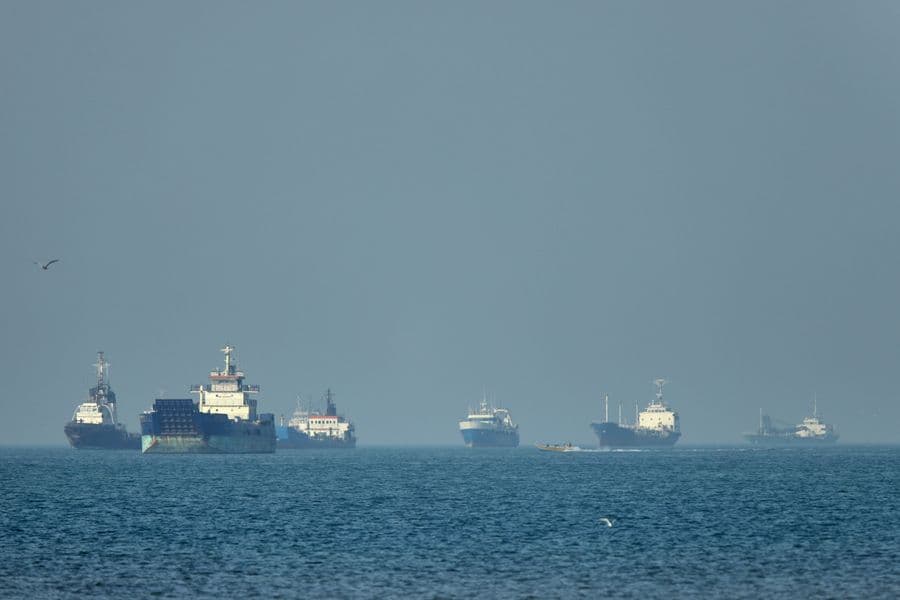
Hormuz in the U.S.–Iran Conflict as a Strategic Game Changer
Last updated 06:31 AM EDT • Read time: 15m
Introduction
The global energy system has entered a phase of instability in which an incident that began as a local disruption triggered chain reactions on a global scale. The situation in the Strait of Hormuz has become a stress test for the resilience of global logistics, insurance mechanisms, export routes, and national strategic planning.
Instability has manifested as a gradual deformation of the supply architecture. Exporters have faced rising logistical costs and declining route predictability; importers have encountered intensified competition for available volumes and higher risk premiums; insurers have been forced to revise threat‑assessment models. The energy market has shifted from reacting to events to reacting to expectations, increasing the sensitivity of the entire global fuel infrastructure.
These changes have affected more than price dynamics. They have reshaped state behavior: some actors began searching for bypass routes, others moved to form regional coalitions, a third group used instability as a tool of pressure, and a fourth adapted domestic policy to new external constraints. As a result, the crisis around Hormuz has become a catalyst for parallel processes developing according to their own logic and shaping a new strategic environment.
It is within this environment that states will define the parameters of their energy security, foreign‑policy priorities, and their ability to withstand prolonged periods of instability.
The scenarios that follow outline potential trajectories for the evolution of this environment—from the gradual erosion of Hormuz’s strategic role to the emergence of new energy blocs, regional power configurations, and models of managed instability. Each scenario represents a structural pathway derived from current dynamics and capable of shaping the configuration of the global energy system in the years ahead.
Scenario 1 — Hormuz Irreversibly Loses Its Strategic Value
1. Trigger
Prolonged instability in Hormuz is registered by global actors as a structural risk incompatible with long‑term energy strategy. The strait ceases to be viewed as a reliable element of the global architecture, and dependence on it becomes a systemic vulnerability.
2. Dynamics
States shift from tactical responses to strategic infrastructure realignment. Saudi Arabia accelerates the redirection of exports to the Petroline; the UAE strengthens Fujairah’s role as an out‑of‑strait hub; Iraq expands use of the Kirkuk–Ceyhan route; and Russia and Kazakhstan consolidate their eastern pipeline corridors. Rising risk premiums make alternative routes economically preferable, turning investment in pipelines, LNG capacity, and bypass corridors into a priority. The share of oil transiting Hormuz declines not because of logistical disruptions but as a result of deliberate strategic choices by states and investors.
3. Result
Hormuz loses its status as a global chokepoint. The world energy system shifts toward a distributed infrastructure in which no single node holds monopolistic significance. Iran’s leverage over global oil supplies declines structurally, and resilience is ensured through diversification rather than control of maritime straits.
4. Implications by Actor
- United States — reduced need for persistent military presence in the region.
- Iran — loss of a key lever over global markets.
- Gulf States — increased infrastructure competition and reorientation of export flows.
- Europe and Asia — diversification becomes a baseline assumption in strategic planning.
- Global System — transition to a model in which no single chokepoint defines global energy security.
Scenario 2 — Gulf Logistics Breakdown
1. Trigger
Even without a full closure of Hormuz, prolonged instability renders the region operationally unreliable. Insurance rates rise, shipowners avoid the risk zone, ports experience disruptions, and fleet turnover slows. The Gulf ceases to be perceived as a predictable logistics corridor.
2. Dynamics
The process unfolds as chronic logistical degradation rather than strategic realignment. Major shipowners reduce port calls, demand higher insurance premiums, and shift their fleets to lower‑risk routes. Alternative ports—Fujairah, Yanbu, Ceyhan, and ports in East Africa—face increased traffic, delays, and capacity shortages. Logistics costs rise: tanker turnaround times increase, Gulf producers’ margins decline, and the attractiveness of their crude grades diminishes. Ports operate irregularly, insurers continue raising premiums, and the entire logistics chain becomes chronically high‑risk. This is an operational process, not a global infrastructure reorientation of the type described in Scenario 1.
3. Result
The Gulf becomes a zone of persistent logistical risk, even without a formal blockade and without a strategic global shift away from Hormuz. Regional reliability declines due to the behavior of shipowners, insurers, and ports—not because of state‑level decisions.
4. Implications by Actor
- Gulf States — reduced competitiveness, increased dependence on bypass routes, and pressure on export margins.
- Iran — enhanced leverage through the ability to generate localized risks without overt escalation.
- United States — increased operational burden on naval forces and reduced effectiveness of regional presence.
- Europe and Asia — higher import costs and the need to treat logistical risk as a permanent planning factor.
- Global System — entrenchment of Gulf‑related logistical risk as a structural feature of global trade.
Scenario 3 — Arab States Are Drawn into a Ground Operation Against Iran
1. Trigger
Prolonged instability in Hormuz leads to systemic losses: export revenues decline, insurance rates and freight costs rise, and budgetary risks increase. Gulf states conclude that a limited war is cheaper than maintaining the blockade.
2. Dynamics
Phase 1 — Political decision. Saudi Arabia, the UAE, and Bahrain decide to act independently; the United States provides intelligence, airpower, and coordination, but no ground forces.
Phase 2 — Coalition formation. Regional actors enter the conflict as defenders of their own export interests.
Phase 3 — Limited operation. Objectives: destroy blockade infrastructure, neutralize IRGC positions, and establish a security zone along the coastline.
Phase 4 — Escalation. Iran responds with missile strikes, proxy attacks, and expansion of the conflict into Iraq and Syria.
3. Result
Initiative shifts from the United States to regional actors. For the first time in decades, the Middle East develops its own force architecture, and the oil market enters a phase of extreme volatility.
4. Implications by Actor
- United States — coordinator rather than executor; increased risks stemming from allied actions.
- Saudi Arabia / UAE — strengthened leadership, rising operational and financial costs.
- Iran — threat of losing coastal control; intensifying internal contradictions.
- Global Economy — prolonged period of high prices and accelerated diversification.
Scenario 4 — China Becomes the Hidden Beneficiary
1. Trigger
Rising oil prices, higher risk premiums, and logistical delays in Hormuz increase pressure on Western markets. Russia gains windfall revenues, Central Asia faces elevated demand, and China acquires an opportunity to reallocate its purchases to its advantage.
2. Dynamics
Phase 1 — Deepening Russia’s dependence. Higher prices increase Russia’s revenues and expand the share of its exports flowing to Asia. The ESPO and Kozmino pipelines become critical, tightening Moscow’s dependence on Chinese demand.
Phase 2 — China secures discounts. Sanctions force Russia to sell oil to China below market prices and on flexible terms.
Phase 3 — Beijing gains control. China dictates volumes, controls logistics, secures priority access to pipelines, and expands yuan‑denominated settlements.
Phase 4 — Political exploitation of the crisis. Beijing promotes the narrative of “instability created by the United States,” strengthening its influence across Asia.
3. Result
China becomes the primary structural beneficiary of the crisis without participating in it directly. Russia and Central Asia become increasingly integrated into China’s energy orbit.
4. Implications by Actor
- China — enhanced energy security, increased leverage over Russia, expanded role of the yuan.
- Russia — higher revenues but reduced strategic maneuverability.
- United States — weakened position in Asia.
- Europe — rising competition and prices, accelerated diversification.
- Global System — consolidation of a durable Russia–China axis.
Scenario 5 — The United States Uses the Blockade as a Tool of Allied Pressure
1. Trigger
Prolonged instability in Hormuz raises oil prices, freight costs, and insurance premiums. Europe, Japan, South Korea, and India bear the highest economic burden, while the United States remains the least vulnerable. Washington registers this asymmetry and sees an opportunity to exert pressure on its allies.
2. Dynamics
Phase 1 — Identifying allied vulnerability. Europe suffers from elevated oil and gas prices; Asia faces high LNG and logistics costs.
Phase 2 — Formulating demands. The United States uses energy dependence as leverage: Europe — increased purchases and stronger defense commitments; Japan/South Korea — higher defense budgets; India — reduced ties with Russia.
Phase 3 — Pressure mechanism. Washington acts indirectly: controlling export flows, prioritizing LNG allocations, and sending diplomatic signals.
Phase 4 — Allied reaction. A perception emerges that the United States is not seeking to stabilize the situation but is instead exploiting the crisis.
3. Result
The blockade becomes an instrument of U.S. foreign policy. The energy dependence of allies turns into a political dependency.
4. Implications by Actor
- United States — increased influence, but heightened risk of eroding trust.
- Europe — deeper dependence, growing frustration, accelerated diversification.
- Japan / South Korea — expanded defense obligations, increased reliance on U.S. LNG.
- India — reduced strategic maneuverability.
- Global System — energy becomes a tool of coercion.
Scenario 6 — Iran Adopts a Strategy of “Managed Chaos”
1. Trigger
Iran recognizes that it cannot win a direct confrontation with the United States and cannot ensure stability in Hormuz. However, it can make the strait sufficiently unstable that the costs for other actors exceed the costs for itself.
2. Dynamics
Phase 1 — Controlled escalation. Iran maintains tension below the threshold of open war: proxy attacks, threats of closure, IRGC maneuvers, and tanker incidents.
Phase 2 — Zone of uncertainty. Maritime traffic becomes unpredictable, insurance rates rise, and markets react to even minor signals.
Phase 3 — Economic pressure. The United States incurs minimal costs; Europe and Asia bear the highest burden; Gulf states lose revenue; China and India are forced to adjust their procurement patterns.
Phase 4 — Political pressure. Iran leverages instability to pressure Europe (sanctions), the United States (negotiations), and the Gulf (regional politics).
3. Result
Hormuz becomes a zone of managed instability. Iran retains the initiative while avoiding direct war, and stability itself becomes a bargaining instrument.
4. Implications by Actor
- Iran — strengthened negotiating position; expanded influence of proxy forces.
- United States — reduced effectiveness of pressure; increased security costs.
- Europe — heightened vulnerability and inflationary pressure.
- Gulf States — declining revenues; elevated risk of escalation.
- China and India — higher import costs; increased reliance on alternative routes.
- Global System — entrenchment of a “managed instability” model.
Scenario 7 — The United States and Iran Both Lose Control of the Conflict
1. Trigger
Prolonged instability in Hormuz, combined with rising prices, insurance premiums, and freight costs, creates an environment in which proxy groups begin acting autonomously, local commanders make decisions without central oversight, and incidents multiply faster than diplomacy can respond.
2. Dynamics
Phase 1 — Autonomization of proxies. Groups in Yemen, Iraq, Syria, and Lebanon strike targets on their own initiative, compete with one another, and escalate in order to preserve influence.
Phase 2 — Decentralization of U.S. and allied decision‑making. Decisions are made in the field; identification errors trigger retaliatory actions.
Phase 3 — Chain reaction of incidents. Each episode generates a new wave of escalation.
Phase 4 — Loss of initiative by central actors. Washington and Tehran attempt to halt the dynamic, but the system is already operating independently.
3. Result
The conflict evolves into an autonomous system in which events unfold according to their own internal logic rather than the intentions of the parties.
4. Implications by Actor
- United States — risk of unintended war; increased operational burden on forces.
- Iran — loss of control over proxies; intensifying internal contradictions.
- Gulf States — heightened threats to infrastructure; increased risk of being drawn in.
- Europe and Asia — severe energy shock and inflationary pressure.
- Global System — emergence of a model of uncontrolled escalation.
Scenario 8 — Europe’s “Energy Sovereignty” as a Side Effect of the Conflict
1. Trigger
Prolonged instability in Hormuz drives up oil prices, risk premiums, LNG costs, and freight rates. The EU experiences a renewed energy shock comparable to 2022 and concludes that dependence on the Middle East is as dangerous as dependence on Russia.
2. Dynamics
Phase 1 — Accelerated diversification. Europe increases imports from the United States and Norway and expands the share of Africa and the Caspian region.
Phase 2 — Strategic shift toward LNG. New terminals are built, long‑term contracts are signed, and strategic reserves grow.
Phase 3 — Investment in alternatives. Development of hydrogen, biofuels, transport electrification, and renewables accelerates.
Phase 4 — Political consolidation. A doctrine emerges: no single region should hold a monopoly over Europe’s energy security.
3. Result
Europe begins to establish its own form of energy sovereignty. Dependence on the Middle East declines, and the import structure shifts toward the United States, Norway, Africa, and the Caspian region.
4. Implications by Actor
- Europe — strengthened autonomy; accelerated transition.
- Middle East — loss of the European market; increased dependence on Asia.
- United States — enhanced role as a key supplier.
- Russia — final loss of the EU market; deeper orientation toward China.
- Africa — increased investment and strategic relevance.
- Global System — weakening of Hormuz’s strategic role.
Scenario 9 — “Internal Balance Disruption” Inside Iran
1. Trigger
Prolonged instability in Hormuz reduces Iran’s export revenues, raises domestic prices, and intensifies competition among security institutions. Global prices rise, but Iran cannot capitalize on the situation due to its own pressure‑based strategy. This creates a point of internal tension.
2. Dynamics
Phase 1 — Decline in export revenues. Tankers avoid the route, insurance rates increase, buyers demand discounts, and volumes fall.
Phase 2 — Growth of domestic discontent. Fuel and food prices rise, real incomes decline, and the budget comes under pressure.
Phase 3 — Intensification of factional struggle. The IRGC, the army, the Interior Ministry, and the political leadership compete for control over foreign policy and blame one another for failures.
Phase 4 — Attempts to seize control. Hardliners demand escalation; moderates push for negotiations; economic elites call for stabilization.
3. Result
Iran faces an internal governance crisis. Factions act autonomously, and foreign policy loses a unified center.
4. Implications by Actor
- Iran — rising instability; intensifying factional competition.
- United States — window of opportunity, but heightened unpredictability.
- Gulf States — increased threat from autonomous Iranian actors.
- Europe and Asia — higher risk premiums; accelerated diversification.
- Global System — Iran becomes a source of both internal and external instability.
Scenario 10 — Fragmentation of the U.S.‑Led Coalition
1. Trigger
Prolonged instability in the Strait of Hormuz drives sustained increases in oil and LNG prices, insurance premiums, and shipping delays. Europe and Asia absorb the highest economic damage, while the United States remains comparatively insulated. Allies observe Washington’s reluctance to stabilize the situation and interpret it as strategic opportunism. Conditions emerge for a fracture within the coalition.
2. Dynamics
Phase 1 — Rising allied frustration
Europe, Japan, South Korea, and India face inflation, industrial pressure, and political backlash. Israel, preoccupied with Iranian activity, demands stronger U.S. engagement and interprets Washington’s restraint as strategic ambiguity.
Phase 2 — Divergence of expectations
Allies call for decisive U.S. action to restore maritime stability. Washington limits its involvement, prioritizing domestic resilience and selective pressure on adversaries. Israel increases unilateral signaling toward Iran, further complicating coalition dynamics.
Phase 3 — Coalition drift
Europe expands coordination with China and Gulf states. Japan and South Korea demand privileged access to U.S. LNG. India accelerates strategic autonomy. Israel intensifies independent deterrence measures, forcing the U.S. to balance alliance management with escalation risks.
Phase 4 — Loss of unity
The coalition remains formally intact but functionally dissolves into states pursuing divergent interests. U.S. leadership becomes reactive rather than directive.
3. Result
The United States loses the ability to shape a unified strategic response. The coalition ceases to operate as a coherent actor, with members recalibrating their alignments based on national rather than collective priorities.
4. Implications by Actor
- United States — erosion of trust; diminished ability to coordinate allies; growing perception of selective engagement.
- Israel — heightened unilateralism; pressure on U.S. decision‑making; increased risk of escalation with Iran.
- Europe — acceleration of strategic autonomy; diversification toward China and the Gulf.
- Japan and South Korea — increased independence; demand for guaranteed U.S. energy access.
- India — reinforcement of autonomous strategic posture.
- Gulf States — deeper orientation toward China; recalibration of security expectations.
- Global System — consolidation of multipolarity; weakening of U.S.-centric alliance structures.
Scenario 11 — Formation of a Russia–Iran–China “Oil Arc”
1. Trigger
Prolonged instability in Hormuz raises global prices, insurance premiums, and freight costs. Russia gains windfall revenues, Iran strengthens its eastward orientation, and China acquires the opportunity to consolidate control over supplies from both states. A new energy configuration begins to take shape.
2. Dynamics
Phase 1 — Consolidation of the Russia–China linkage. High prices increase the importance of the ESPO pipeline and the Kozmino terminal—the end point of that route—deepening Russia’s dependence on Chinese demand and expanding yuan‑denominated settlements.
Phase 2 — Intensification of Iran’s pivot to the East. Iran expands exports to China, offers discounts, and increases the use of national currencies in transactions.
Phase 3 — Formation of a trilateral architecture. Russia, Iran, and China coordinate supply flows, synchronize pricing strategies, and develop supporting infrastructure.
Phase 4 — Emergence of an alternative bloc. The linkage becomes an autonomous energy center.
3. Result
A durable energy axis emerges, reducing the strategic weight of Hormuz and strengthening China’s influence.
4. Implications by Actor
- China — enhanced energy security; expanded influence.
- Russia — higher revenues and deeper dependence on China.
- Iran — strengthened eastern orientation.
- United States — reduced leverage over energy flows.
- Europe — increased competition for volumes.
- Global System — emergence of an alternative center of power.
Conclusion
The scenarios outlined above illustrate how instability in the Strait of Hormuz can reshape the global energy landscape. It acts as an accelerator for processes capable of altering the structure of the world’s energy architecture. In a scenario‑based perspective, states move from dependence to diversification, from centralized routes to distributed infrastructure, and from external reliance to greater autonomy. Regional actors may strengthen their independence, global actors may encounter limits to their influence, and energy flows may be redistributed toward emerging centers. Within this logic, China may consolidate control over Asian supply chains, Europe may develop its own form of energy sovereignty, the United States may face allied drift, and Iran may experience internal fragmentation.
Current trends already show increasing route diversification, the rising importance of alternative export corridors, and the growing weight of regional decision‑making. Taken together, these developments create an environment in which resilience is defined by a state’s ability to adapt to persistent uncertainty. The previous model—built on predictable routes and the dominance of individual chokepoints—is losing relevance. The new architecture will emerge from the decisions states are making now, at a moment when instability has ceased to be an exception and has become a baseline parameter of the global energy system.
Sergey E. Ivashchenko is a strategic analyst working at the intersection of escalation dynamics, information strategy, and long‑range strategic forecasting.

Innovation Alone Won’t Prepare the U.S. for the Future Battlefield
By Joshua Segal • RealClearDefense
The sUAS Tactical Trifecta
By Bryan T. Woody • RealClearDefense
The Revolutionary War: When Strategic Options Share the Same Weakness
By Henry Yep • RealClearDefense
The Houthis Are Testing the Limits of Collective Defense
By Saima Afzal • RealClearDefense
Radio Frequencies in the Intelligence Ecosystem
By Craig Brower • RealClearDefense

Who Shoots Down the Drone Over the Shipyard?
By John Ferrari & Dillon Prochnicki • RealClearDefense
Northrop Grumman Breaks Out the Big Guns at AUSA
By Daniel Terrill, Defense News
Army Pursuing Diverse Array of New Anti-Air Interceptors
By Trevithick, The WarZoneWho Shoots Down the Drone Over the Shipyard?
By John Ferrari & Dillon Prochnicki, RCD
F-35C Lands for the First Time on a Ford-Class Aircraft Carrier
By The Aviationist